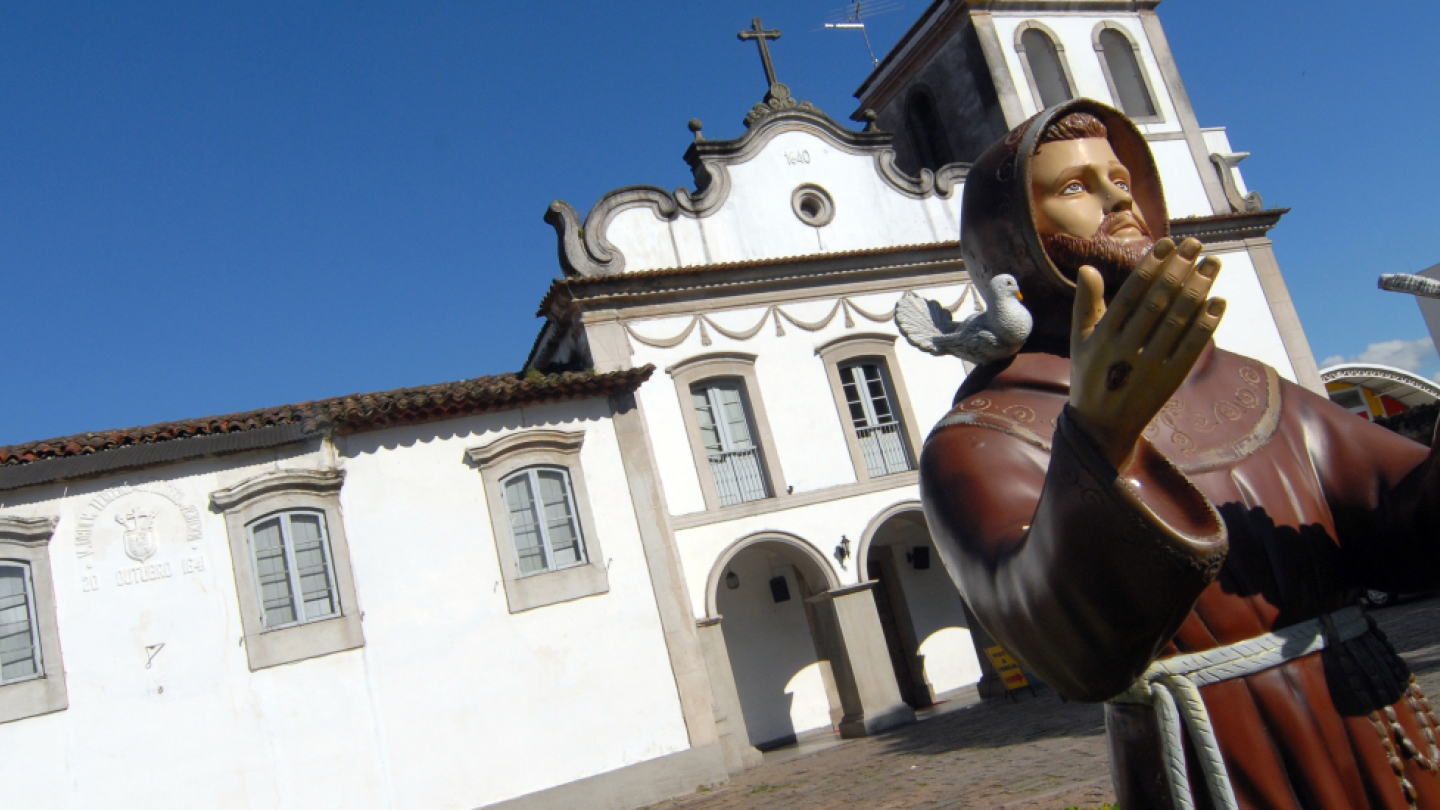


Top photo: Tadeu Nascimento
Architecturally rich, with its history marked by a miracle, the Santuário de Santo Antonio do Valongo, built in 1640, was one of the first churches in the country and the second oldest architectural complex in Santos. Baroque in style, its walls are covered in tiled murals from the 1930s and, on the high altar sits one of the few revolving thrones in the country, with the Holy Trinity on one side and on the other, the monstrance for Perpetual Adoration. The Chapel of the Venerable Third Order of Saint Francis, built in 1691, is annexed to the Church, and houses the life-size statue of Saint Francis, in Baroque style, praying before a mystic Christ with Six Wings.
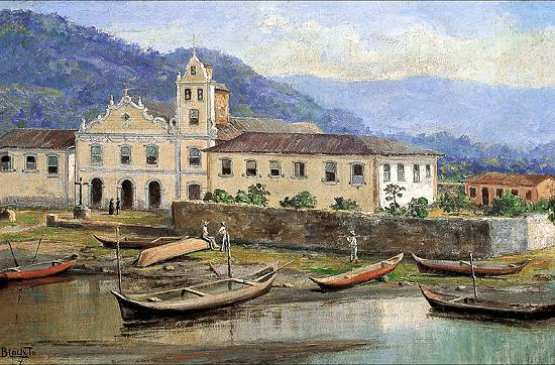
The Valongo Complex
In 1859, the Valongo complex comprising church, convent and chapel was sold for the construction of the Santos-Jundiaí railway line, the first in São Paulo State. The cloisters were demolished two years later, making way for Valongo Station. But nothing could remove the statue of Saint Anthony from the altar, a fact that was considered a miracle and prevented the demolition of the church, which was elevated to the state of Sanctuary in 1987. Both the church and the south wing of the convent, which also escaped demolition, are considered one of the main examples of Franciscan architecture in the country.
Photo: Reproduction
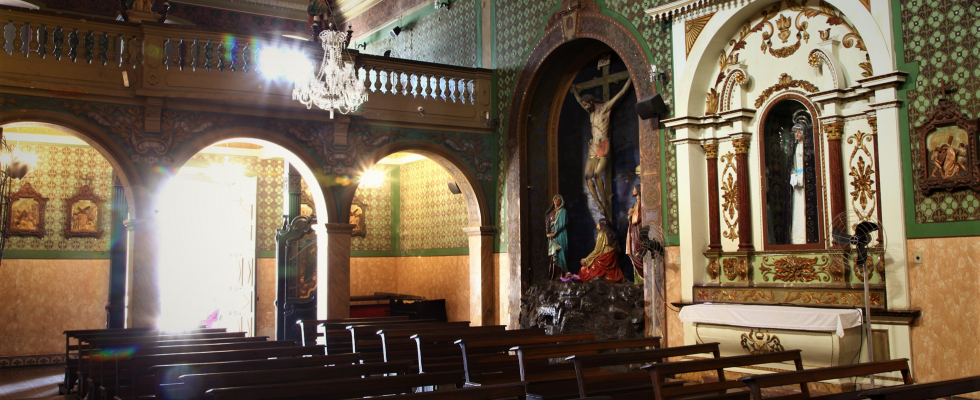
The church
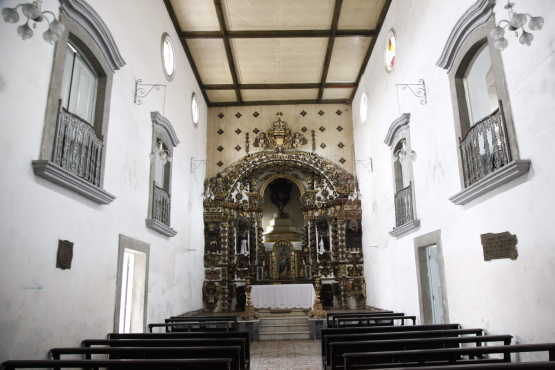
The church entrance has three Roman arches, symmetrical to the balcony doors of the depressed arches on the upper floor, finished with curved stone lintels. An undulating pediment and garlands complete the façade, considered one of the finest examples of 18th century Baroque. The Chapel of the Venerable Third Order of Penance of Saint Francis, built in 1691, stands to the left, perpendicular to and with its arch open to the convent church.
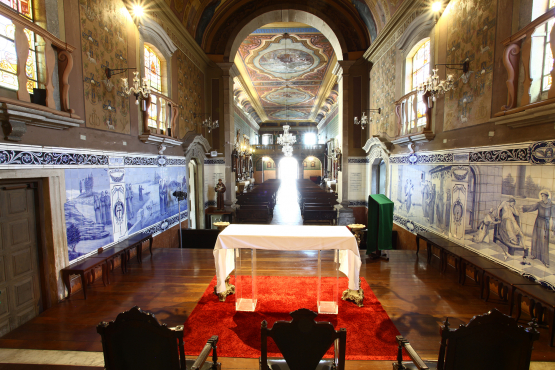
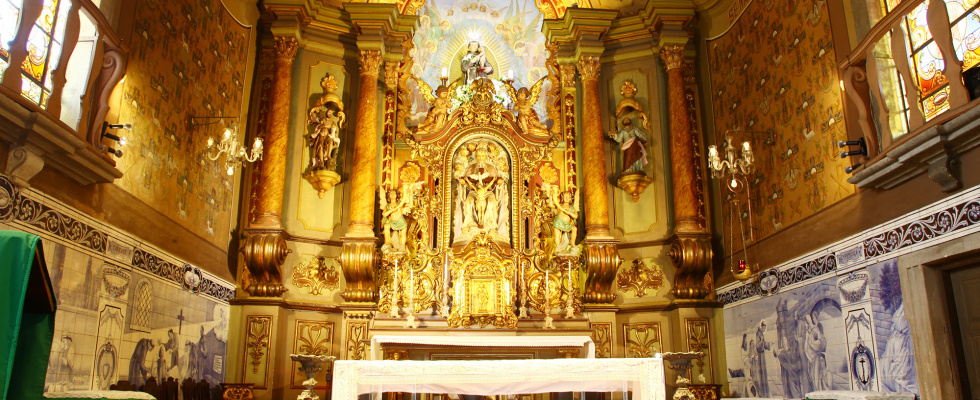
The altar has six tiled panels painted between 1938 and 1940 by the Portuguese artist José Candido da Silva Jr. He did a self-portrait, in jacket and tie, on the panel entitled ‘Saint Anthony’s Bread’, alongside the saint. On the panel named ‘The Death of Saint Anthony’, the artist did a portrait of Brother Vicente Borgard pointing to the sky, trying to console a friar crying at the death of Saint Anthony. Brother Vicente was responsible for the restoration and renovations of the church in the 1930s.
Scenes from the life of Saint Anthony and Saint Francis are depicted in oil paintings on the ceiling, as well as the main Franciscan saints: Saint Clare, Saint John Vianney, Saint Pascal, Saint Bonaventure and Popes Pius X and Gregory IX. The scenes are enhanced by the painting of thousands of flowers that cover the walls, with a small square mirror in the center, which multiplies the effect of the light.
The Altar
The details and the features of the images on the altar deserve a closer look, for example ‘Divine Justice’, which shows Mary Magdalene at the feet of the Crucified Jesus. It is said that this image, always revered on Good Friday, was carried in a procession during the yellow fever epidemic between 1889 and 1890, which decimated the population of Santos. After the procession, the story is recorded that the number of sick people began to decrease, and weeks later, no further cases were recorded.
A coffin of the Dead Lord can be found on the lower part of the altar, in a glass box. The carved wood altar came from Lisbon between 1726 and 1727 – it stands three steps from the floor and is in white and gold, traditional Baroque colors.
Details
The details and expressions of the images on the 'Divine Justice' altar, which depicts Mary Magdalene at the feet of Jesus Crucified, deserve a closer look. It is said that this image, always highlighted on Good Friday, was carried in procession during the yellow fever epidemic between 1889 and 1890, which decimated the population of Santos. After the procession, history records that the number of sick began to decrease, and weeks later, no more cases were reported.
At the lower part of the altar, the coffin of the Dead Lord can be found, in a glass case. The carved wooden altar came from Lisbon between 1726 and 1727 – it stands three steps above the floor and retains the traditional colors of Baroque art: white and gold.
Photo: Francisco Arrais
Chapel
The Chapel of the Venerable Third Order of Saint Francis of Penance, dating from 1691, is located to the left, perpendicular and with an open arch leading to the conventual church.
Photo: Rogério Bomfim