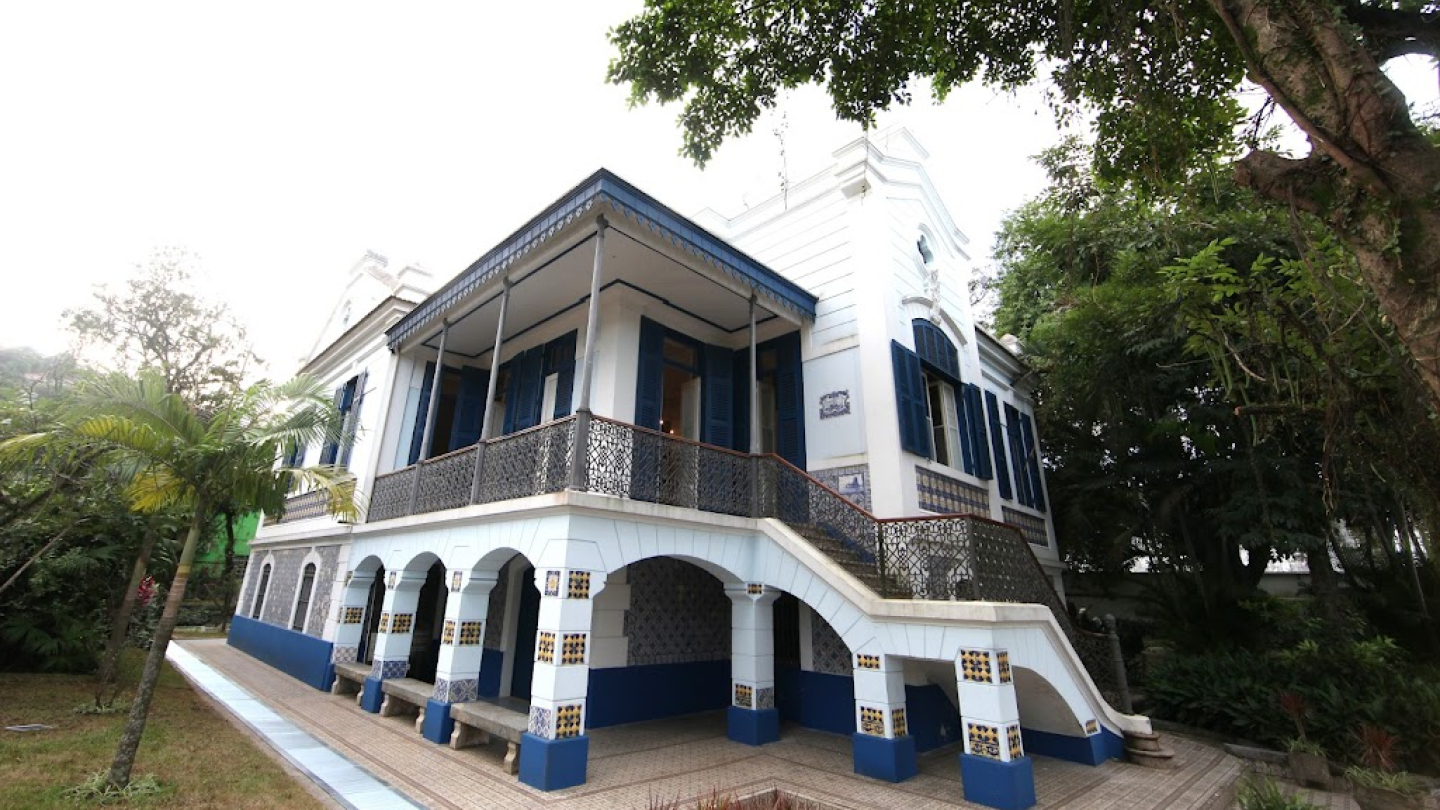
A imagem mostra uma elegante casa histórica de estilo colonial tardio, cercada por vegetação e situada em um terreno arborizado. A construção é marcada por paredes brancas, janelas e portas com venezianas azuis e detalhes decorativos em azulejos, especialmente nas colunas e ao longo da base do prédio.

House of Cultures

The Santos House of Cultures occupies a listed and restored eclectic-style mansion located at Rua Sete de Setembro 49, in Vila Nova, built in 1900 as a residence for employees of the then Santos Dock Company.

Leased by the City Hall, the space will host exhibitions, book launches, literary workshops, and activities of various artistic expressions. Management will be handled by the Secretariat of Culture in partnership with the Santos Archive and Memory Foundation, and curated by Flávio Viegas Amoreira.

It will be open from Thursday to Saturday from 2 pm to 7 pm and on Sunday from 11 am to 4 pm. Admission is free.

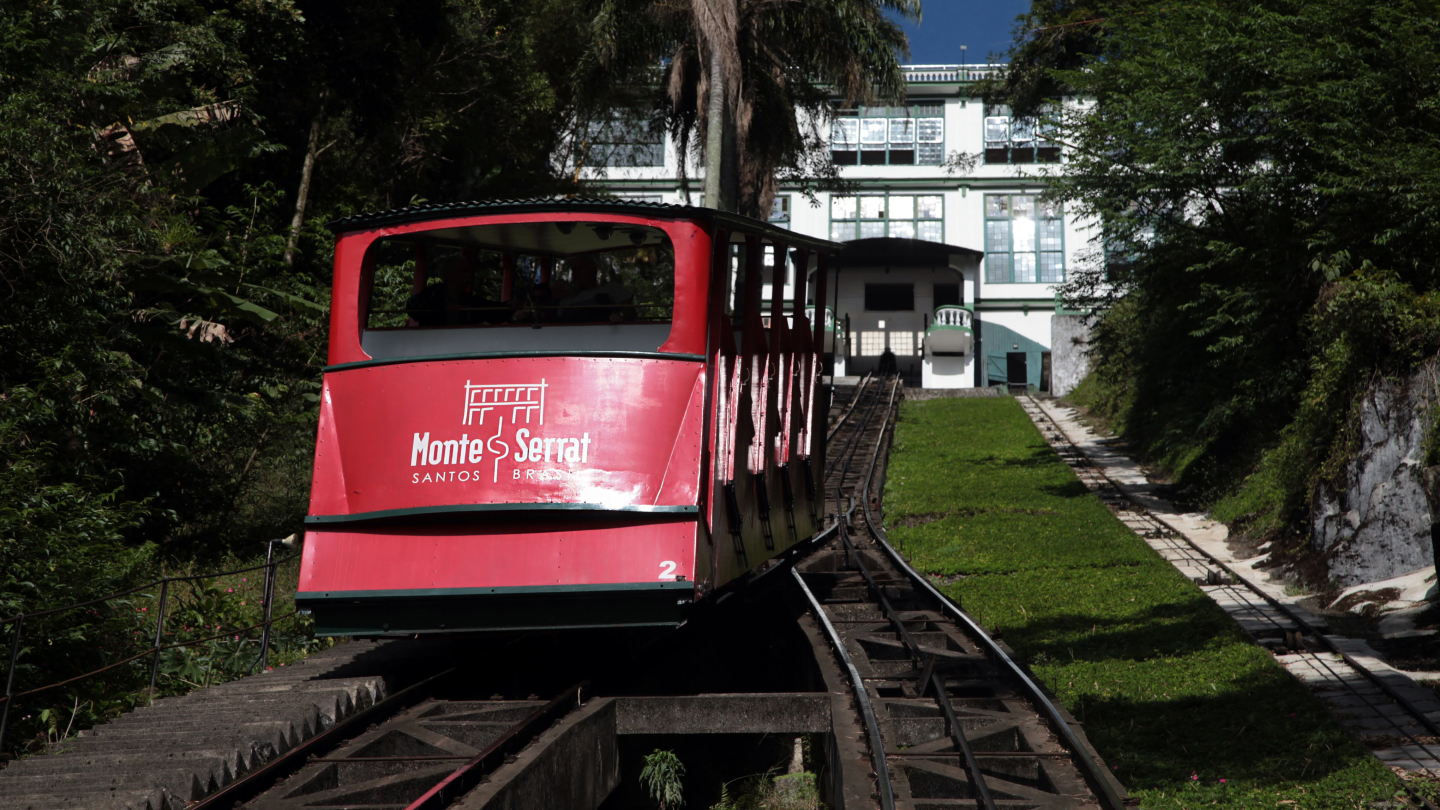
Um funicular de cor vermelha com a inscrição "Monte Serrat - Santos - Brasil" sobe uma ferrovia íngreme em direção a um edifício de estilo colonial em uma área arborizada

Monte Serrat

Main photo: Isabela Carrari


Four minutes of pure emotion, ascending 147 meters, lead to the top of Monte Serrat by funicular railway, where visitors can find the old casino and the Sanctuary dedicated to Our Lady of Monte Serrat (Nossa Senhora Monte Serrat), patron saint of Santos, built more than 400 years ago. Or, 402 steps with 14 niches reproducing scenes from the Via Dolorosa, inaugurated between 1939 and 1941, lead to a breathtaking 360-degree panoramic view of the city, and a partial view of the municipalities of  São Vicente, Cubatão and Guarujá.


Monte Serrat is an important part of the history of Santos, since it used to serve as a refuge for the population when the then village was invaded by pirates. During one of these attacks, in 1614, the invaders were finally buried by an avalanche of earth and stones, and this miracle, attributed to Our Lady, made her the city’s patron saint in 1955.


Our Lady of the Rosary Church

Top photo: Francisco Arrais


With its nave of colored marble, this church is one of the loveliest and oldest in Santos. Its origins date back to a chapel where runaway slaves used to hide, built around 1756. The Our Lady of the Rosary of Black Men (slaves)  Brotherhood, however, was formed in 1652 – and disbanded in 2008 – and had an altar in the old parish church, which was moved because of restoration works in the 18th century. With the demolition of this building, the Church of the Rosary became the city’s main church, a status it maintained for 15 years, until 1924, when the Cathedral was inaugurated. 

Tuiuti mansion

Also known as Mauá Palace, this is the oldest residential  building in Santos, constructed in 1818, with an area of  3000m², and renovated many times, with no great alterations to its architectural features. 

   
It was a mansion for traditional local families, among them those of politicians such as  Colonel José Antonio Vieira de Carvalho, governor of Itapema Fort and also judge, local councilor and president of the Council Chamber, when this position corresponded to that of mayor. It was in this building, on 4 March 1822, that the most opulent Santos Ball of the 19th century was held, named ‘Meteor Party’.

  
 Nowadays, the space focuses on cultural and commercial events and activities, has also been the headquarters of Mauá, Santos and Mercantile Banks, and was military quarters for Imperial troops during the Paraguay War. 

   
In 1887, North-American export company Hard Rand acquired the building, extended the property, and began to operate there from 1922. In the 1980, the mansion was the location for filming the TV Bandeirantes soap opera ‘Os Imigrantes’(The Immigrants).
Council chamber and prison

Designed in 1836 and concluded only 30 years later, due to the wars against Uruguay and Paraguay, the Council Chamber and Prison is an architectural monument of great historical and cultural value to Santos. An important cultural center, it has been the headquarters of (Pagu Workshops), run by the São Paulo State Government, since 1994.

With an area of more than 2000m², the historical building has housed over the years: the city council (1870 to 1896), a prison, court, police stations and was the site of the proclamation of the country’s first and only Municipal Constitution, on November 25, 1894,

Patrícia Galvão Cultural Center

The city’s main arts complex, the Patricia Galvão Cultural center comprises the Brás Cubas Municipal Theater, the Rosinha Mastrângelo Arena Theater, the Santos Museum of Image and sound (MISS), the Roldão Mendes Rosa  Newspaper Library , and the Braz Cubas and Patricia Galvão art galleries. The building is also home to the Municipal Department of Culture, as well as workshops and regular courses in the areas of scenic arts, visual arts, music, dance, audiovisual and general culture.

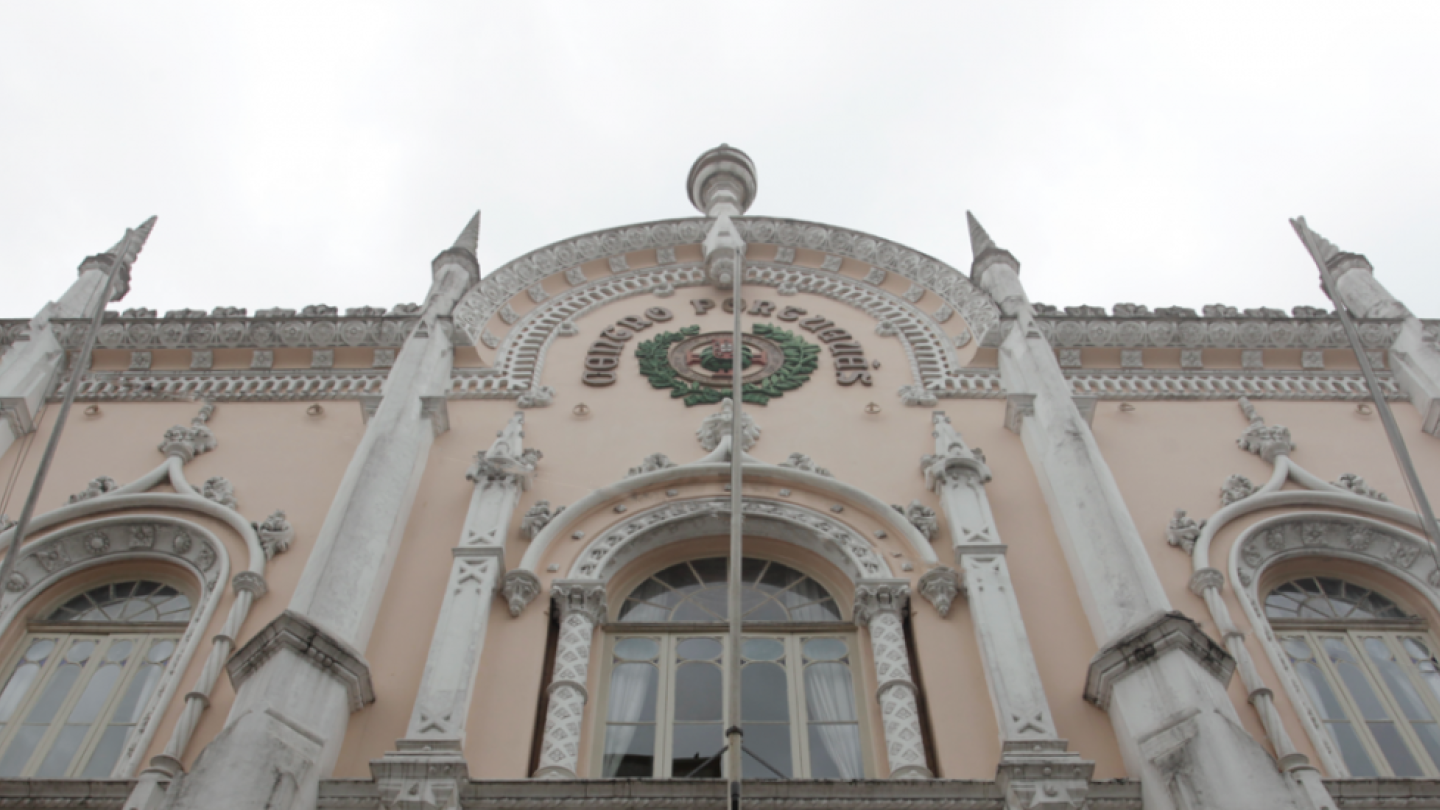
Vista em contraponto da fachada neogótica em tons de bege e branco do Centro Português, com três grandes janelas em arco e pináculos pontiagudos contra um céu claro. No centro superior, o emblema da instituição está gravado sob a balaustrada decorada.

Portuguese Cultural Center

Top photo: Ronaldo Andrade


The only construction in Neo-Manueline style in São Paulo State and one of the few in Brazil, this building was inaugurated in 1900, still unfinished, after two years’ work – the project by two Portuguese engineers was concluded in the following year. In 1945, the Royal Portuguese Center was renamed the Portuguese Center and in 2006, merging with the Portuguese Social Union, was given the name of Portuguese Cultural Center. The older building is the administrative and cultural headquarters, while the other unit holds social activities.

Guarany Theater

Top photo: Anderson Bianchi


This building, the first in Santos to be constructed as a theater, was inaugurated in 1882 and destroyed by fire in 1981, with only the external walls left standing. After two decades of neglect, the building was completely restored by City Hall and reopened in 2008. Besides the beauty of the building itself, highlights include two paintings by Paulo Von Poser – one on the ceiling reinterpreting a scene from the novel O Guarany, by José de Alencar, and the other in the second floor foyer, which is a reinterpretation of Benedicto Caixto’s view of Santos from the top of Monte Serrat. The theater hosts presentations and also functions as a municipal school for scenic arts.

Coliseu Theater

Top photo: Tadeu Nascimento


The city’s biggest theater, with seating for an audience of 1000, the Teatro Coliseu has had its current characteristics since 1924. The eclectic style building boasts fine frescos and architectural details, excellent acoustics and refined décor, which have made the theater famous and have classified it as one of the best in the country.


The stage for the premiere of spoken cinema in Santos in 1929, the Teatro Coliseu staged the main musicals, concerts, operas, plays and other spectacles by national and international companies. It fell into disrepair in the 1970 and was closed down in the following decade. Abandoned, it underwent 10 years of renovation work and reopened its doors in 2006. 

Benedicto Calixto Art Collection

Top photo: Marcelo Martins


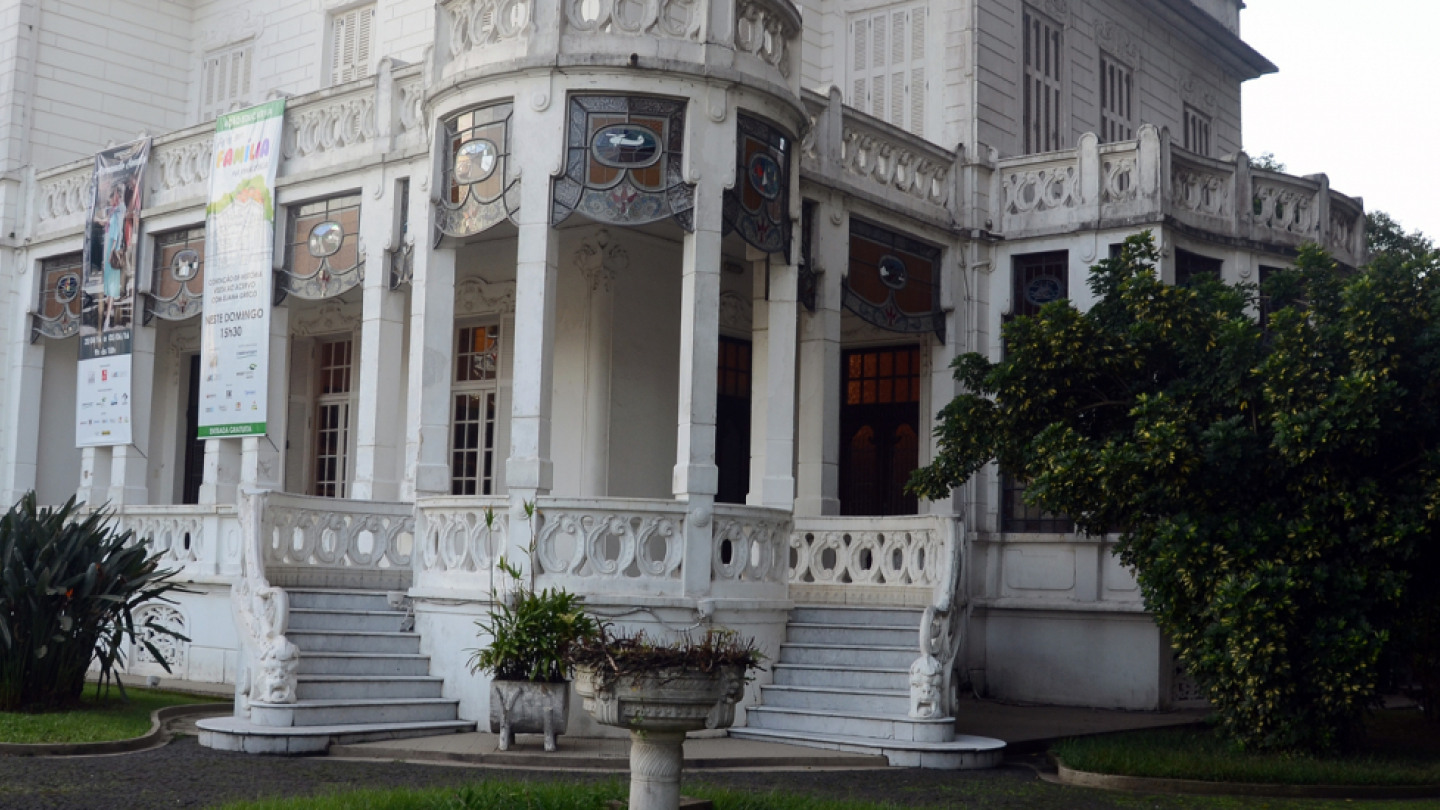
Installed in a fine mansion built in early 20th-century neo-classical style, the Benedito Calixto Art Gallery is an important cultural space in the city, with musical happy hour, and a variety of courses and events for children and adults, mainly at the weekend.  

The house, the last one along the Santos shoreline to maintain the characteristics of the coffee boom, was a family residence, care home for the elderly, boarding house for young women and even a slum, before being declared a public utility in 1979, with restoration work commencing seven years later.

The ground floor houses the art book library and a permanent exhibition of works by Calixto, considered one of the major exponents of Brazilian painting from the beginning of the 20th century.  The upper floor functions as a gallery for temporary exhibitions.