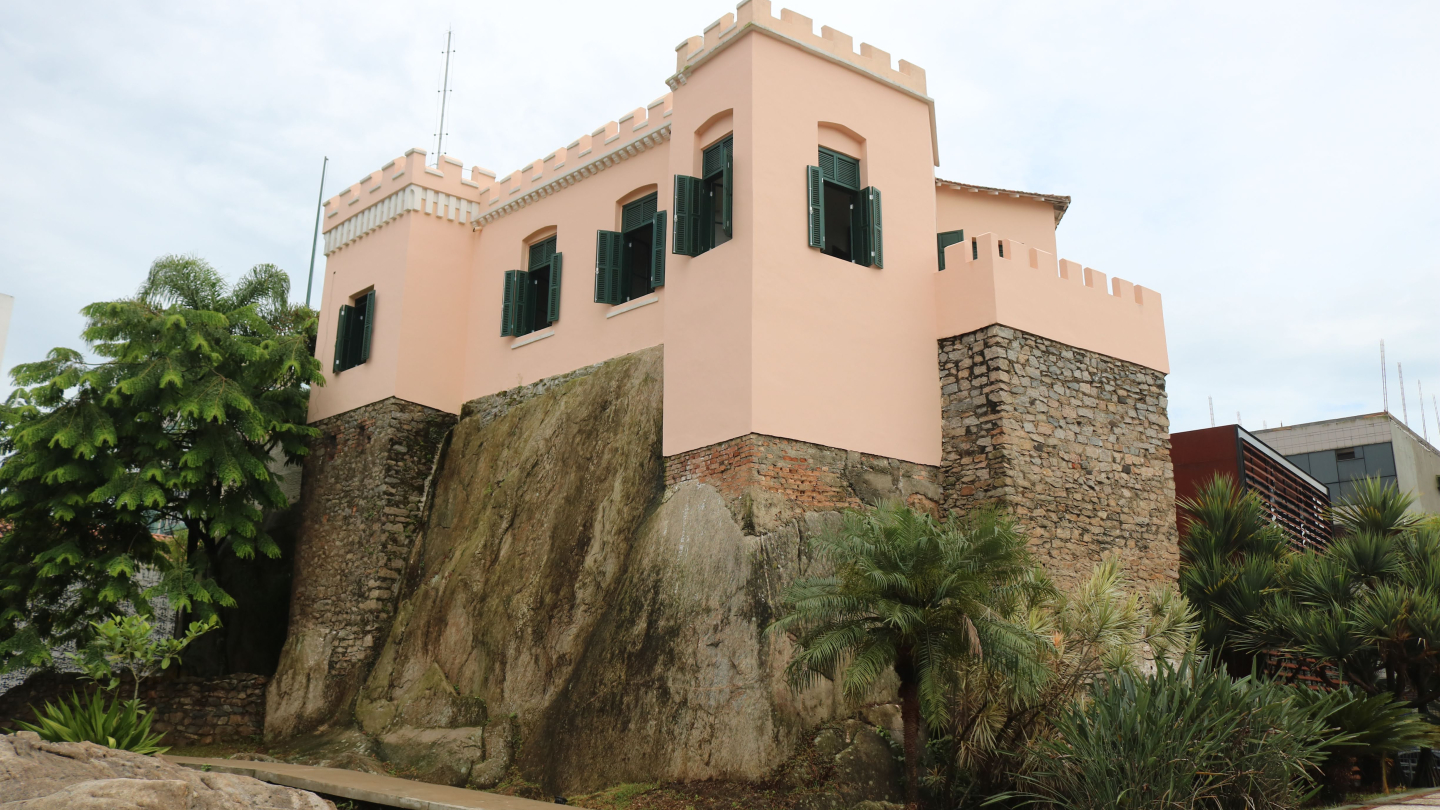
Um prédio histórico de cor salmão, com janelas de venezianas verdes e telhado com ameias. Ele está construído sobre um grande rochedo e cercado por vegetação

Saint Catherine’s Mount

Top photo: Tadeu Nascimento


Saint Catherine’s Mount marks the foundation of Santos – knowing the exact spot of its foundation is a privilege that few cities in the world enjoy.  This small mount bears the name of the chapel that existed at the foot of this small hill, built in 1532.

In 1591, English pirate Thomas Cavendish sacked the city, destroyed the chapel and threw the statue of Saint Catherine of Alexandria into the sea. After 72 years, while fishing with a net, Jesuit slaves happened to take the statue out of the water by chance.

The first Santa Casa de Misericórdia hospital in Brazil was installed next to the chapel in 1543. For years the mount supplied stones for the paving of the roads and extension of the port. 
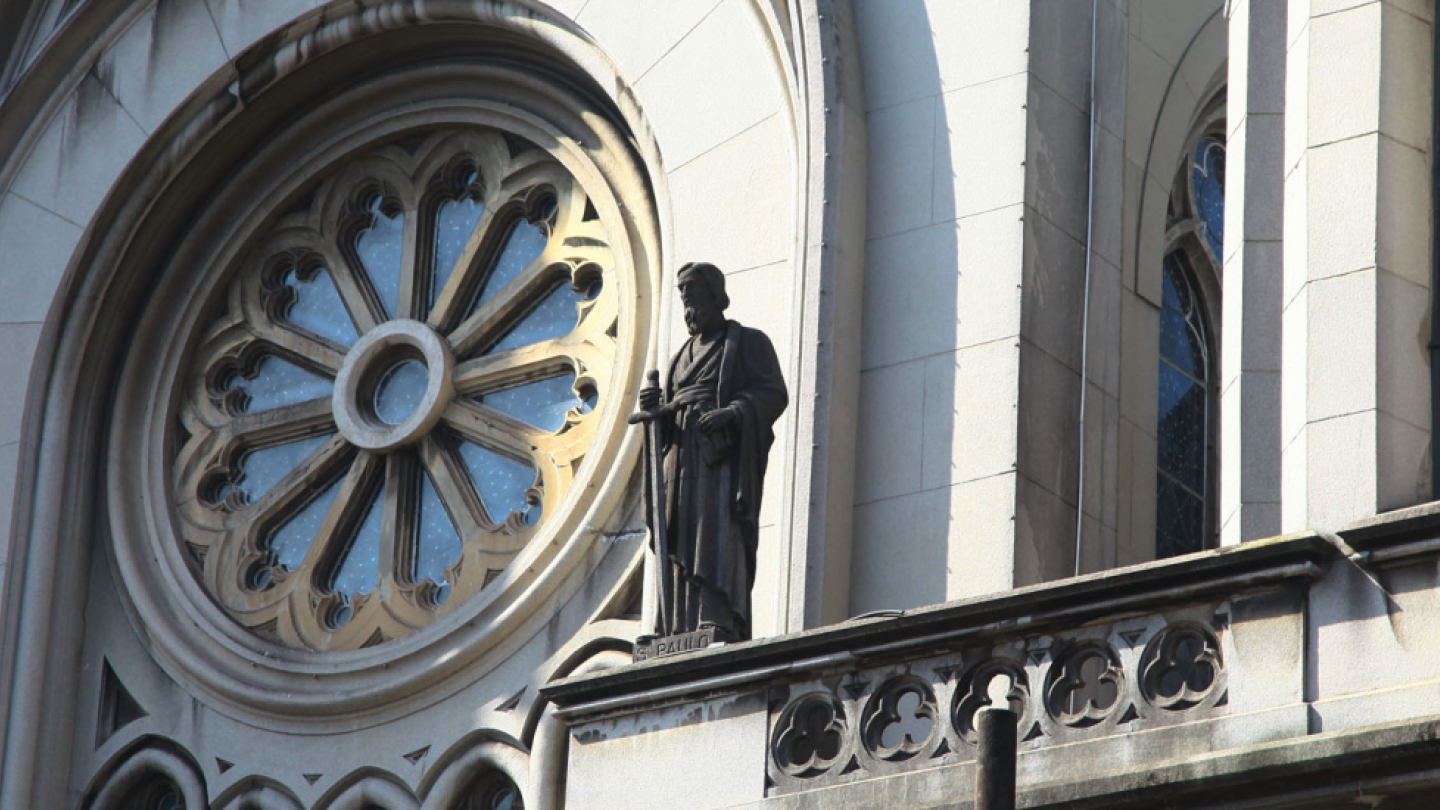
A imagem mostra um recorte da fachada de uma igreja de grande porte, com forte inspiração neogótica. O destaque principal é o grande vitral circular em forma de rosácea, com divisões radiais e detalhes ornamentais em pedra, típico desse estilo arquitetônico. A fachada é clara, em tons de bege e cinza, com linhas verticais marcantes e arcos altos que reforçam a sensação de imponência.

Cathedral

Top photo: Anderson Bianchi

Built in the Neo-Gothic style, it is the seat of the Parish of Our Lady of the Rosary. Construction of the cathedral began in 1909, it was inaugurated in 1924, but only completed in 1967. On the facade are two images in natural granite, representing Saint Peter and Saint Paul, and, above them, are the figures of the prophets Isaiah, Jeremiah, Ezekiel and Daniel, with four evangelists beside them.

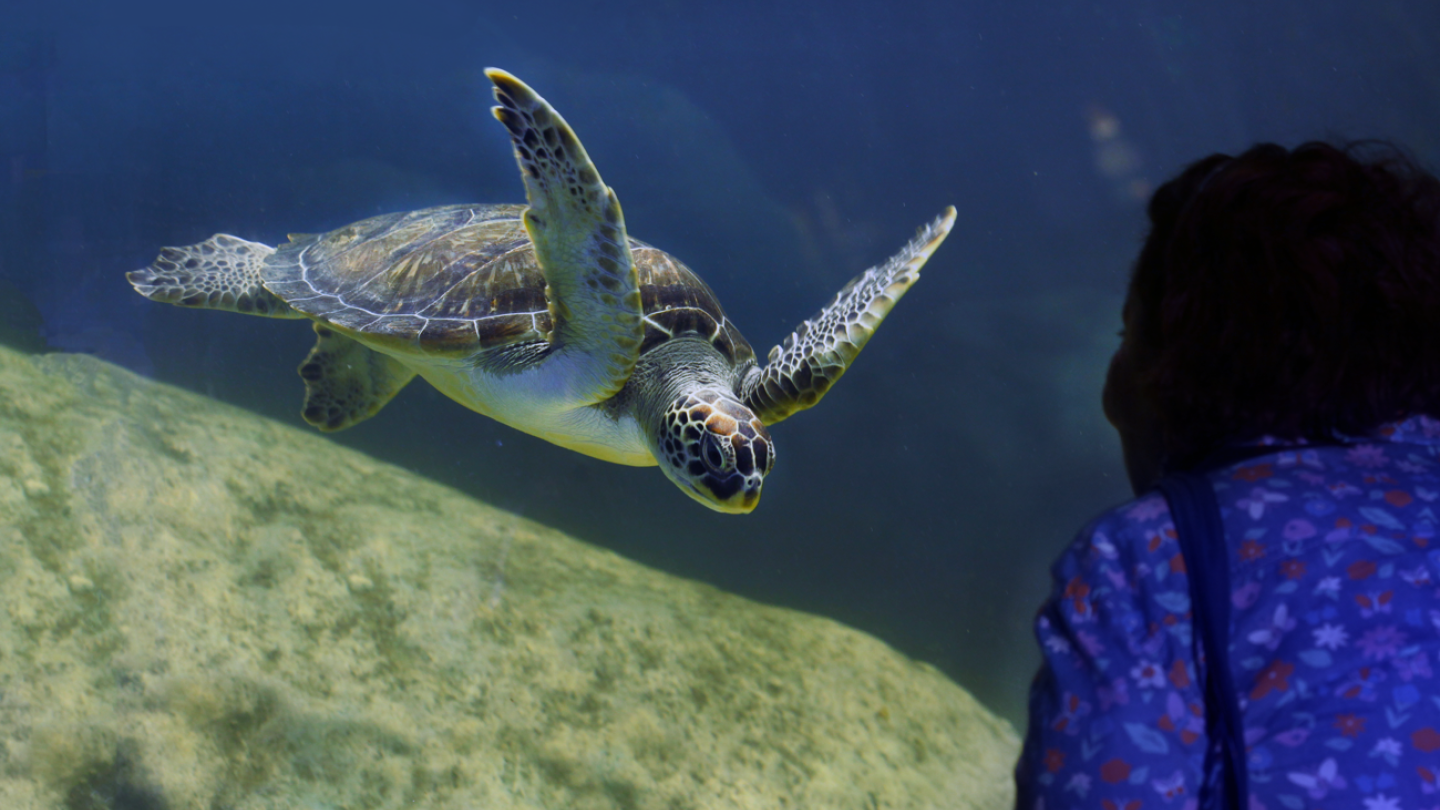
aquario de santos tanque das tartarugas

The Aquarium

Top photo: Anderson Bianchi


Enchanting generations for seven decades, the Santos Aquarium is the oldest in Brazil, and has featured in the Guinness Book of World Records since 1995. 

A favored spot for leisure and knowledge, this attraction is a pioneer in conservation projects concerning the sea and its creatures – it was the first Brazilian institution to carry out rescue and recovery of sea animals. The Aquarium occupies an area of 3000 m², 2214 of which are open to visitors.

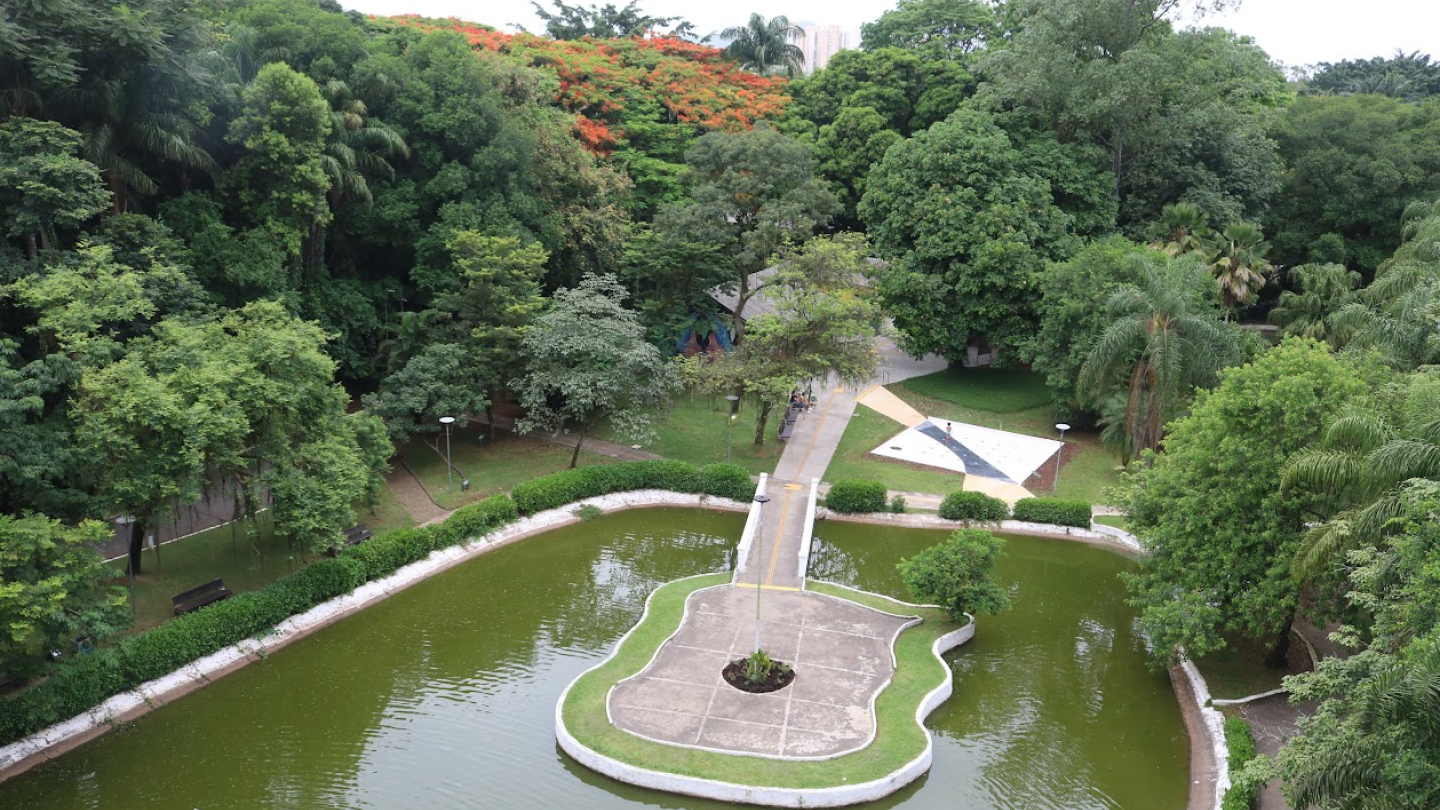
Vista aérea de um parque arborizado com lago em formato de violão. Uma passarela conecta o "corpo do violão" ao restante do parque. Ao fundo, há muitas árvores de diferentes tons de verde e algumas com flores alaranjadas. Caminhos pavimentados cruzam o parque, que também possui áreas gramadas e bancos. Ao centro da imagem, destaca-se o formato do violão desenhado no concreto da ilha.

Chico Mendes Botanical Gardens

Top photo: Raimundo Rosa


This is a park covering 90,000m², with more than 300 catalogued plant species, divided into 20 botanical collections, such as Amazon and Atlantic Forest, hardwood, 65 species of palm trees and endangered species. This diversity can be appreciated on a guided tour. The park offers a playground, as well as 100 meters of paved, well-lit paths, marked every 100 meters, facilitating sports activities. It also has wooden benches and tables, ideal for looking out over the three lakes, home to tilapia and carp, with frequent visits by aquatic birds. Work on the park began in 1925 in the old Municipal Nursery Gardens, located beside Santa Casa hospital, where City Hall gardeners planted the first seedlings and cuttings. In 1973, this work began to be carried out in the current grounds, in Bom Retiro, which then became the Botanical Gardens in 1994, when it started to offer conservation programs, especially for native Atlantic Forest species.

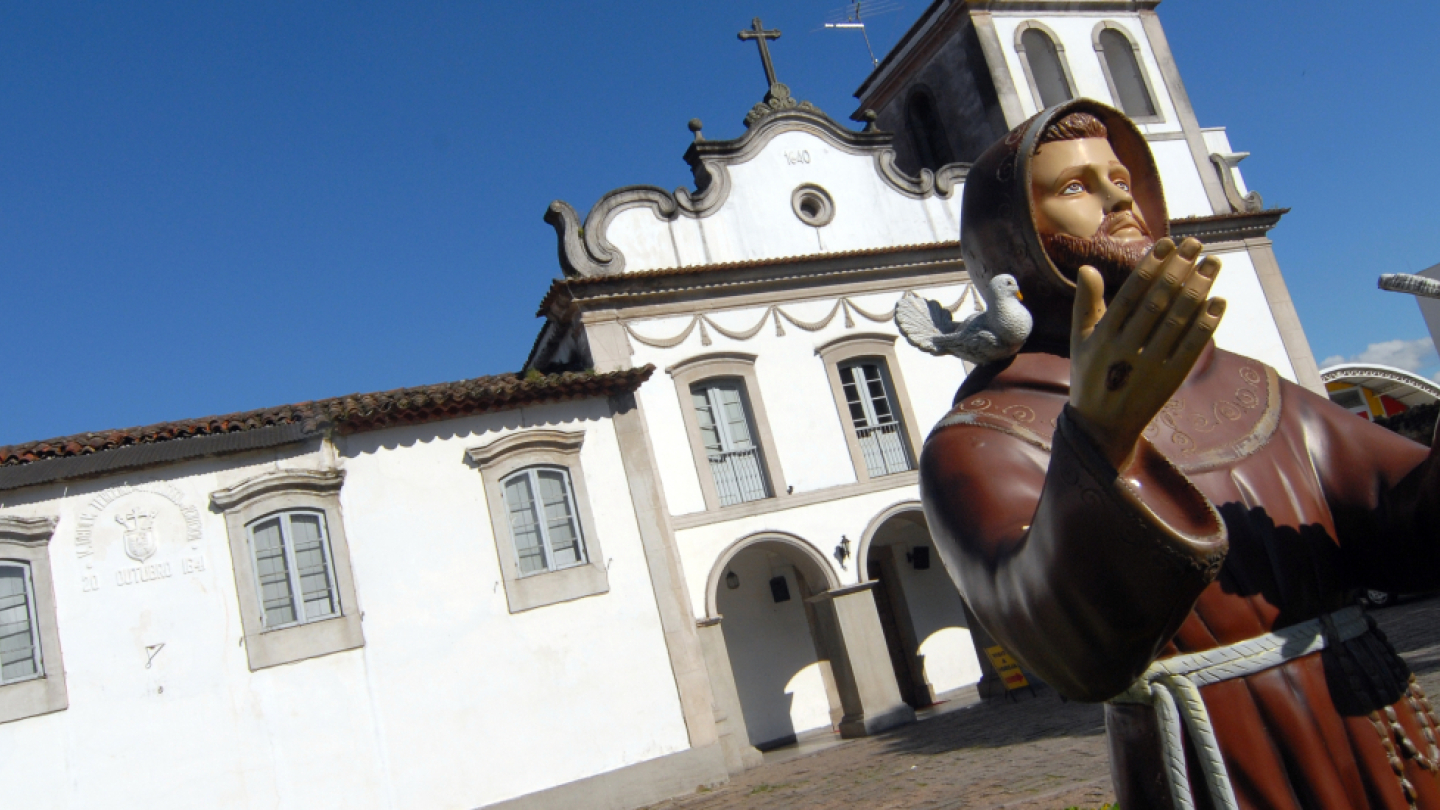
A statue of Saint Francis of Assisi in the foreground, with white birds on his hands and shoulders. Behind him, under a clear blue sky, stands a white colonial-style church, with tiled roofs and a bell tower

Saint Anthony of Valongo Sanctuary

Top photo: Tadeu Nascimento


Architecturally rich, with its history marked by a  miracle, the Santuário de Santo Antonio do Valongo, built in 1640, was one of the first churches in the country and the second oldest architectural complex in Santos. Baroque in style, its walls are covered in tiled murals from the 1930s and, on the high altar sits one of the few revolving thrones in the country, with the Holy Trinity on one side and on the other, the  monstrance for Perpetual Adoration.  The Chapel of the Venerable Third Order of Saint Francis, built in 1691, is annexed to the Church, and houses the life-size statue of Saint Francis, in Baroque style, praying before a mystic Christ  with Six Wings.


José Bonifácio Palace

Top photo: Tadeu Nascimento


The seat of Santos City Hall, the Palácio José Bonifácio honors one of the most illustrious Santos residents, José Bonifácio, the Father of Brazilian Independence. With statues of Mercury and Minerva  at the entrance, the building, constructed during the coffee boom years, is one of the few public buildings in São Paulo State that still has its original structure and most of its décor preserved. 

The Palace is full of symbolism, which refers to the philosophical past and historical importance of José Bonifácio de Andrada e Silva. Inaugurated in January, 1939, after two years of building work, it is the fifth seat of Legislative Power – and the first to have its own building. Occupying a site of 2847.15m², the seven-story building weighs around 12,000 tons and was constructed with 2,050,000 bricks.

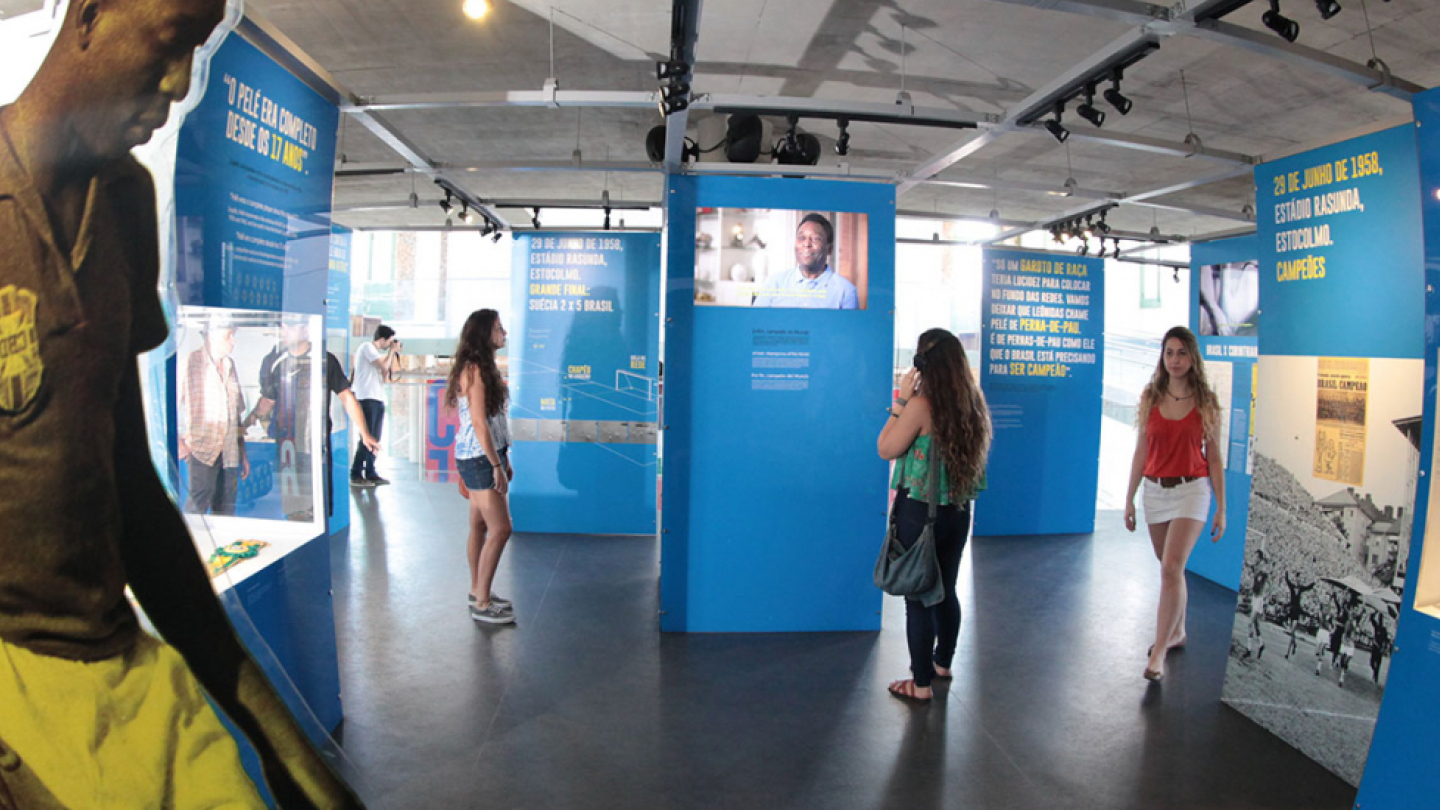
Interior de uma exposição sobre futebol: à esquerda, escultura em tamanho real de jogador com uniforme da Seleção Brasileira. No espaço, visitantes observam painéis azuis com textos, fotos e objetos históricos, em destaque a Copa de 1958.

Pelé Museum

Top photo: Anderson Bianchi


Installed inside the 19th -century Casarões do Valongo, which were damaged by two fires and then completely rebuilt, the Pelé Museum exhibits shirts, football boots, balls, honors and awards, trophies, a football made of socks and a shoeshine box, among other items from the personal collection of "The Athlete of the 20th Century". There are 2,354 items in all, to be displayed in rotation, according to exhibition theme (the first is "4 Cups and 1 King). In the museum's 4,134 square meters the public can also enjoy audio presentations, films, photos and texts about the history of the "King" As well as this, there is an interactive space where visitors can test their ball skills and even compare them to Pelé's performance.

Folder


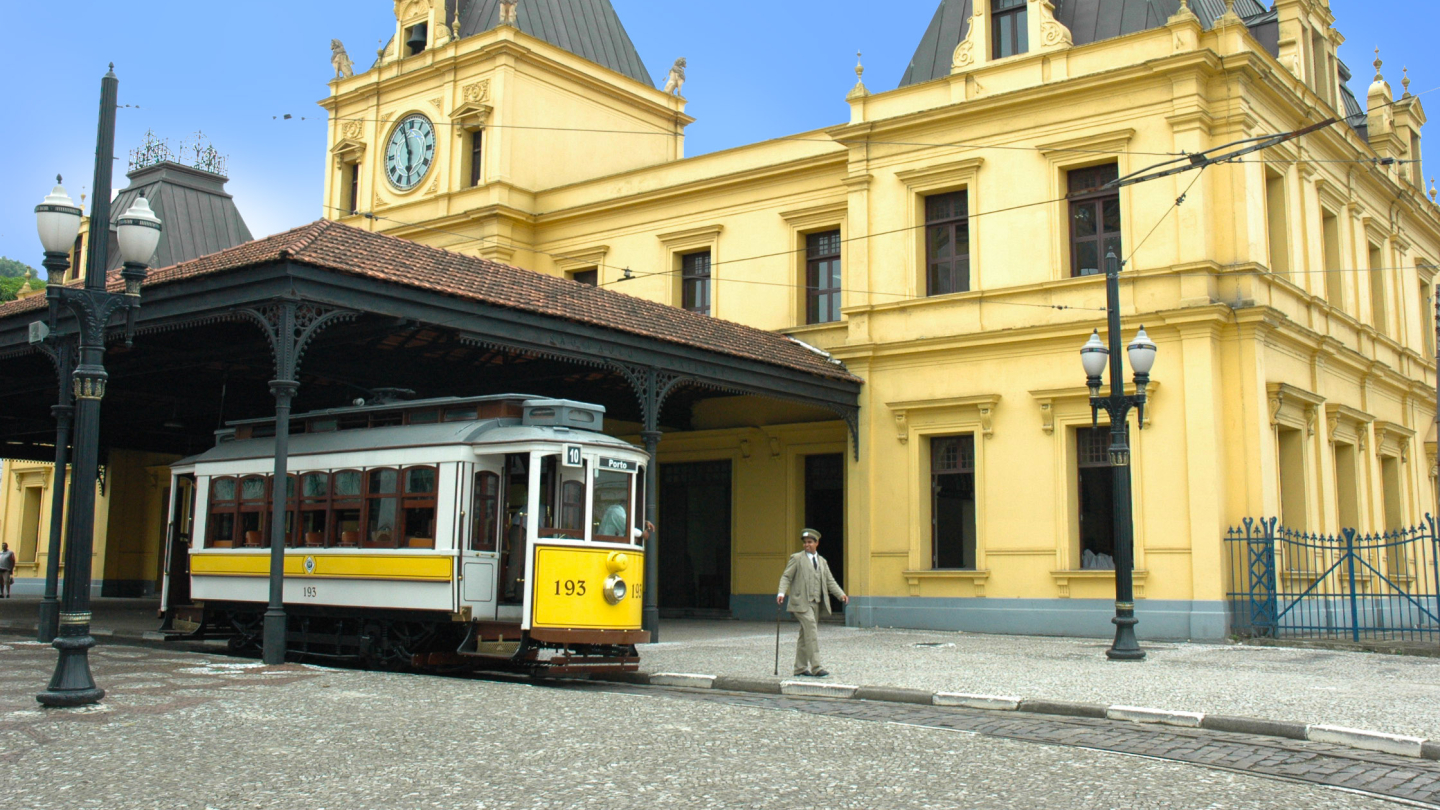
Bonde branco e amarelo em frente à Estação do Valongo no centro histórico de Santos

Tourist Streetcar Ride

Top photo: Francisco Arrais


The Tourist Streetcar ride offers a true voyage back in time via 40 points of historical and cultural interest. With departures from Valongo station – built in 1867 for the first railroad in São Paulo – the electric streetcars from the 19th and 20th centuries travel through the Historic Center, accompanied by a tour guide. 


They are original vehicles, originating in Scotland, Portugal and Italy, making Santos the first Living Streetcar Museum in Latin America. Drivers and conductors wear replicas of the original uniform from the time when the streetcars were the city’s main means of transport. 

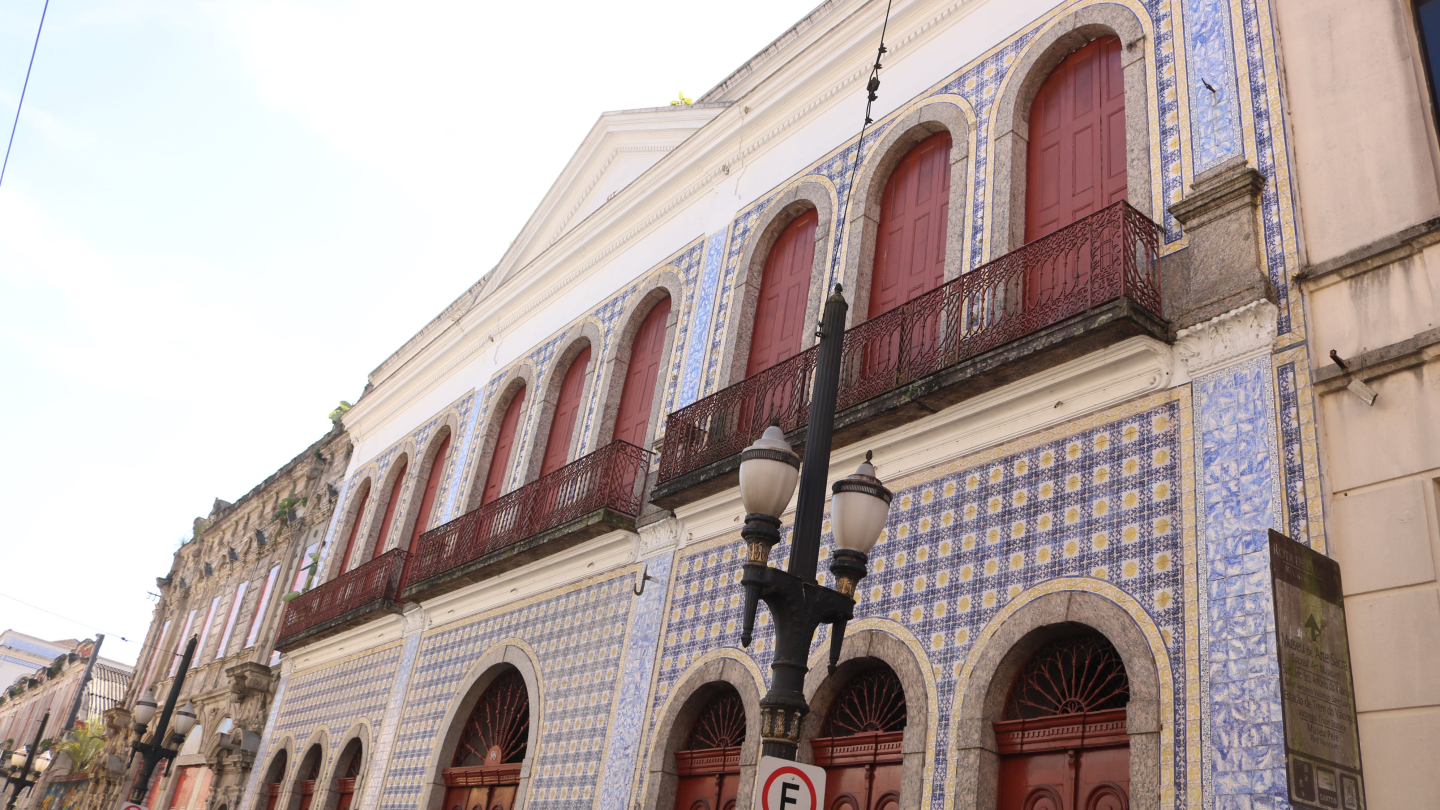
A fachada de um prédio histórico de dois andares, com a frente coberta por azulejos brancos e azuis. No andar de cima há janelas com venezianas e portas de madeira avermelhada, e no de baixo há arcos com portas de madeira. A frente é adornada com sacadas de ferro forjado e há um poste de luz na frente.

House with tiled façade

Top photo: Carol Fariah


One of the most important architectural works in Santos, the House with Tiled Façade was built in 1865 as a residence and warehouse for Portuguese commander Manoel Joaquim Ferreira Netto (1808-1868).

A cultural space since 2007, hosting exhibitions, benefit events and cultural presentations, it frequently serves as a location for shooting commercials, soap operas, mini-series and short and full-length feature films.