Itabatatinga Plantation

Top photo: Disclosure


In an area of 22 hectares, Itabatatinga is made up of native forest, with special mention for the palm trees and banana plantations, as well as the natural elevations partially covered by vegetation. Between 1900 and 1935, this spot – 48 hectares at the time – belonged to Spanish builder João Esteves Martins, who was responsible for several plantations.

Pining Lake

Top photo: Marcelo Martins


With an area of around 20.500m², this is a place of leisure and a meeting point for fishing enthusiasts. It boasts a playground and kiosks, equipped with individual barbecue facilities and stone tables, for use at no charge when booked in advance with the Regional dos Morros (tel. 13 3258-5111).


Diana Island

Top photo: Raimundo Rosa


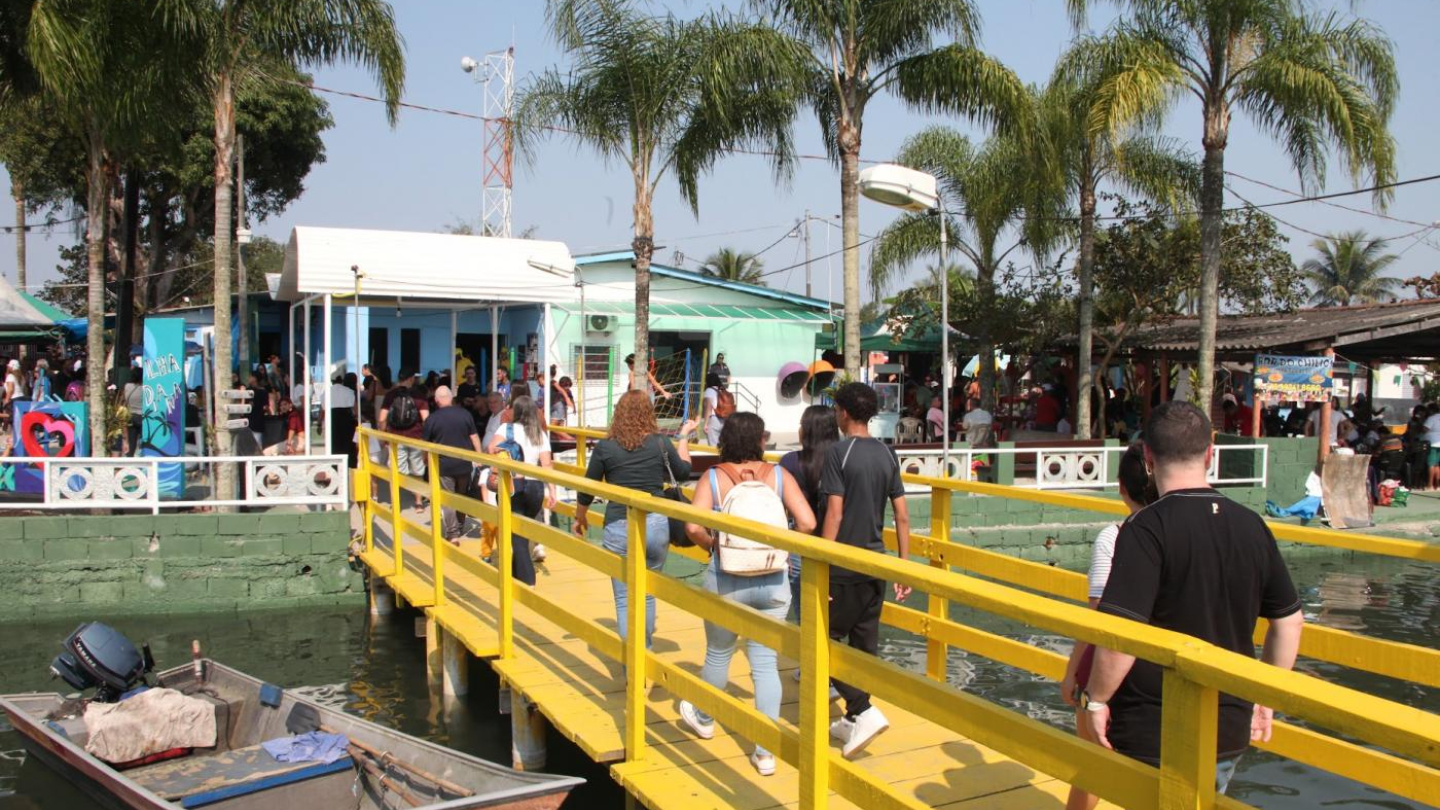
Sail, delight in nature and watch the comings and goings in the port, get to know local culture and even try peixe azul-marinho (navy-blue fish), a typical local dish of fish accompanied by green banana, rice and salad. 


En route to the island from the boat station behind the Customs House, it is possible to observe the fauna and flora, with typical mangrove swamp species such as crabs and mollusks, as well as birds, for example red ibis, herons, wood rails, spoonbills and egrets. Raccoons and otters are the commonly spotted mammals. 


Anyone who wishes to can join the Vida Caiçara, Project, which takes a group of 15 to 40 people to Diana Island daily. Trips must be arranged at least three days in advance by phone (13) 99741-8690.  

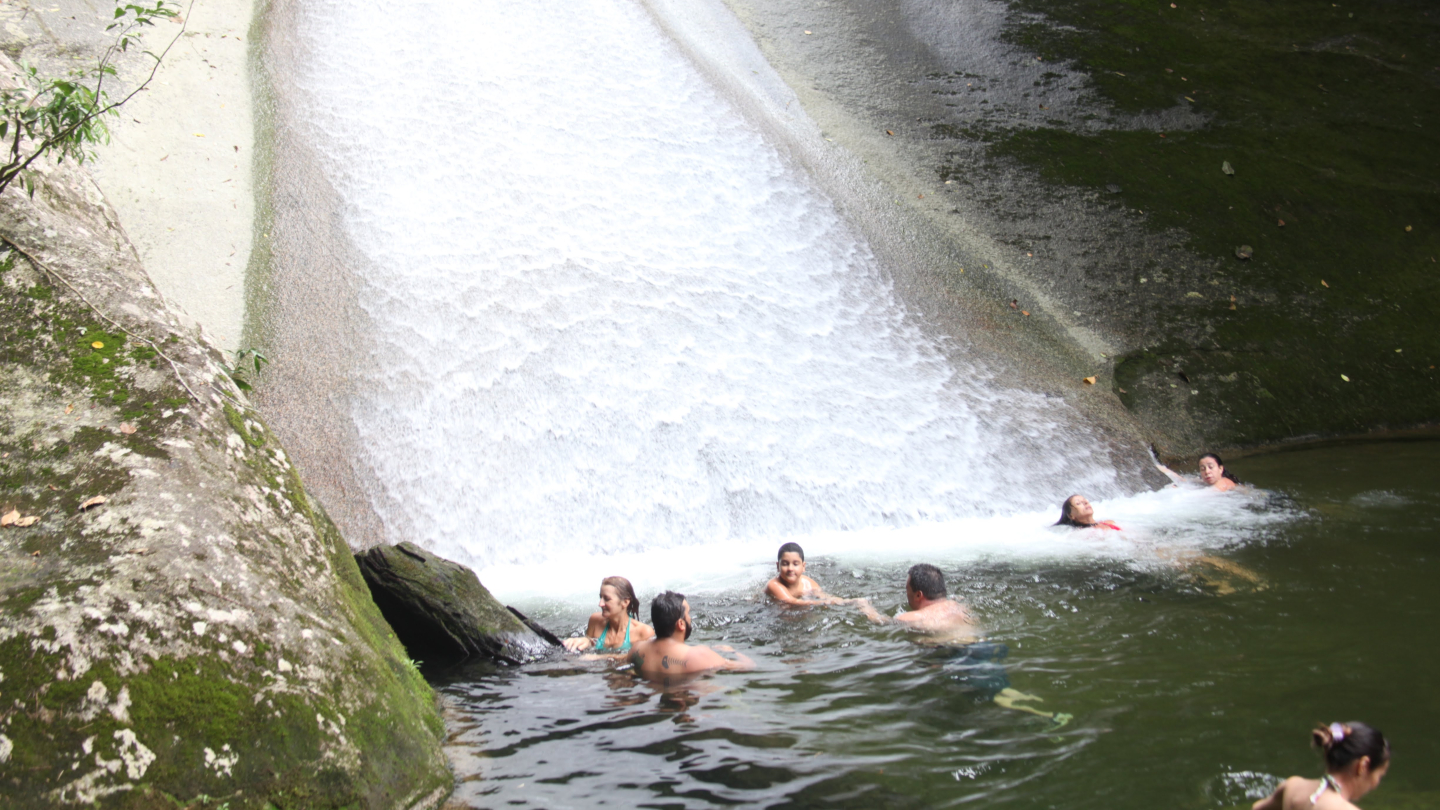
Pessoas se divertem em cachoeira com tobogã natural formado por pedras e água corrente

Cabuçu Farm

Top photo: Ronaldo Andrade


The high point on this route is Cabuçu Waterfall, with a drop of about 10 meters, a natural water slide falling onto an enormous rock, forming a natural pool. On the way, visitors need to cross crystal-clear streams.

Diana Ranch

Top photo: Antonio Vargas


With stories and natural beauty at every turn, Diana Ranch sits in a dazzling rural landscape, where visitors have a close-up view of several exotic plants cultivated there, the worm farm and worm compost production.


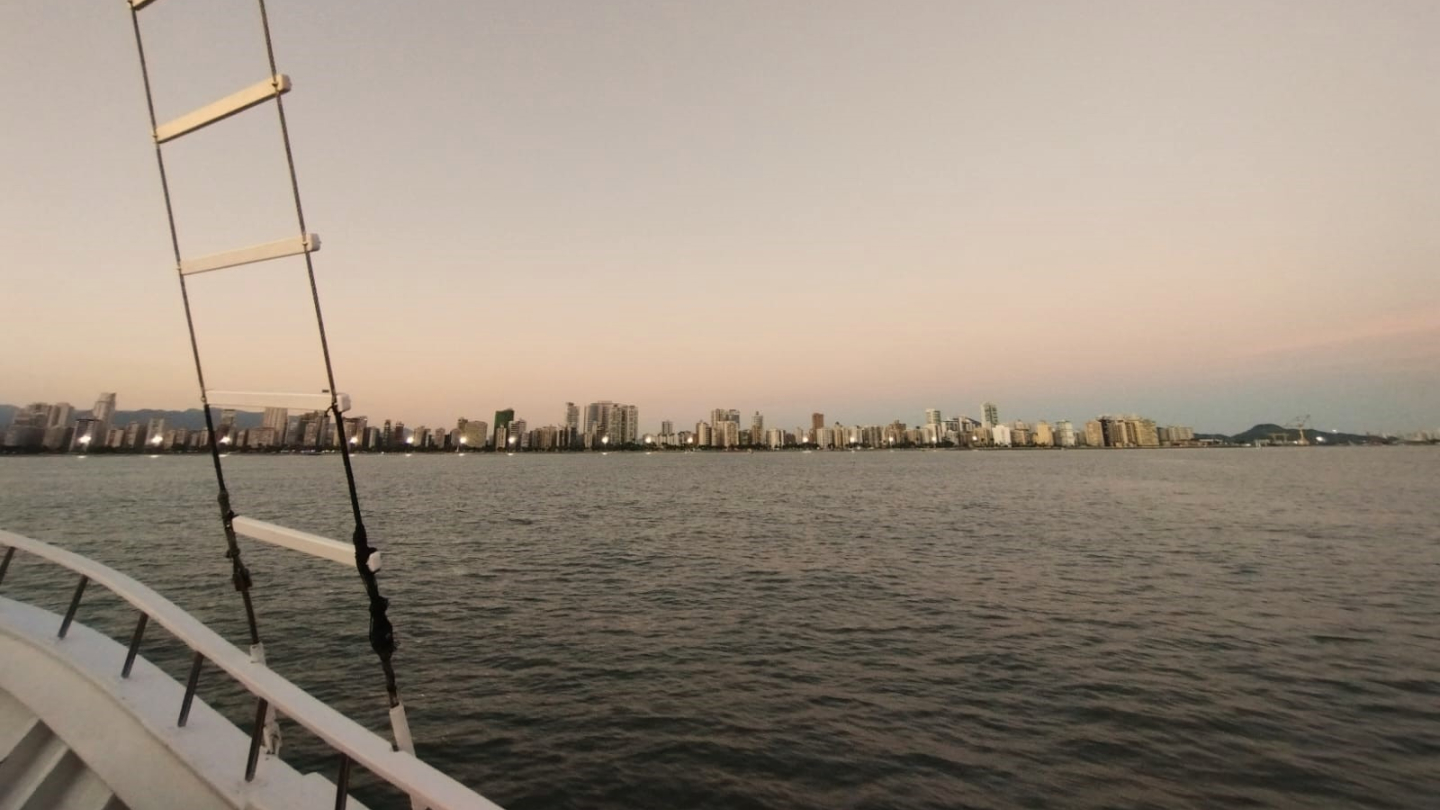
Vista dos prédios da orla de Santos, ao entardecer, e parte de uma escuna em primeiro plano

Edgard Perdição Bridge - Schooners

Top photo: Marcelo Martins


Trips set off on diverse routes in Santos Bay, taking in Barra Fortress; Palmas Island; Góes, Cheira Limão and Sangava beaches, and Urubuqueçaba Island. Highlights on the trip through the Estuary and Bertioga channel are the port and warehouses, the old Codesp (Docks Company of the State of São Paulo) buildings, Barnabé Island, the old Santos Air Base and Diana Island. Genesis, Turismo no Mar and Bravotur travel agencies offer routes that vary from 1hour 30 minutes to 3hours 45 minutes.

Laje de Santos

Top photo: Vanessa Rodrigues


45 km from the beach, this is considered to be the best diving spot in São Paulo state, and the third in Brazil. With its granite slab formation resembling a whale, it is 550m long, 33m high and 185 m wide. This is the place for an unforgettable dive: crystal-clear waters, temperatures of around 23º, visibility up to 30 meters and impressive fauna. Divers and underwater photographers can see colorful shoals, manta rays, turtles, grouper and even dolphins. Depending on the time of year, and luck, you might see sharks and whales.

The Shore and Gardens

The city’s main beauty spot, these 7km of spotless beaches are fringed by the largest beachfront garden in the world (According to the Guinness Book of Records, 2000), and approximately 7.9 kilometers of cycle lanes. 5.335 meters long and 45 to 50 meters wide, the gardens boast 815 flower beds, housing several perennial species, predominantly yellow (Hemerocalis flava) and white (Spathiphiphyllum sp) lilies; red canna lilies (Canna indica), and white, yellow and multi-colored chrysanthemums (Crysanthemum sp). Engineer Saturnino de Brito first had the idea to build the gardens in 1914. In the following decade, gardens began to appear in front of the hotels, and in the 1930s the first stretch of beachfront gardens was built. The present curved design dates from 1960.

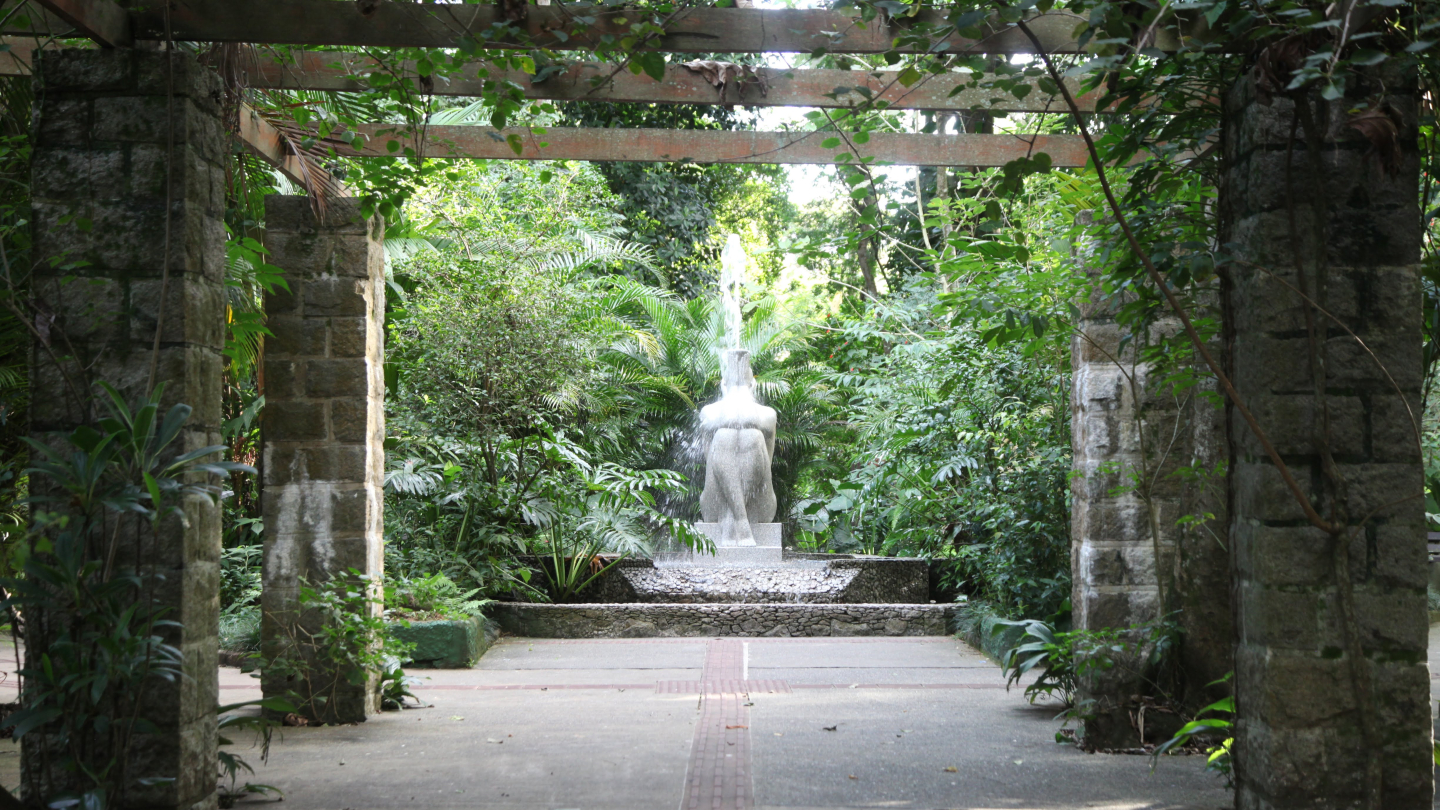
Fonte em forma de escultura feminina cercada por vegetação densa em um jardim tropical

Orchid Garden

Top photo: Marcelo Martins


A zoological garden reproducing Atlantic Forest vegetation, the Municipal Orchid Garden boasts around 3500 orchids from 120 species, the vast majority fixed on trees. Inaugurated in 1945, it was the world’s largest open-air garden of it type at the time, and is currently the second most popular tourist attraction Santos, behind only the Aquarium.

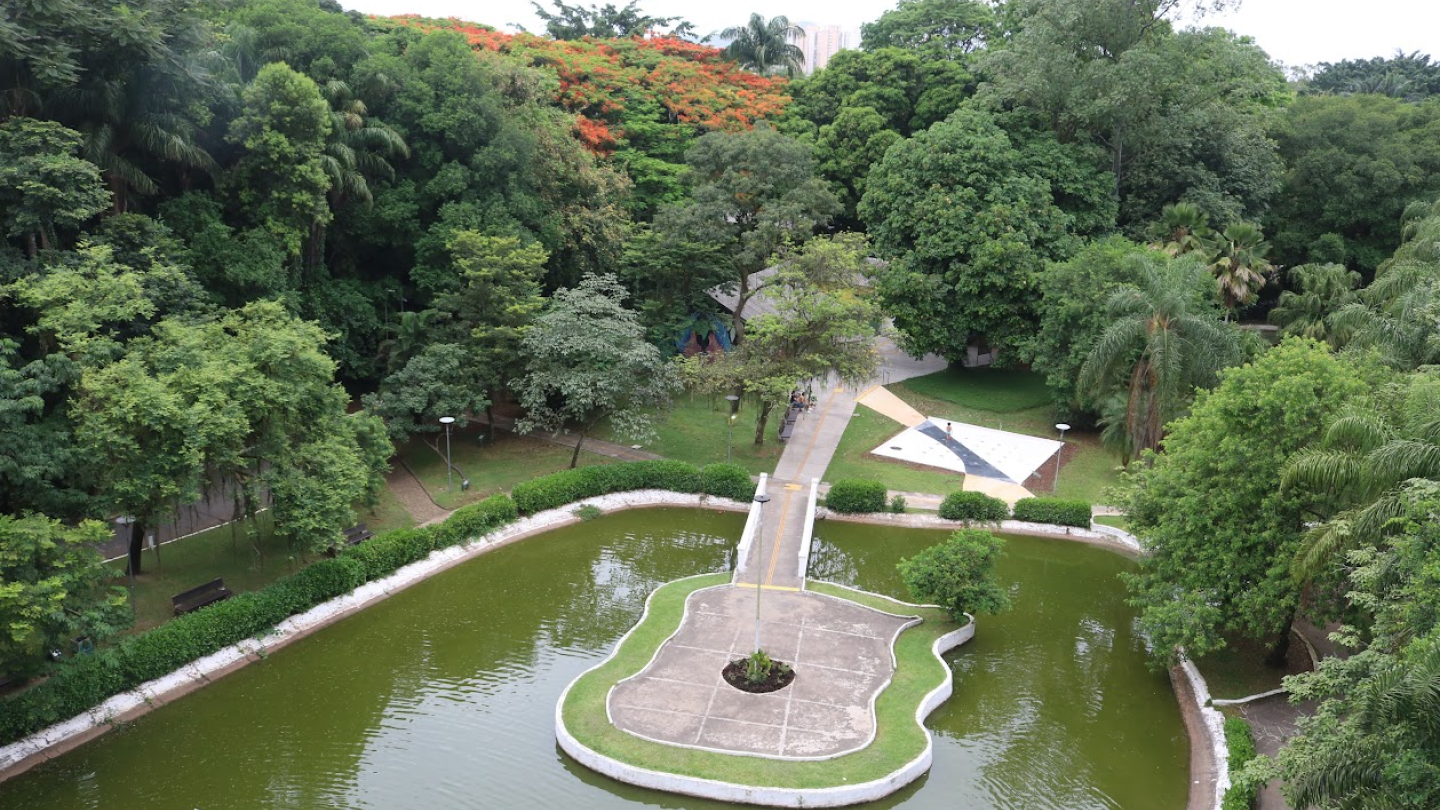
Vista aérea de um parque arborizado com lago em formato de violão. Uma passarela conecta o "corpo do violão" ao restante do parque. Ao fundo, há muitas árvores de diferentes tons de verde e algumas com flores alaranjadas. Caminhos pavimentados cruzam o parque, que também possui áreas gramadas e bancos. Ao centro da imagem, destaca-se o formato do violão desenhado no concreto da ilha.

Chico Mendes Botanical Gardens

Top photo: Raimundo Rosa


This is a park covering 90,000m², with more than 300 catalogued plant species, divided into 20 botanical collections, such as Amazon and Atlantic Forest, hardwood, 65 species of palm trees and endangered species. This diversity can be appreciated on a guided tour. The park offers a playground, as well as 100 meters of paved, well-lit paths, marked every 100 meters, facilitating sports activities. It also has wooden benches and tables, ideal for looking out over the three lakes, home to tilapia and carp, with frequent visits by aquatic birds. Work on the park began in 1925 in the old Municipal Nursery Gardens, located beside Santa Casa hospital, where City Hall gardeners planted the first seedlings and cuttings. In 1973, this work began to be carried out in the current grounds, in Bom Retiro, which then became the Botanical Gardens in 1994, when it started to offer conservation programs, especially for native Atlantic Forest species.