Tuiuti mansion

Also known as Mauá Palace, this is the oldest residential  building in Santos, constructed in 1818, with an area of  3000m², and renovated many times, with no great alterations to its architectural features. 

   
It was a mansion for traditional local families, among them those of politicians such as  Colonel José Antonio Vieira de Carvalho, governor of Itapema Fort and also judge, local councilor and president of the Council Chamber, when this position corresponded to that of mayor. It was in this building, on 4 March 1822, that the most opulent Santos Ball of the 19th century was held, named ‘Meteor Party’.

  
 Nowadays, the space focuses on cultural and commercial events and activities, has also been the headquarters of Mauá, Santos and Mercantile Banks, and was military quarters for Imperial troops during the Paraguay War. 

   
In 1887, North-American export company Hard Rand acquired the building, extended the property, and began to operate there from 1922. In the 1980, the mansion was the location for filming the TV Bandeirantes soap opera ‘Os Imigrantes’(The Immigrants).
Pining Lake

Top photo: Marcelo Martins


With an area of around 20.500m², this is a place of leisure and a meeting point for fishing enthusiasts. It boasts a playground and kiosks, equipped with individual barbecue facilities and stone tables, for use at no charge when booked in advance with the Regional dos Morros (tel. 13 3258-5111).


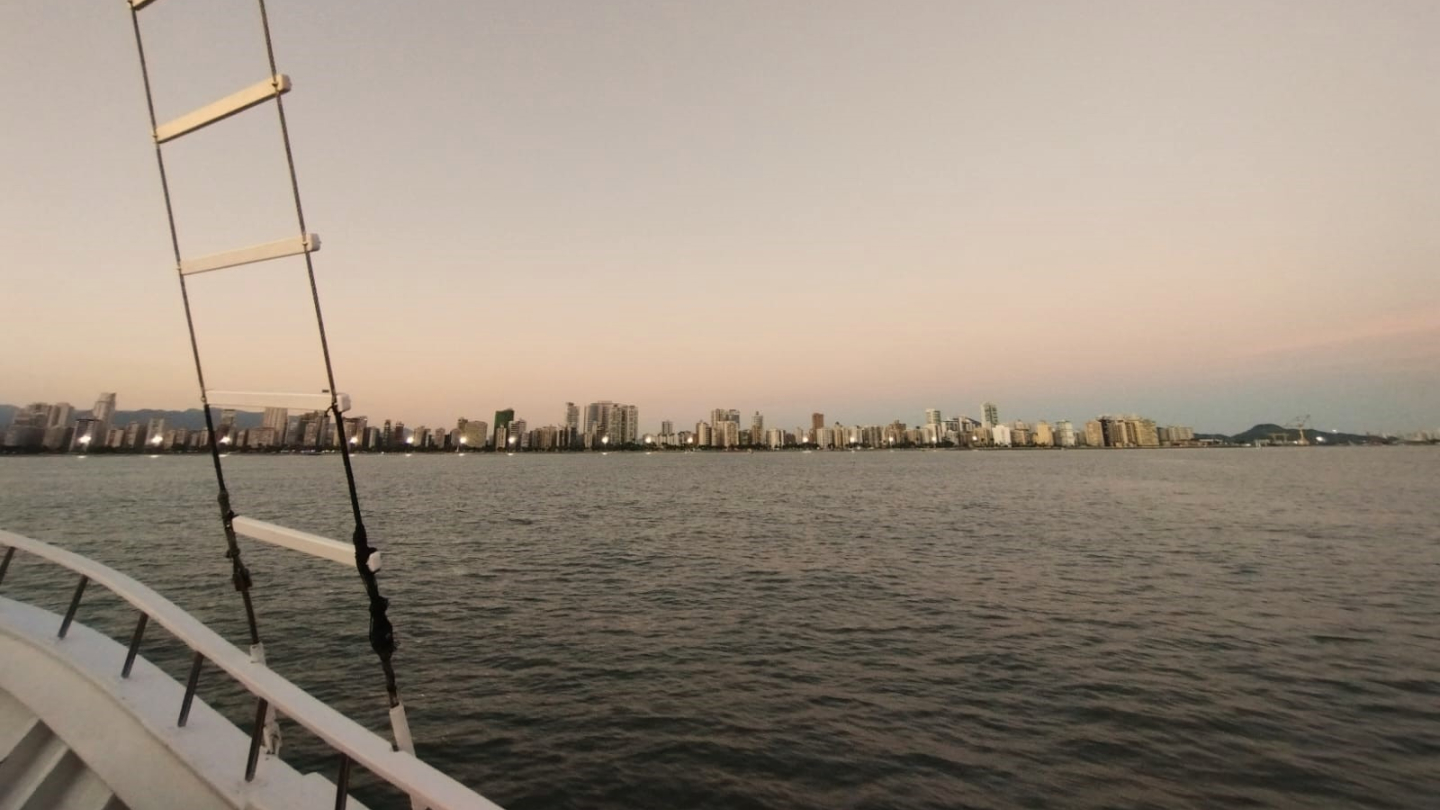
Vista dos prédios da orla de Santos, ao entardecer, e parte de uma escuna em primeiro plano

Edgard Perdição Bridge - Schooners

Top photo: Marcelo Martins


Trips set off on diverse routes in Santos Bay, taking in Barra Fortress; Palmas Island; Góes, Cheira Limão and Sangava beaches, and Urubuqueçaba Island. Highlights on the trip through the Estuary and Bertioga channel are the port and warehouses, the old Codesp (Docks Company of the State of São Paulo) buildings, Barnabé Island, the old Santos Air Base and Diana Island. Genesis, Turismo no Mar and Bravotur travel agencies offer routes that vary from 1hour 30 minutes to 3hours 45 minutes.

Maritime Museum

Top photo: Susan Hortas


The Maritime Museum boasts one of the main collections of submarine archeology and maritime history in Brazil. To the sound of old sea shanties, visitors witness a simulation of cannon fire, look at models of captains and pirates and enjoy seeing relics salvaged from 18th and 19th-century vessels, including pirate ships and the Titanic. 

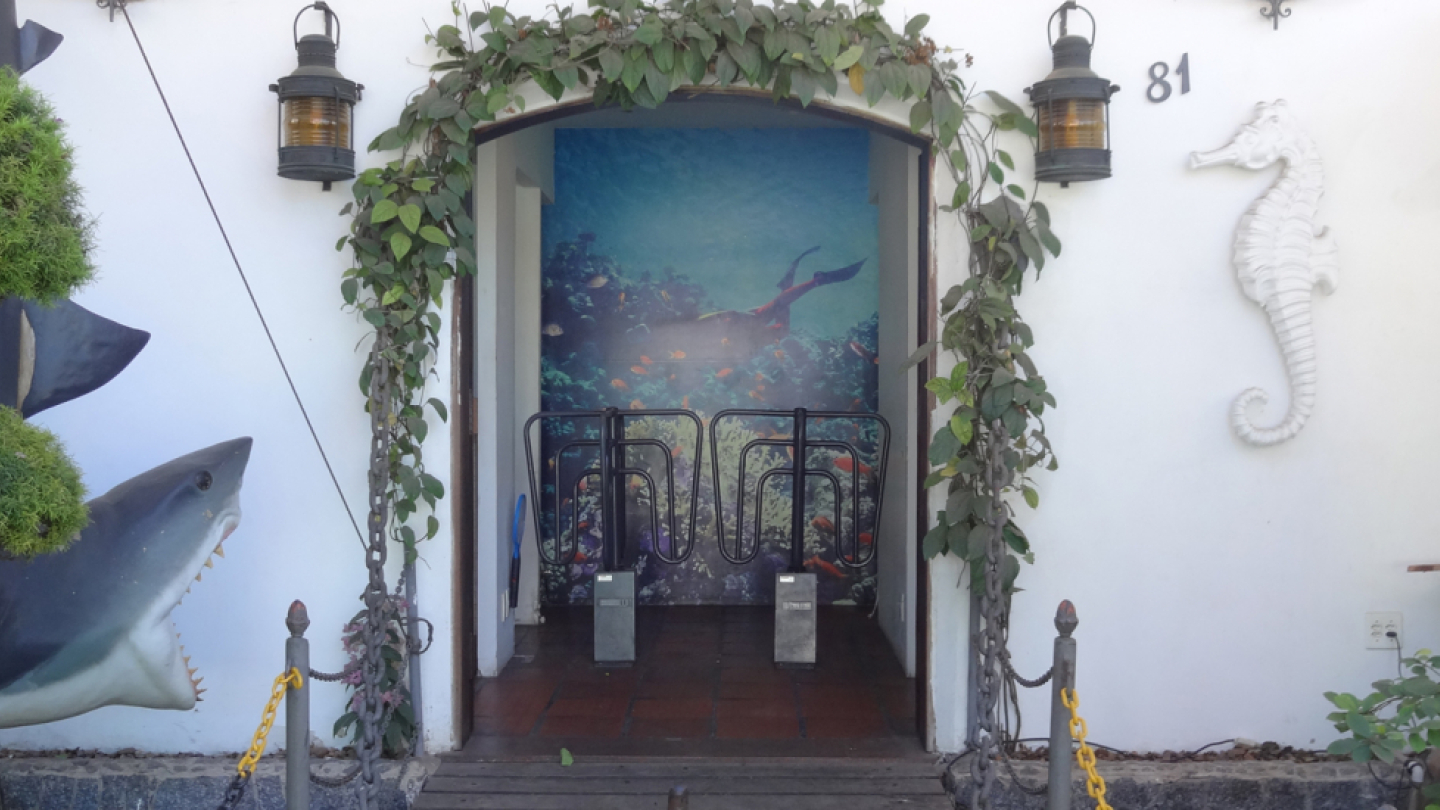
The entrance to the museum, inaugurated in December 2005, is decorated with ship’s flags and a life-size model of a pirate. Inside you can find models of famous vessels, a collection of medals of varying nationalities and 25 oil paintings by Carlos Alfredo Hablitzel, which depict important Brazilian and foreign naval episodes. Among these is the first naval battle in Santos Bay, in 1580. 

A imagem mostra a entrada de um espaço temático com decoração marítima. No centro há um portal arqueado adornado com trepadeiras verdes, conduzindo a um pequeno hall onde existem catracas de acesso. Ao fundo, uma parede apresenta uma grande imagem submarina com peixes coloridos e um mergulhador, criando um clima de “mundo subaquático”.

Sea and Maritime Museum

Top photo: Francisco Arrais

With a large collection of marine biology from Latin America, it possesses the largest collection of taxidermied sharks in the country, including the embryo of a specimen with two heads and fossilized teeth of a megalodon, a prehistoric animal extinct for 30 million years.

It also exhibits a whale shark; a sunfish, the largest bony fish in the world; seabirds and shells weighing over 100 kilos. A large part of the collection comes from abroad.

The Maritime Museum boasts one of the main collections of underwater archaeology and maritime history in Brazil. To the sound of old sailors' songs, visitors witness simulated cannon fire, contemplate models of pirates and captains, and appreciate relics recovered from 18th and 19th-century vessels, including pirate ships and the Titanic.

The entrance to the museum, which opened in December 2005, is adorned with ship flags and a life-size pirate figure. Inside, there are scale models of famous vessels, a collection of medals from various nationalities, and 25 oil paintings on canvas by Carlos Alfredo Hablitzel, depicting important Brazilian and foreign naval episodes, including the first naval battle in the bay of Santos in 1580.

De Vaney Sports Memorial Center

Top photo: Marcelo Martins


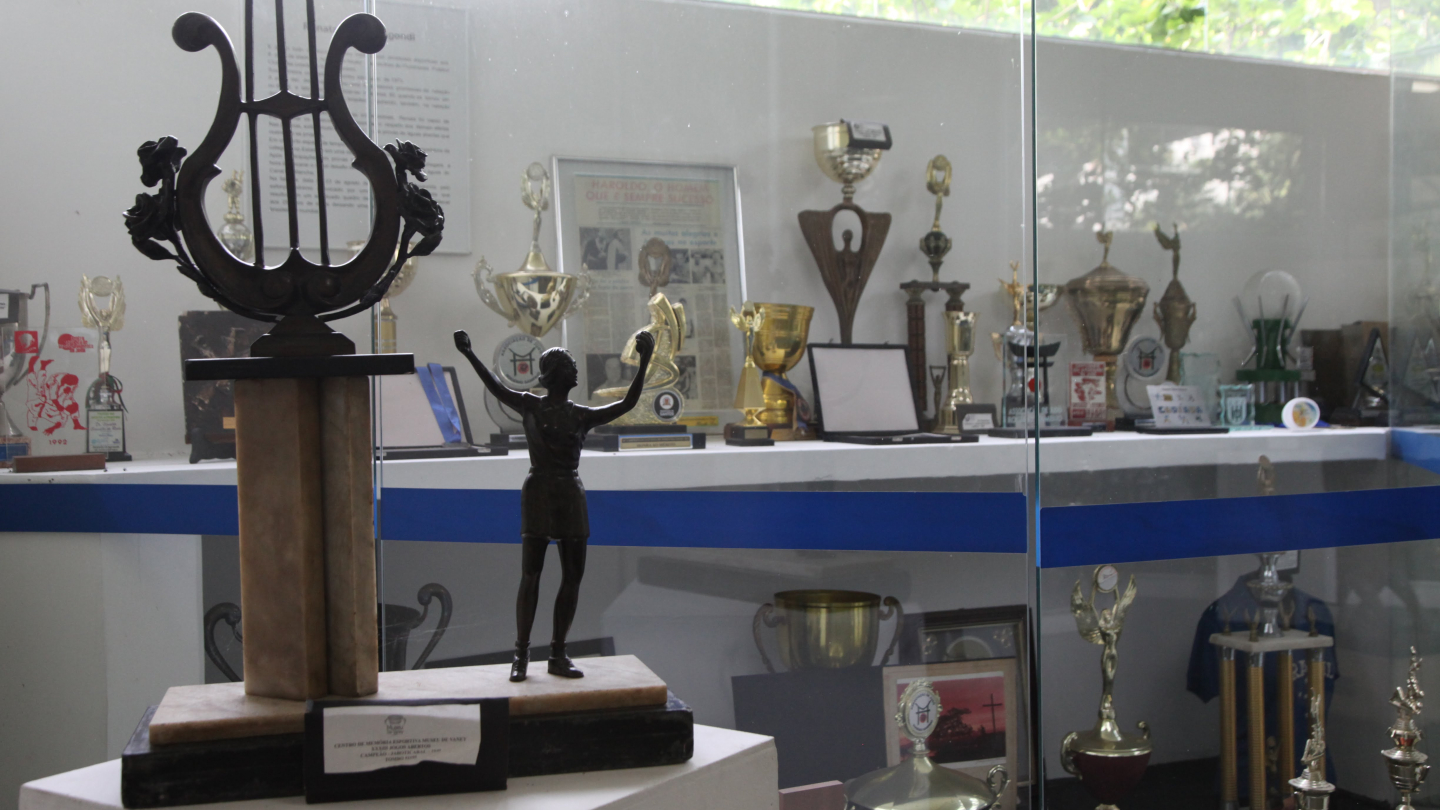
Created to recover, witness and preserve the sports history of Santos – considered the sportiest municipality in Brazil since 1955 – the De Vaney Sports Memorial Center boasts a collection of more than 500 trophies won from 1939.

The museum also houses photographic and personal collections with more than a thousand images, library and sports newspaper collection with journalistic material organized according to subject and sport. There are also records of veteran athletes, CDs and DVDs, research material, statements, auditorium for talks and small events. The museum offers guided tours, publishes information and has a choir of veteran athletes, which meets weekly. 

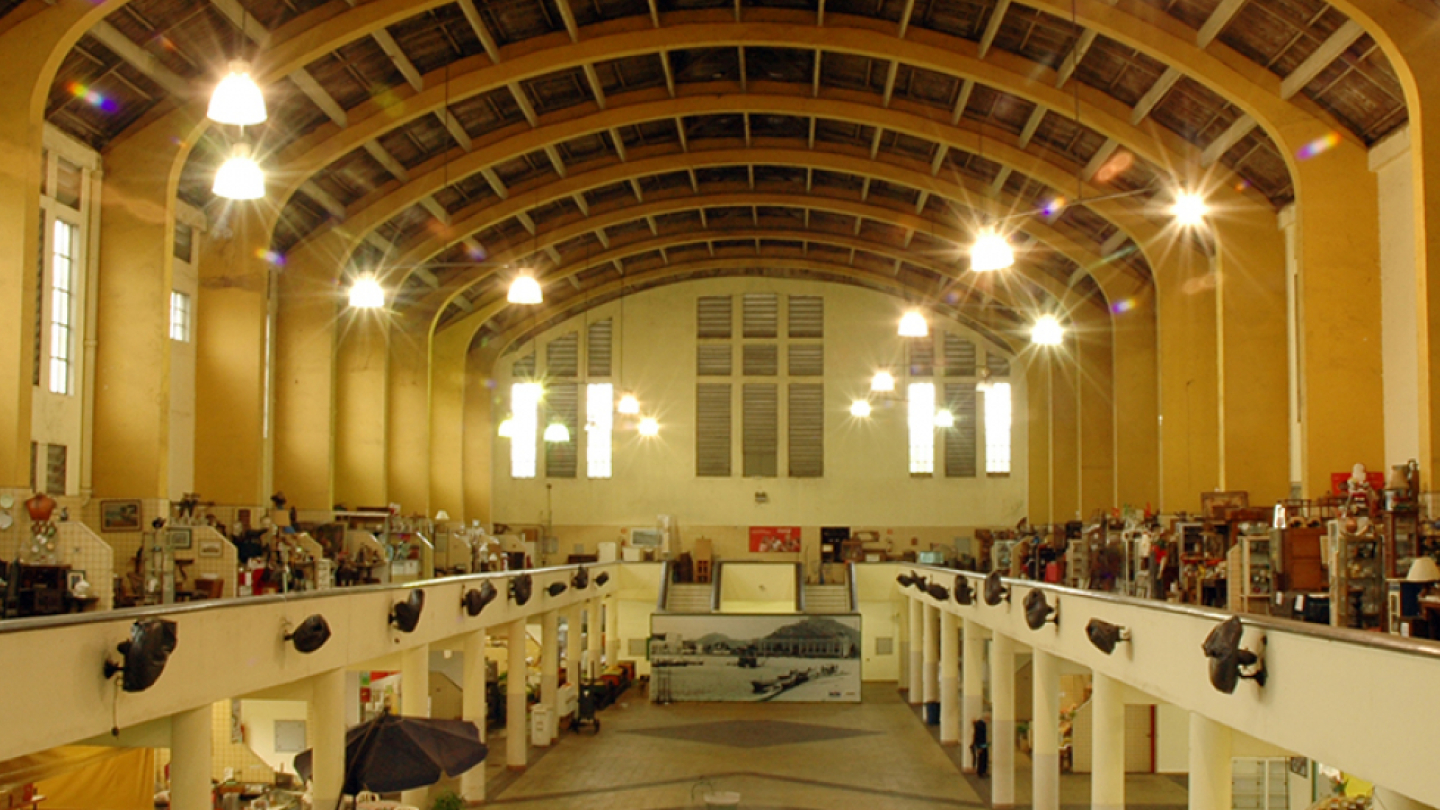
Interior del Mercado Municipal de Santos, con techo de gran altura, techo abovedado e iluminación colgante. A los lados del entresuelo, los puestos exhiben variados productos y antigüedades

Municipal market

Top photo: Francisco Arrais


Built in 1902 to house two establishments of the type that operated in the city, the Mercado Municipal was originally castellated in style. Rebuilt in 1947, it was extended in 1955, when it gained a second floor and a fish pavilion.

The market boasts 54 stalls selling meat, fruit and vegetables, groceries, fish and Japanese items, all  offering products wholesale and retail, in addition to a restaurant. It holds regular events, craft fairs, festivities and festivals.

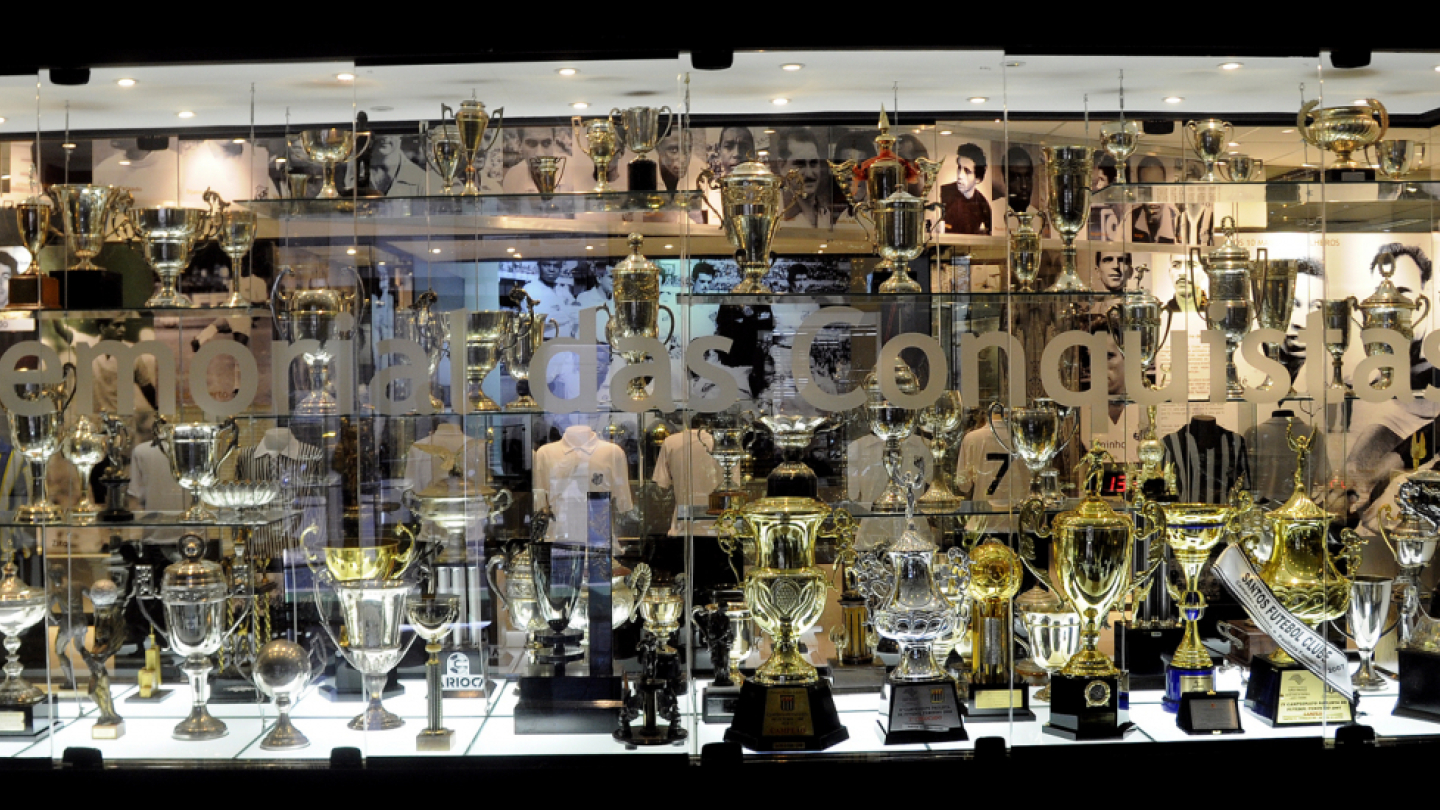
Vitrine ampla repleta de troféus de diferentes tamanhos e formatos, todos brilhantes e organizados em prateleiras de vidro. Ao fundo, fotos antigas em preto e branco compõem o cenário do memorial esportivo

Santos F.C. Trophy Hall and Memorial Museum

Top photo: Tadeu Nascimento


During a visit to the Santos Football club Trophy Hall and Memorial Museum, fans – and even those who are not so keen on football! – can learn about some of the many incredible feats of a team that stopped a war, scored more goals and is a renowned production line of international football cracks.

There are 380m² for visitors to have fun and learn about the legends of the most famous ‘vila’ in the world: Vila Belmiro, the neighborhood that is home to the Urbano Caldeira Stadium, and Santos FC. Installed on the ground floor of the stadium since November 17, 2003, the  Memorial Museum presents eternal moments of the great idols of all time, some with their own spaces, like Pelé and Neymar, as well 600 trophies, photographs, videos, prizes, banners and temporary exhibitions.

The Shore and Gardens

The city’s main beauty spot, these 7km of spotless beaches are fringed by the largest beachfront garden in the world (According to the Guinness Book of Records, 2000), and approximately 7.9 kilometers of cycle lanes. 5.335 meters long and 45 to 50 meters wide, the gardens boast 815 flower beds, housing several perennial species, predominantly yellow (Hemerocalis flava) and white (Spathiphiphyllum sp) lilies; red canna lilies (Canna indica), and white, yellow and multi-colored chrysanthemums (Crysanthemum sp). Engineer Saturnino de Brito first had the idea to build the gardens in 1914. In the following decade, gardens began to appear in front of the hotels, and in the 1930s the first stretch of beachfront gardens was built. The present curved design dates from 1960.

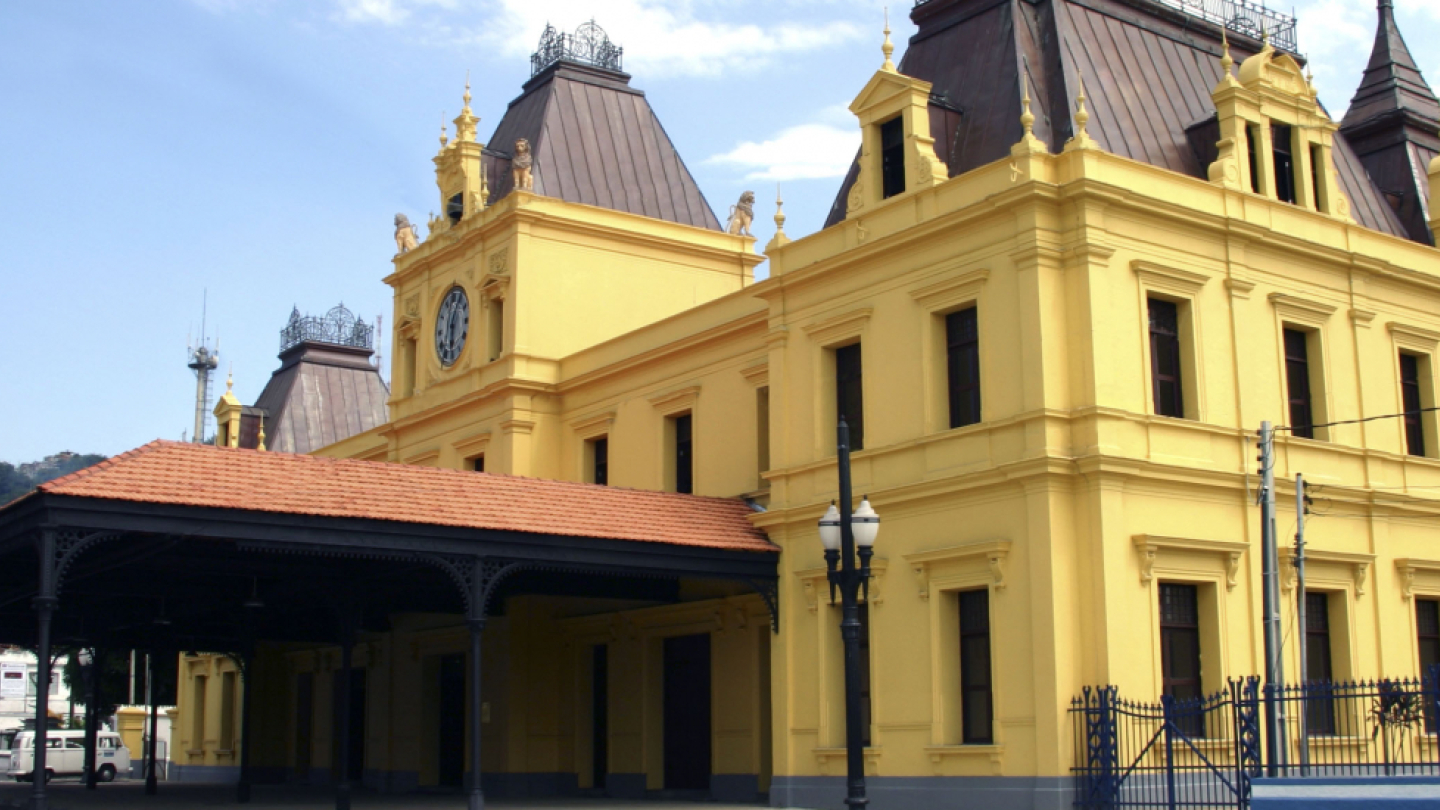
Prédio histórico de fachada amarela com detalhes arquitetônicos clássicos e telhados inclinados em tom marrom. No centro, há uma torre com relógio. À frente, uma cobertura metálica preta e postes de iluminação completam a cena. O céu está claro e há morros verdes ao fundo.

Valongo Station

Top photo: Anderson Bianchi


A true architectural treasure, Valongo was the first station in São Paulo State to hear a train whistle. The station was designed in England and inaugurated in 1867 by the São Paulo Railway, with neo-classical lines inspired by London’s Victoria station, and it is the only building in Santos prepared for snow (!).


The building was constructed on the initiative of Irineu Evangelista de Souza, Baron Mauá, to serve the São Paulo-Santos line, one of first in Brazil. This railway line is considered one of the greatest railway engineering works in the world because of the steep nature of the Serra do Mar Range and the eight-kilometer route, which resembles a slow-motion roller coaster.