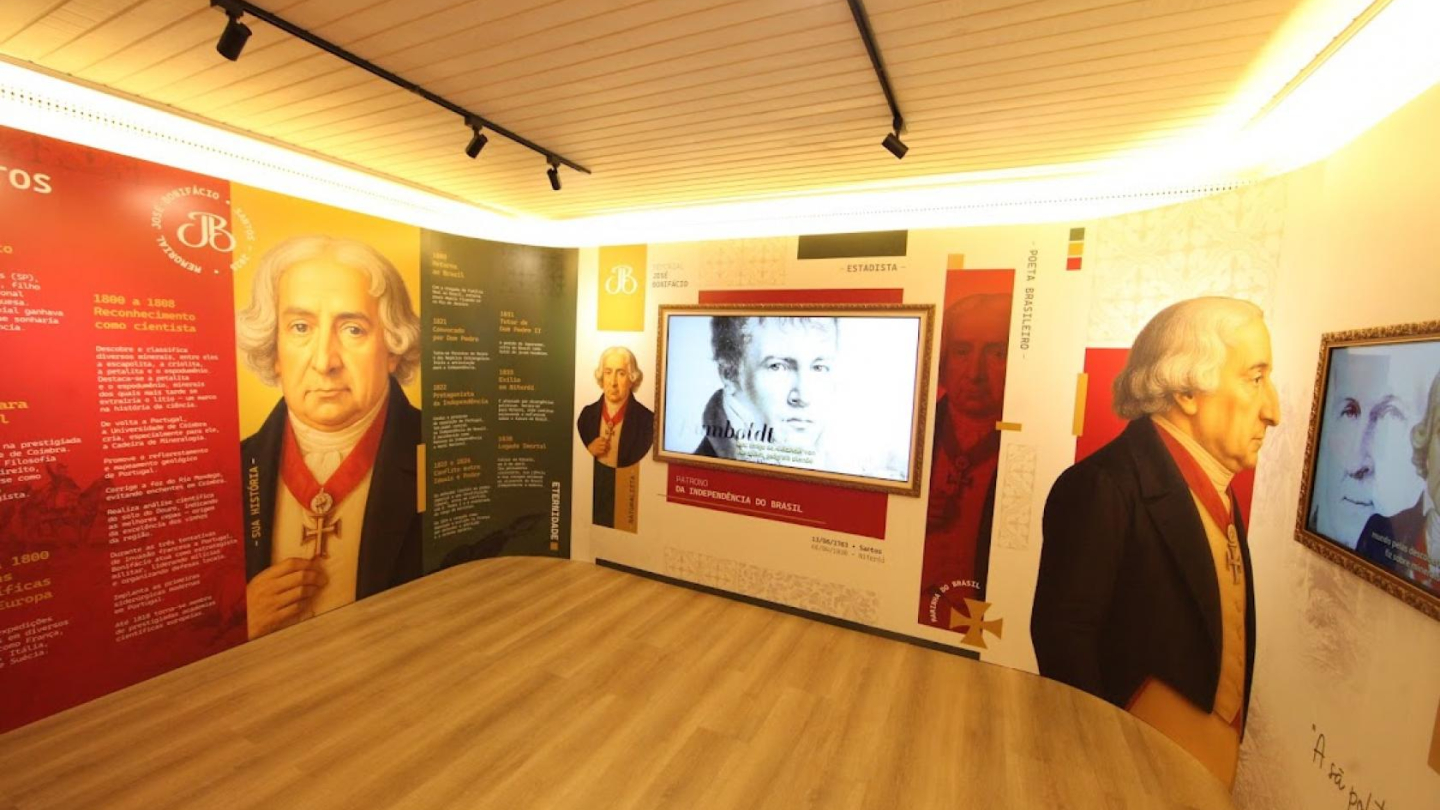
A imagem mostra uma sala de exposição moderna, bem iluminada, dedicada à vida e trajetória de José Bonifácio de Andrada e Silva. As paredes são totalmente envelopadas por painéis coloridos — em tons de vermelho, verde, amarelo e branco — que apresentam textos informativos, datas importantes e títulos que contam diferentes fases de sua atuação, como estadista, cientista e patriota da Independência do Brasil.

José Bonifácio Memorial

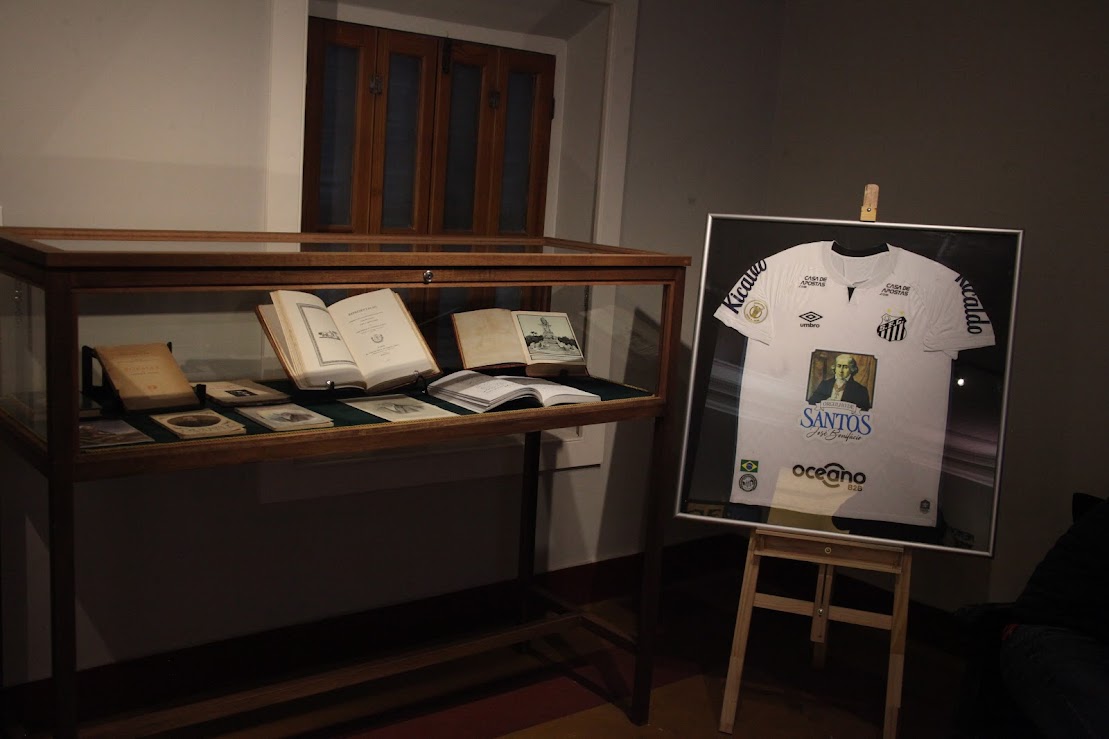
Located in the House of Cultures, the José Bonifácio Memorial now has three rooms dedicated to presenting the unique and surprising history of this saint. The collection includes visual and textual content, videos, and objects such as medals, plaques, books, samples of minerals he discovered, and a bust.
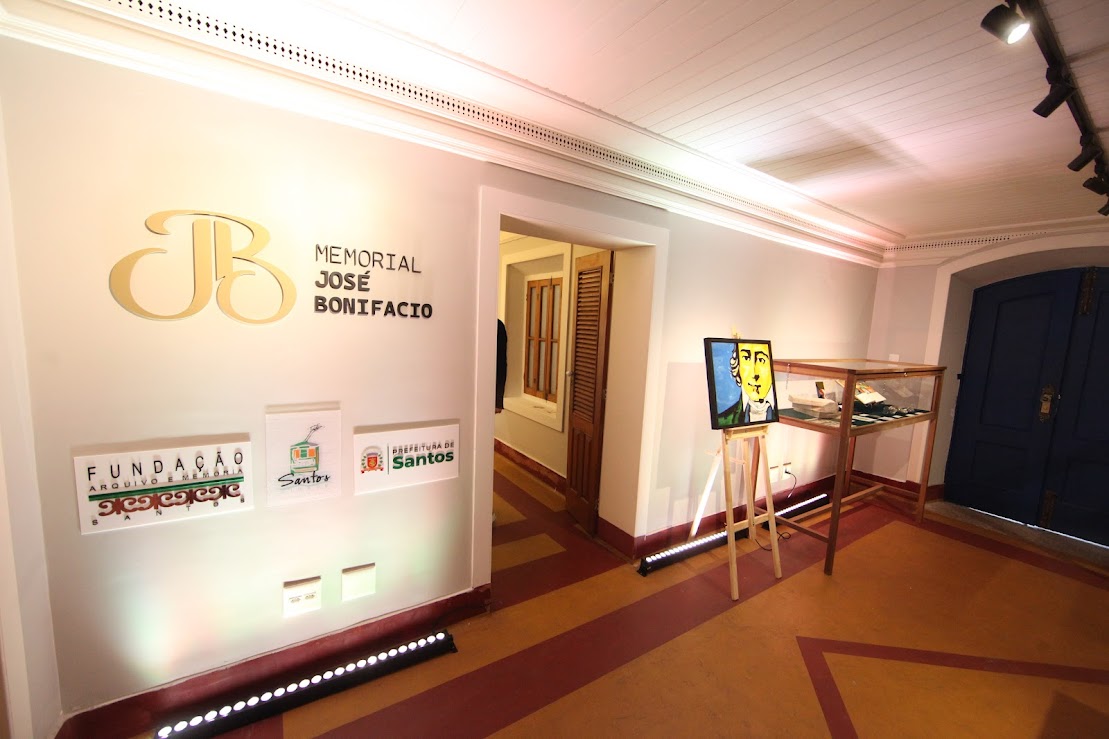
In the very first room, an artificial intelligence animation, produced by the Santos Archive and Memory Foundation (Fams), features José Bonifácio himself welcoming the visitor. In the same space, an augmented reality table presents in detail the monument in homage to the Andradas in Independence Square, in Gonzaga.
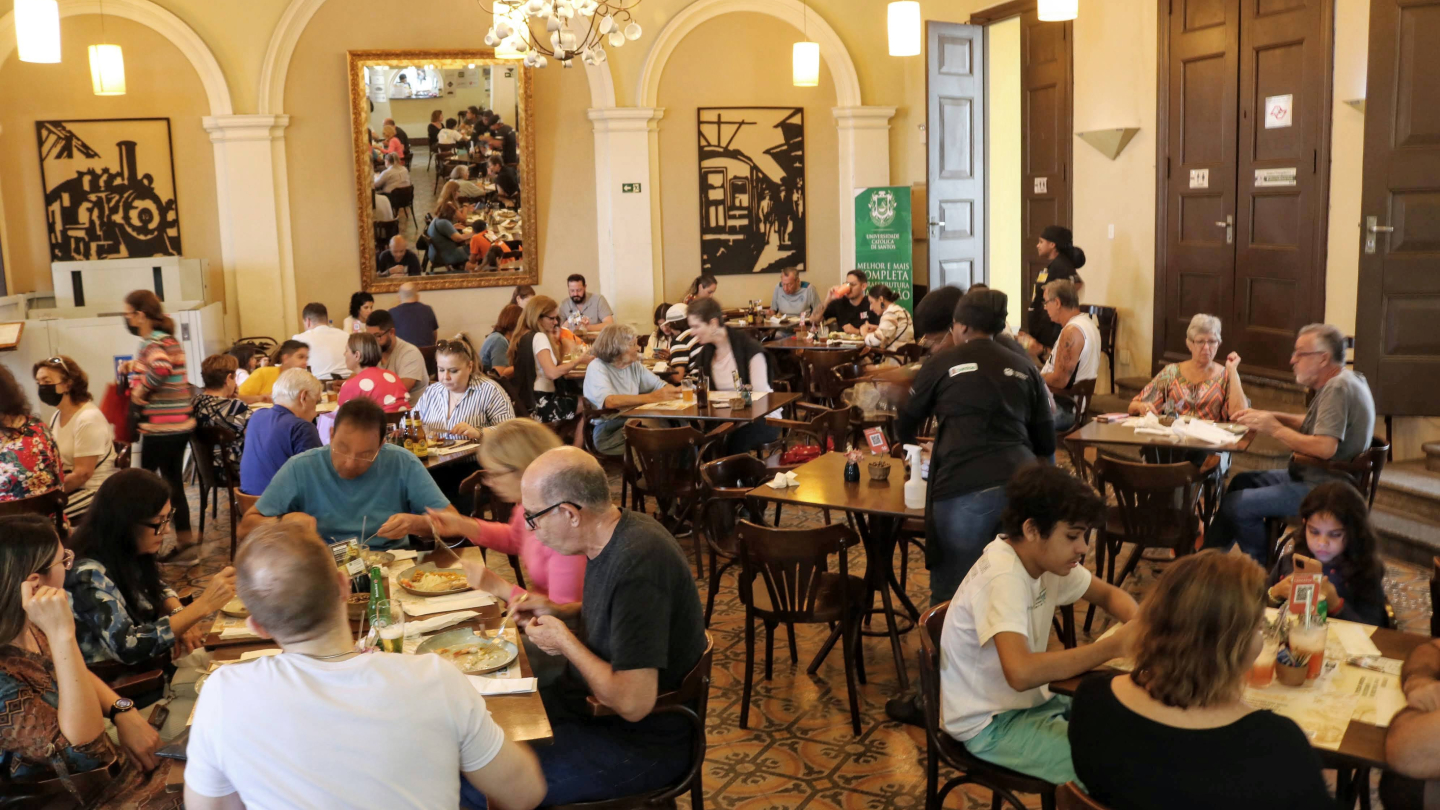
Restaurante movimentado, com várias mesas ocupadas por pessoas almoçando em ambiente acolhedor e decorado

Restaurante-Escola Estação Bistrô

On the ground floor of the Valongo Station operates the Estação Bistrô, the first restaurant-school on the Paulista coast.

The original floor, featuring two types of hydraulic tiles, was discovered in 2003 during the property's revitalization works.

Opened to the public on June 5, 2012, the restaurant-school is dedicated to the qualification of young people in a state of social vulnerability in the Food & Beverage sector.

Created through a partnership between the city hall, the Ministry of Tourism, and the Catholic University of Santos (Unisantos), it operates from Tuesday to Saturday, from 12 pm to 3 pm.

NOTÍCIAS

Santos creates a special itinerary for visiting the Historic City Center on Saturdays

on

Home to an incalculable wealth of architectural, cultural and religious details that date back to the history of Brazil and has connections with different parts of the world, the Historic City Center of Santos is home to several attractions for tourists and Santos residents of all ages. To attract more and more people to experience these experiences, the City of Santos has just created the #SábadoNoCentro script.


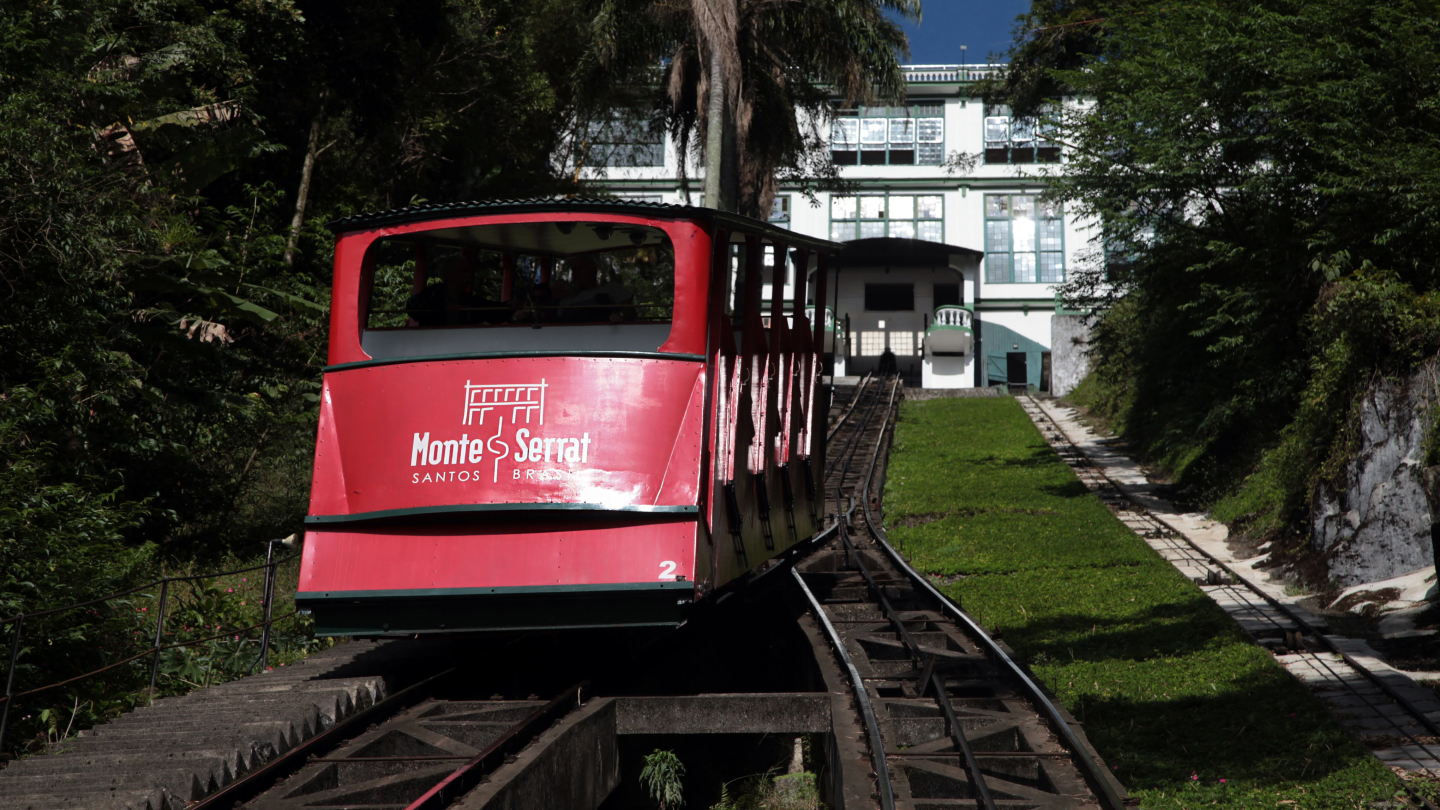
Um funicular de cor vermelha com a inscrição "Monte Serrat - Santos - Brasil" sobe uma ferrovia íngreme em direção a um edifício de estilo colonial em uma área arborizada

Monte Serrat

Main photo: Isabela Carrari


Four minutes of pure emotion, ascending 147 meters, lead to the top of Monte Serrat by funicular railway, where visitors can find the old casino and the Sanctuary dedicated to Our Lady of Monte Serrat (Nossa Senhora Monte Serrat), patron saint of Santos, built more than 400 years ago. Or, 402 steps with 14 niches reproducing scenes from the Via Dolorosa, inaugurated between 1939 and 1941, lead to a breathtaking 360-degree panoramic view of the city, and a partial view of the municipalities of  São Vicente, Cubatão and Guarujá.


Monte Serrat is an important part of the history of Santos, since it used to serve as a refuge for the population when the then village was invaded by pirates. During one of these attacks, in 1614, the invaders were finally buried by an avalanche of earth and stones, and this miracle, attributed to Our Lady, made her the city’s patron saint in 1955.


Our Lady of the Rosary Church

Top photo: Francisco Arrais


With its nave of colored marble, this church is one of the loveliest and oldest in Santos. Its origins date back to a chapel where runaway slaves used to hide, built around 1756. The Our Lady of the Rosary of Black Men (slaves)  Brotherhood, however, was formed in 1652 – and disbanded in 2008 – and had an altar in the old parish church, which was moved because of restoration works in the 18th century. With the demolition of this building, the Church of the Rosary became the city’s main church, a status it maintained for 15 years, until 1924, when the Cathedral was inaugurated. 

Tuiuti mansion

Also known as Mauá Palace, this is the oldest residential  building in Santos, constructed in 1818, with an area of  3000m², and renovated many times, with no great alterations to its architectural features. 

   
It was a mansion for traditional local families, among them those of politicians such as  Colonel José Antonio Vieira de Carvalho, governor of Itapema Fort and also judge, local councilor and president of the Council Chamber, when this position corresponded to that of mayor. It was in this building, on 4 March 1822, that the most opulent Santos Ball of the 19th century was held, named ‘Meteor Party’.

  
 Nowadays, the space focuses on cultural and commercial events and activities, has also been the headquarters of Mauá, Santos and Mercantile Banks, and was military quarters for Imperial troops during the Paraguay War. 

   
In 1887, North-American export company Hard Rand acquired the building, extended the property, and began to operate there from 1922. In the 1980, the mansion was the location for filming the TV Bandeirantes soap opera ‘Os Imigrantes’(The Immigrants).

A statue of Saint Francis of Assisi in the foreground, with white birds on his hands and shoulders. Behind him, under a clear blue sky, stands a white colonial-style church, with tiled roofs and a bell tower

Saint Anthony of Valongo Sanctuary

Top photo: Tadeu Nascimento


Architecturally rich, with its history marked by a  miracle, the Santuário de Santo Antonio do Valongo, built in 1640, was one of the first churches in the country and the second oldest architectural complex in Santos. Baroque in style, its walls are covered in tiled murals from the 1930s and, on the high altar sits one of the few revolving thrones in the country, with the Holy Trinity on one side and on the other, the  monstrance for Perpetual Adoration.  The Chapel of the Venerable Third Order of Saint Francis, built in 1691, is annexed to the Church, and houses the life-size statue of Saint Francis, in Baroque style, praying before a mystic Christ  with Six Wings.


Arcos do Valongo

In the middle of the Historic Center, Arcos do Valongo is a space for events and parties, with several different ambiences. In the center of the port zone, the old residences that make up the space have an open unified interior, maintaining a rustic, simple, contemporary architecture, unique in the city.   

The facilities offer an unpretentious space for dancing, listening to good music in an intimate, singular atmosphere. The space holds shows, parties and has been the venue for the Santos Jazz Festival, Beach Colors Festival and the International Valongo image Festival.

Council chamber and prison

Designed in 1836 and concluded only 30 years later, due to the wars against Uruguay and Paraguay, the Council Chamber and Prison is an architectural monument of great historical and cultural value to Santos. An important cultural center, it has been the headquarters of (Pagu Workshops), run by the São Paulo State Government, since 1994.

With an area of more than 2000m², the historical building has housed over the years: the city council (1870 to 1896), a prison, court, police stations and was the site of the proclamation of the country’s first and only Municipal Constitution, on November 25, 1894,

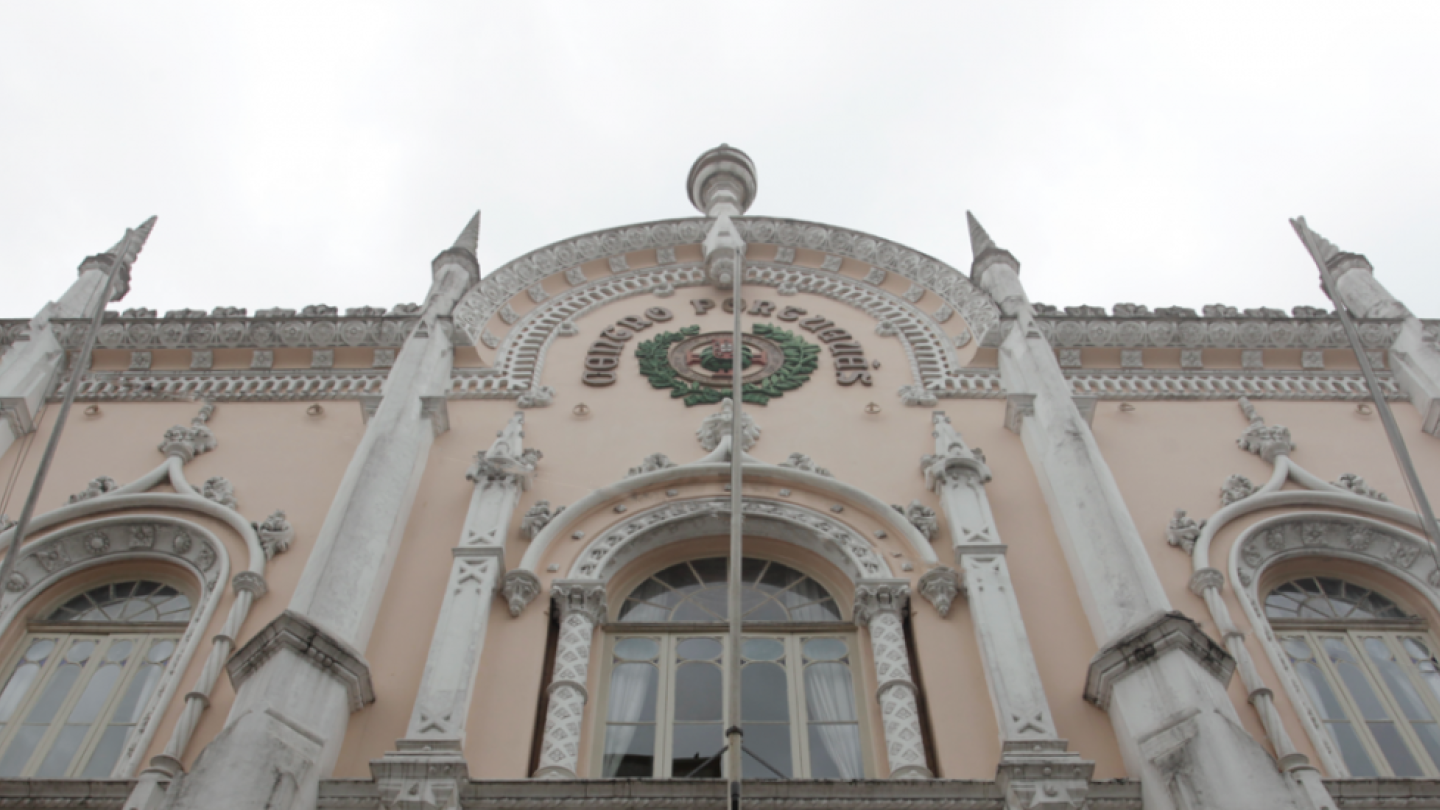
Vista em contraponto da fachada neogótica em tons de bege e branco do Centro Português, com três grandes janelas em arco e pináculos pontiagudos contra um céu claro. No centro superior, o emblema da instituição está gravado sob a balaustrada decorada.

Portuguese Cultural Center

Top photo: Ronaldo Andrade


The only construction in Neo-Manueline style in São Paulo State and one of the few in Brazil, this building was inaugurated in 1900, still unfinished, after two years’ work – the project by two Portuguese engineers was concluded in the following year. In 1945, the Royal Portuguese Center was renamed the Portuguese Center and in 2006, merging with the Portuguese Social Union, was given the name of Portuguese Cultural Center. The older building is the administrative and cultural headquarters, while the other unit holds social activities.