Our Lady of the Rosary Church

Top photo: Francisco Arrais


With its nave of colored marble, this church is one of the loveliest and oldest in Santos. Its origins date back to a chapel where runaway slaves used to hide, built around 1756. The Our Lady of the Rosary of Black Men (slaves)  Brotherhood, however, was formed in 1652 – and disbanded in 2008 – and had an altar in the old parish church, which was moved because of restoration works in the 18th century. With the demolition of this building, the Church of the Rosary became the city’s main church, a status it maintained for 15 years, until 1924, when the Cathedral was inaugurated. 
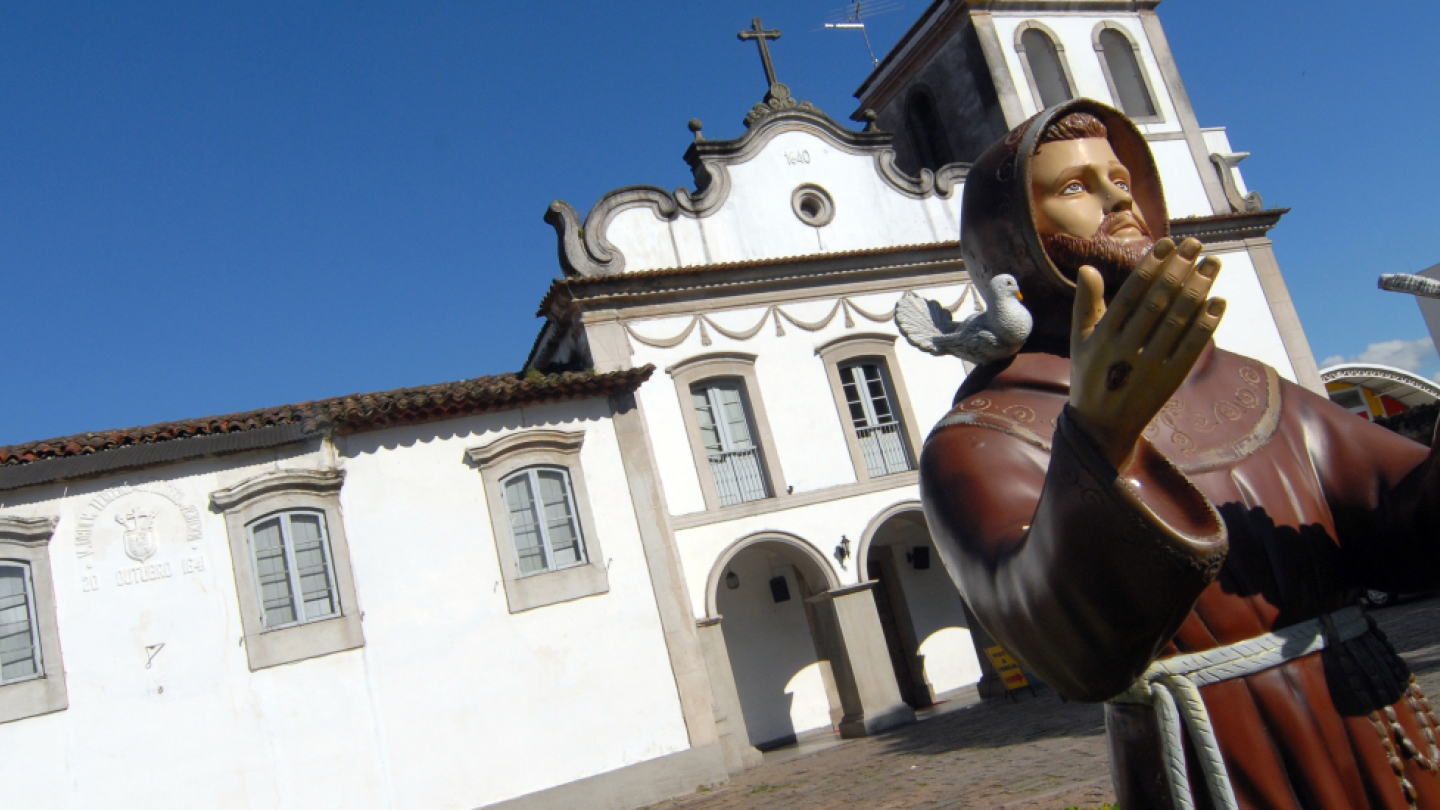
A statue of Saint Francis of Assisi in the foreground, with white birds on his hands and shoulders. Behind him, under a clear blue sky, stands a white colonial-style church, with tiled roofs and a bell tower

Saint Anthony of Valongo Sanctuary

Top photo: Tadeu Nascimento


Architecturally rich, with its history marked by a  miracle, the Santuário de Santo Antonio do Valongo, built in 1640, was one of the first churches in the country and the second oldest architectural complex in Santos. Baroque in style, its walls are covered in tiled murals from the 1930s and, on the high altar sits one of the few revolving thrones in the country, with the Holy Trinity on one side and on the other, the  monstrance for Perpetual Adoration.  The Chapel of the Venerable Third Order of Saint Francis, built in 1691, is annexed to the Church, and houses the life-size statue of Saint Francis, in Baroque style, praying before a mystic Christ  with Six Wings.


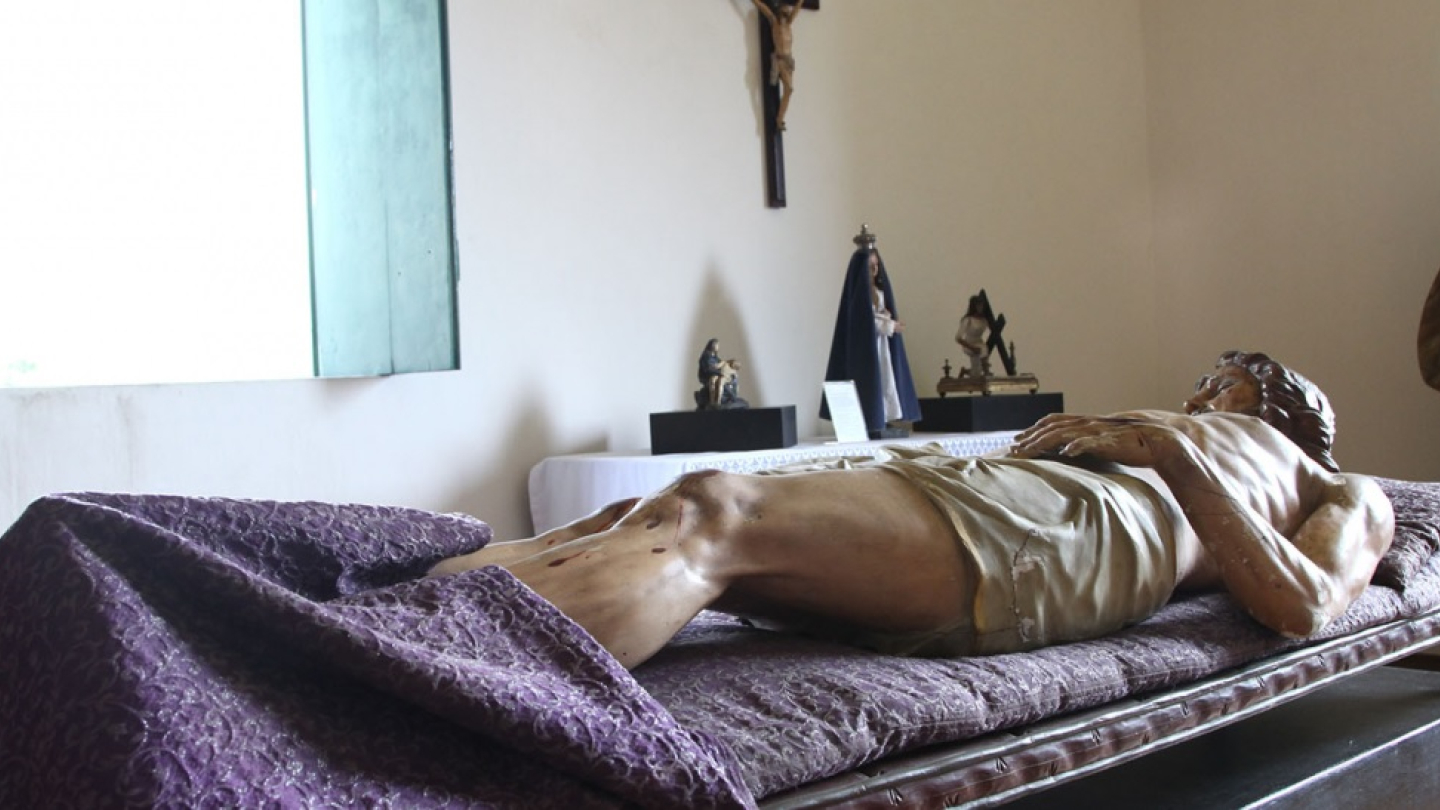
Uma cena de arte sacra em um quarto iluminado pela luz de uma janela aberta, onde uma escultura de Jesus morto repousa em um leito coberto com um tecido roxo, com outras estátuas e um crucifixo na parede ao fundo

Museum of Sacred Art

Top photo: Francisco Arrais


The Benedictine architectural complex composed of the Igreja Nossa Senhora do Desterro (Our Lady of Exile Church) and the old São Bento (Saint Benedict) Monastery is the Santos Museum of Sacred Art today. It was inaugurated on June 11, 1981, on the initiative of the then Diocesan Bishop Dom David Picão.

The collection brings together more than 600 sacred and religious pieces, both erudite and popular, from the 16th to the 20th century,  including sculptures, paintings, liturgical objects and vestments. The oldest statue in Brazil with a known artist is part of the collection: Our Lady of the Conception, dated 1560, by João Gonçalo Fernandes.

Carmo Convent Complex

Top photo: Tadeu Nascimento


A national heritage site since 1940, Conjunto do Carmo, comprising two churches, is considered one of the oldest religious examples of Brazilian baroque. The 18th-century Venerável Ordem Terceira do Carmo church, built by a lay order, is distinguished by its wooden rococo altars, paintings by friar Jesuíno do Monte Carmelo (1764-1819), and by the holy water font, built in 1710. The side altars bear images of Christ on the Way of Sorrows and are considered the most important in the Santos Bay Area for the uniformity of their style. Thanks to these images, the church, consecrated on April 8th, 1760, is known as the Church of the Passion of Christ. Next door stands the Carmelite Convent Church, dating from 1599. The gilded wood altars are in baroque style, adorned with 18th-century devotional images. The presbytery has jacaranda wood pews, used when the brothers make their devotions. Other highlights in this church are the paintings by Benedito Calixto and the very fine candle-holders. The churches are linked by a bell-tower, creating an unusual façade in baroque art, covered by original 19th-century tiles depiciting scenes of Our Lady.

Cathedral

Top photo: Anderson Bianchi


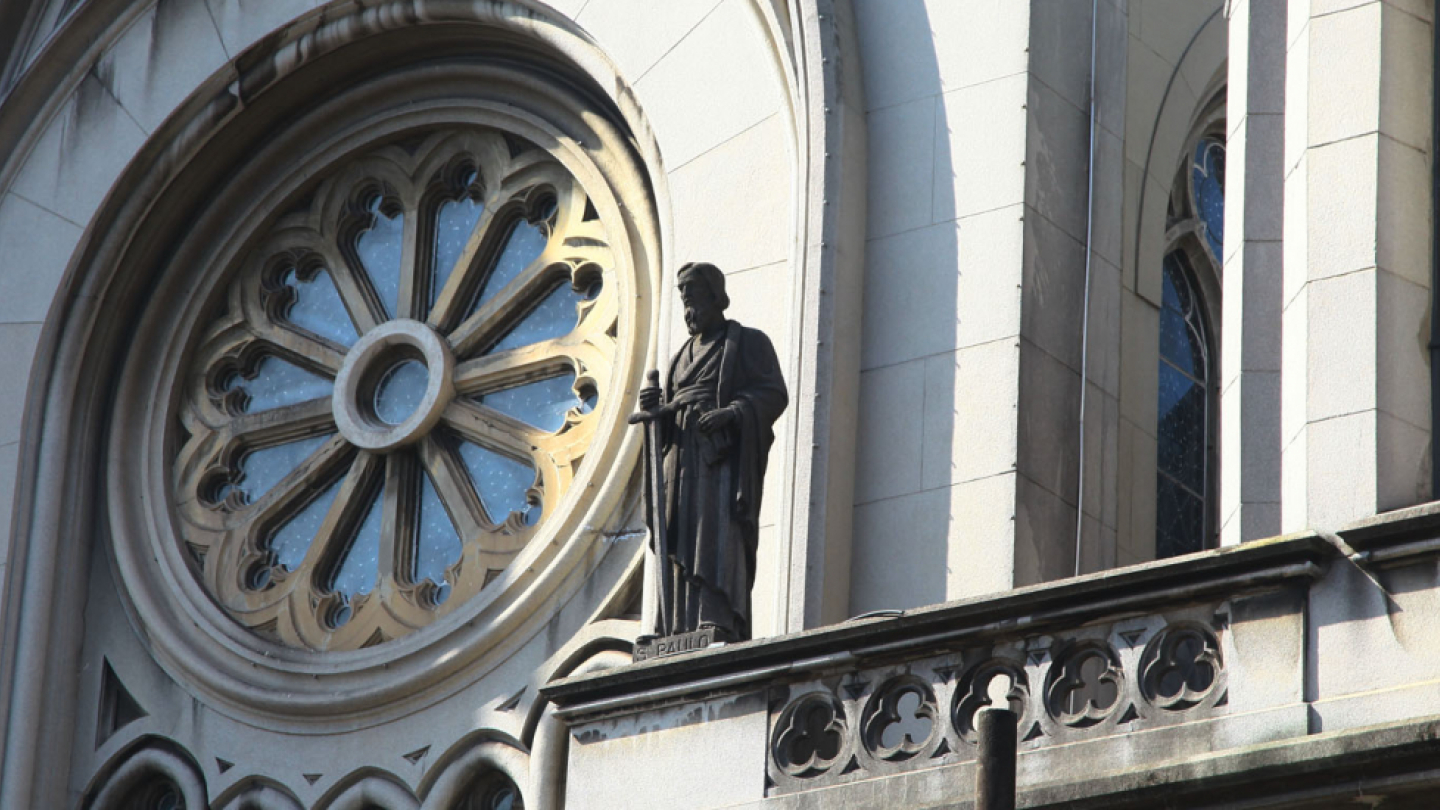
Built in neo-gothic style, the Cathedral is the seat of the Parish of Nossa Senhora do Rosário. In 1907, the Mother Church, a ruin at the time, was demolished and a square, Praça da República, was built in its place. The new Cathedral was begun in 1909, inaugurated in 1924 but only completed in 1951.

It has three naves, two marble side altars and two chapels, one each side of the main altar: one dedicated to the Blessed Sacrament, with frescos by Benedito Calixto, and one dedicated to Our Lady of Fatima. An altar in honor of Saint Josefina Bakhita was added in 2001. She was canonized by virtue of a favor granted to a citizen of Santos. There is also a crypt with ossuary, and a chapel. The church received the title of cathedral because it houses the bishop’s seat, known as ‘cathedra’.

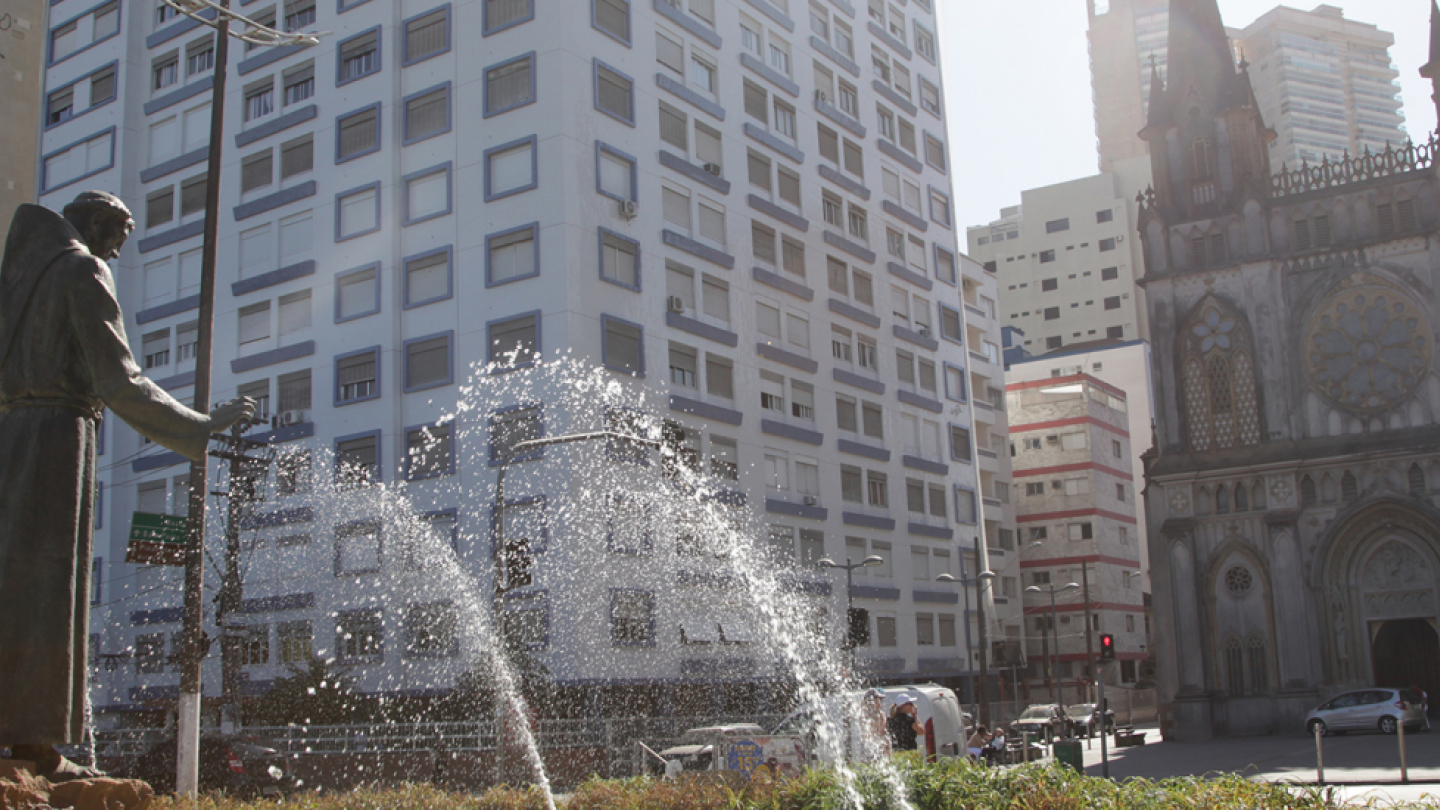
Estátua de frade em primeiro plano, com jatos d'água de uma fonte, em frente à fachada neogótica da Basílica de Santo Antônio do Embaré e prédios modernos. O céu claro e a luz forte destacam o contraste da arquitetura histórica e contemporânea na orla de Santos.

Basilica of Saint Anthony, Embaré

Built in an imposing neo-gothic style, the church was inaugurated in 1945 and elevated to the category of Basilica by Pope Pius XII in 1952. Its origins go way back to a tiny chapel built in 1875 by Antonio Ferreira da Silva Jr., Viscount Embaré, and his wife, and then handed over to Franciscan friars in 1913, who began the new construction in 1930.