Council chamber and prison

Designed in 1836 and concluded only 30 years later, due to the wars against Uruguay and Paraguay, the Council Chamber and Prison is an architectural monument of great historical and cultural value to Santos. An important cultural center, it has been the headquarters of (Pagu Workshops), run by the São Paulo State Government, since 1994.

With an area of more than 2000m², the historical building has housed over the years: the city council (1870 to 1896), a prison, court, police stations and was the site of the proclamation of the country’s first and only Municipal Constitution, on November 25, 1894,
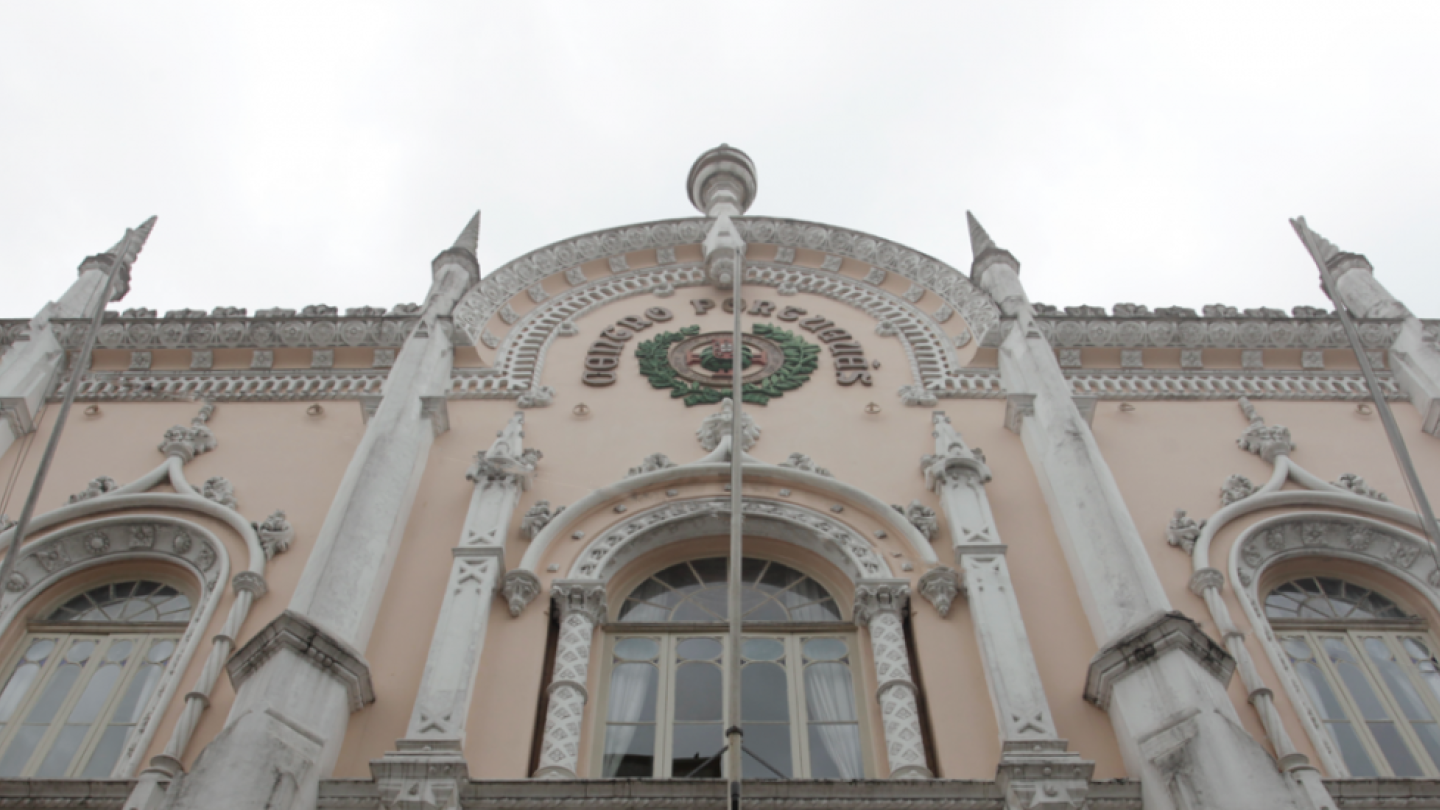
Vista em contraponto da fachada neogótica em tons de bege e branco do Centro Português, com três grandes janelas em arco e pináculos pontiagudos contra um céu claro. No centro superior, o emblema da instituição está gravado sob a balaustrada decorada.

Portuguese Cultural Center

Top photo: Ronaldo Andrade


The only construction in Neo-Manueline style in São Paulo State and one of the few in Brazil, this building was inaugurated in 1900, still unfinished, after two years’ work – the project by two Portuguese engineers was concluded in the following year. In 1945, the Royal Portuguese Center was renamed the Portuguese Center and in 2006, merging with the Portuguese Social Union, was given the name of Portuguese Cultural Center. The older building is the administrative and cultural headquarters, while the other unit holds social activities.

Guarany Theater

Top photo: Anderson Bianchi


This building, the first in Santos to be constructed as a theater, was inaugurated in 1882 and destroyed by fire in 1981, with only the external walls left standing. After two decades of neglect, the building was completely restored by City Hall and reopened in 2008. Besides the beauty of the building itself, highlights include two paintings by Paulo Von Poser – one on the ceiling reinterpreting a scene from the novel O Guarany, by José de Alencar, and the other in the second floor foyer, which is a reinterpretation of Benedicto Caixto’s view of Santos from the top of Monte Serrat. The theater hosts presentations and also functions as a municipal school for scenic arts.

Coliseu Theater

Top photo: Tadeu Nascimento


The city’s biggest theater, with seating for an audience of 1000, the Teatro Coliseu has had its current characteristics since 1924. The eclectic style building boasts fine frescos and architectural details, excellent acoustics and refined décor, which have made the theater famous and have classified it as one of the best in the country.


The stage for the premiere of spoken cinema in Santos in 1929, the Teatro Coliseu staged the main musicals, concerts, operas, plays and other spectacles by national and international companies. It fell into disrepair in the 1970 and was closed down in the following decade. Abandoned, it underwent 10 years of renovation work and reopened its doors in 2006. 

Nossa Senhora do Monte Serrat Sanctuary

Sitting on top of Monte Serrat, 157 meters above sea level, this sanctuary affords a 3600 panorama of the entire city and partial view of the municipalities of São Vicente, Cubatão, Guarujá and Praia Grande. The statue of Nossa Senhora do Monte Serrat, patron saint of Santos, whose saint’s day is celebrated on September 8th, and the stories of her miracles are the big attractions here in the heart of the city. The chapel was built between 1598 and 1603, and access to the sanctuary is by funicular railway or by 415 steps, with 14 niches representing the Way of Sorrows.

Monte Serrrat received its name in 1604, by order of then governor Dom Francisco de Souza, a Spaniard devoted to Our Lady, patron saint of Barcelona, one year after the chapel was built. Up to then, it had been called Morro de São Jerônimo. It is said that in 1614, when Dutch pirate Joris von Spielbergen invaded the settlement, part of the population fled to the top of the hill. While attempting to follow them, the pirates were buried by the avalanche of earth and stones that fell from the mountain. The people considered this a miracle performed by Nossa Senhora do Monte Serrat, and she thus became the city’s patron saint.

The funicular railway opened in 1927 with the inauguration of the function room and restaurant on Monte Serrat. In addition to its terraces and lookout point, the property saw the opening of the Monte Serrat Casino in 1934, hosting such artists as Carmen Miranda, Francisco Alves and Sílvio Caldas until its closure in 1946, when President Gaspar Dutra banned gambling in Brazil. Restored in 1998, the building now offers a café and areas for social and cultural events.

Edgard Perdigão Pier

This is the departure point for the various schooner trips around Santos Bay, taking in Barra Fortress; Palmas island; Góes, Cheira Limão, and Sangava beaches, and Urubuqueçaba Island. On the stretch through the Estuary and Bertioga Channel, highlights are the port and warehouses, the old Port Authority (Codesp) buildings, Barnabé Island, the old Santos Air Base, and Diana Island. Genesis, Turismo no Mar and Bravotur tour agencies offer trips lasting betweeen 1hour 30 minutes and 3 hours 45 minutes.

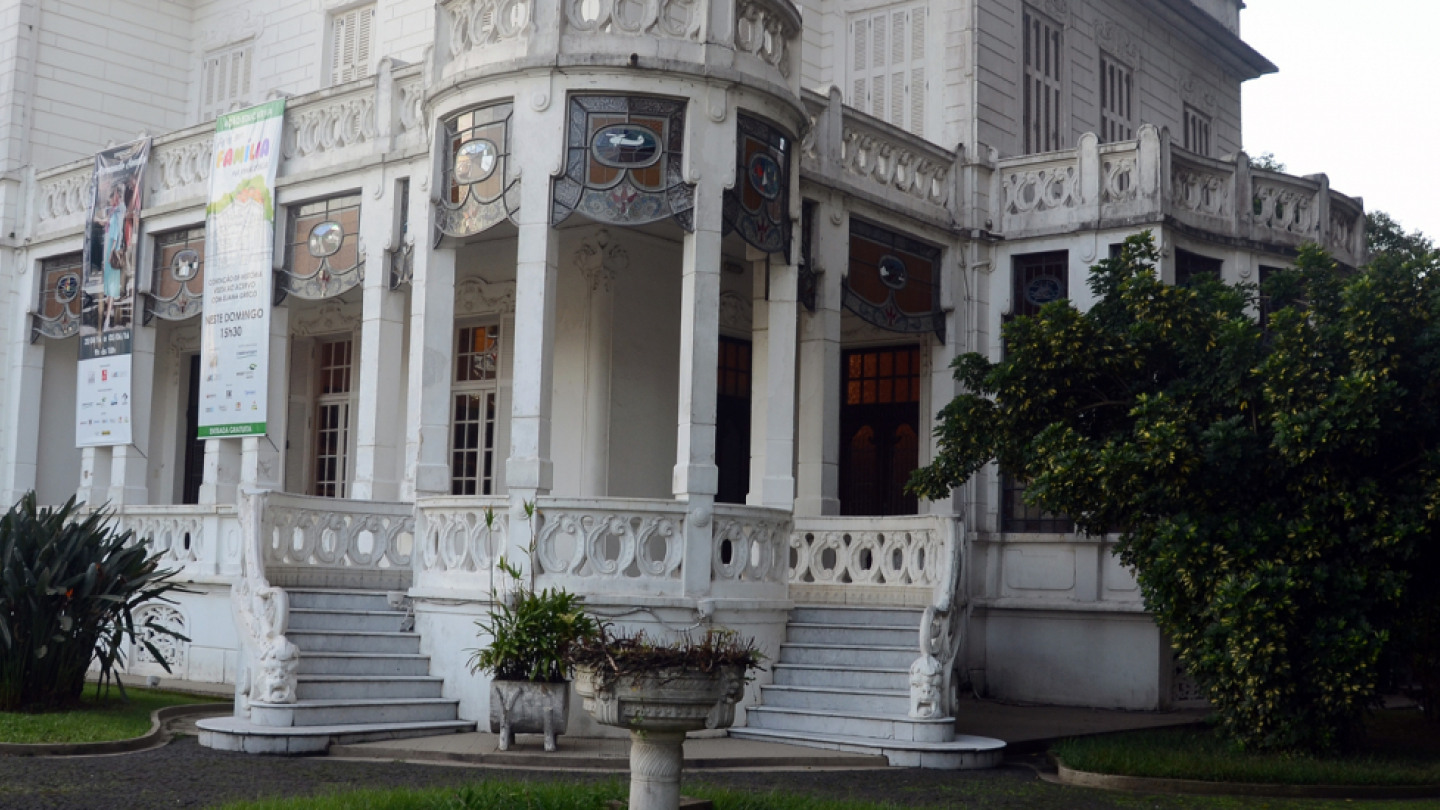
A imagem mostra um elegante edifício histórico de cor clara, com forte inspiração eclética e art nouveau, cercado por jardins bem cuidados. A construção se destaca pela fachada ornamentada, com sacadas curvas, colunas esguias e delicados elementos decorativos em relevo.

Benedicto Calixto Art Collection

Top photo: Marcelo Martins

Hosted in a beautiful neoclassical mansion from the early 20th century, the Benedicto Calixto Art Gallery is an important cultural space in the city, offering musical happy hours, courses, and various events for children and adults, especially on weekends.

The house, the last on the Santos coastline that retains the characteristics of the era of the coffee barons, served as a family residence, a retirement home, a boarding house for young women, and even a tenement, before being declared a public utility in 1979 and beginning its restoration seven years later.

On the ground floor are an art library and a permanent exhibition of works by Calixto, considered one of the greatest exponents of Brazilian painting from the early 20th century. The upper floor functions as a gallery for temporary exhibitions.

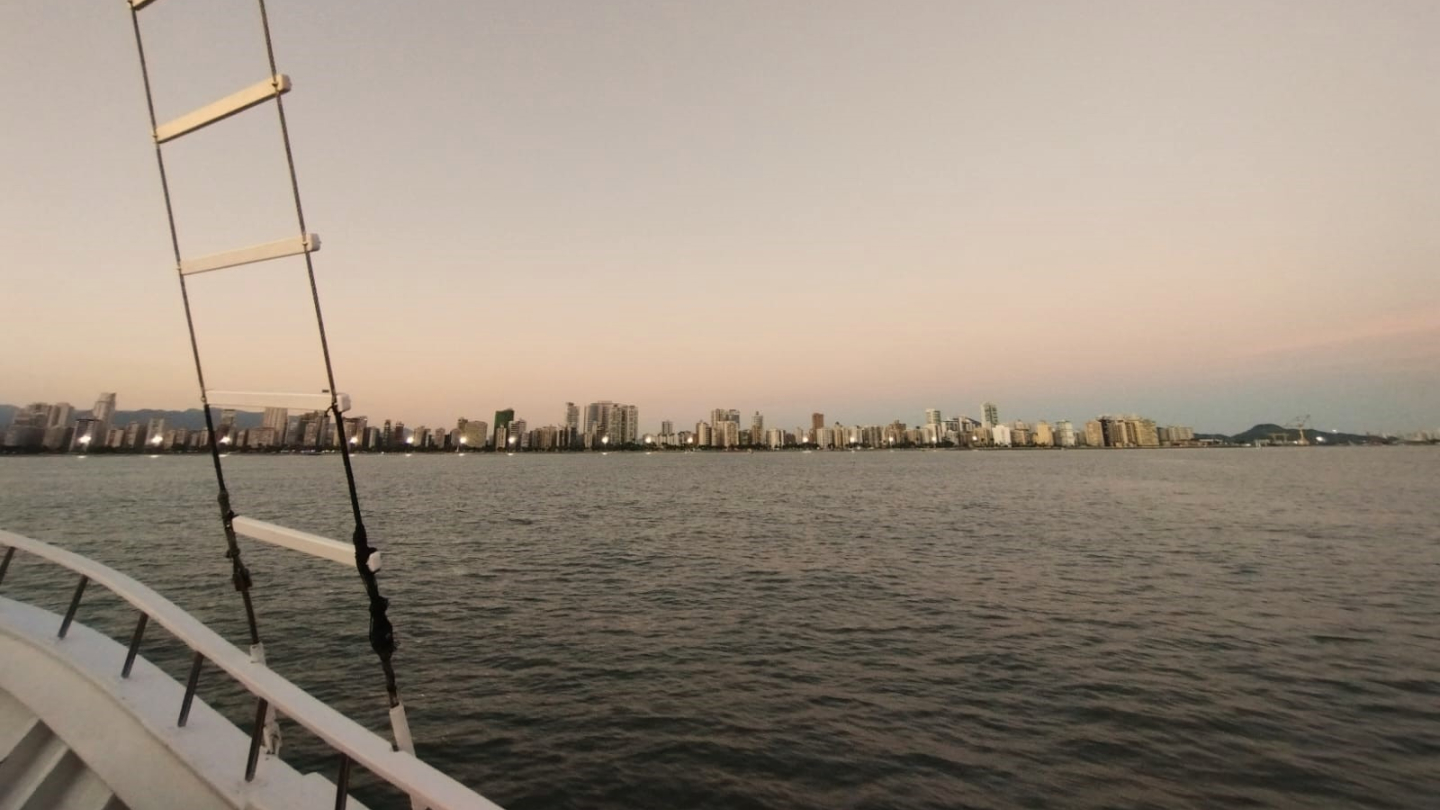
Vista dos prédios da orla de Santos, ao entardecer, e parte de uma escuna em primeiro plano

Edgard Perdição Bridge - Schooners

Top photo: Marcelo Martins


Trips set off on diverse routes in Santos Bay, taking in Barra Fortress; Palmas Island; Góes, Cheira Limão and Sangava beaches, and Urubuqueçaba Island. Highlights on the trip through the Estuary and Bertioga channel are the port and warehouses, the old Codesp (Docks Company of the State of São Paulo) buildings, Barnabé Island, the old Santos Air Base and Diana Island. Genesis, Turismo no Mar and Bravotur travel agencies offer routes that vary from 1hour 30 minutes to 3hours 45 minutes.

Foto aérea do Parque Roberto Mário Santini (Quebra-Mar) no José Menino, com alamedas, vegetação e o mar ao fundo

Roberto Mário Santini Municipal Park

Located on the Santos waterfront, Roberto Mário Santini Park is one of the city's most beloved public spaces. Also known as Quebra-Mar de Santos and Emissário Submarino de Santos, the park serves as a large outdoor meeting point, frequented daily by residents and visitors of all ages.


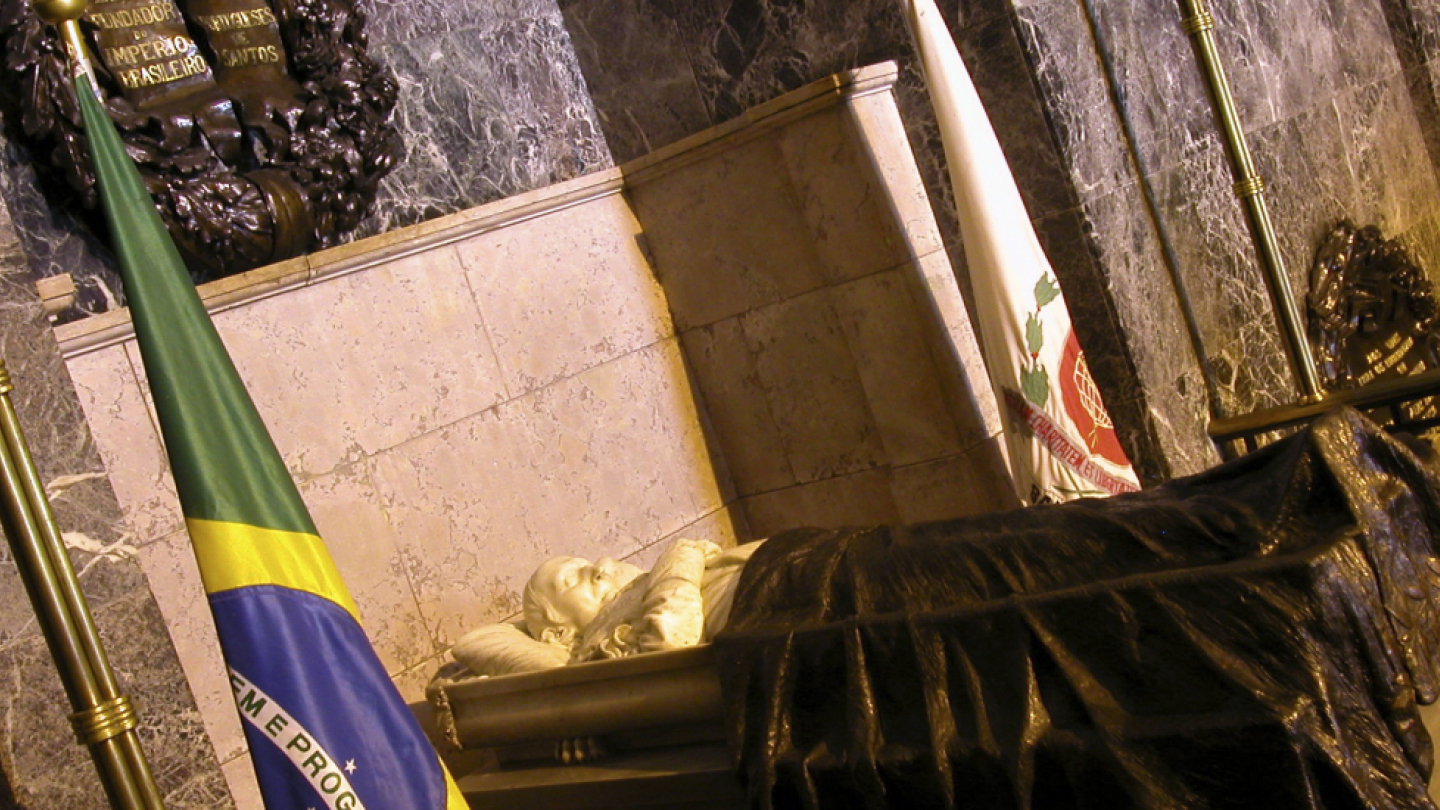
Uma fotografia em plano inclinado captura um sarcófago ou tumba monumental parcialmente coberta com tecido preto, ladeada por bandeiras (incluindo a do Brasil em primeiro plano) dentro de um ambiente interno de mármore escuro

Andrada Pantheon

Top photo: Tadeu Nascimento


The resting place of the ashes of José Bonifácio de Andrada e Silva, the ‘Father of Independence”, and his brothers Antonio Carlos, Martim Francisco and Father Patrício Manuel, the pantheon was inaugurated on 7 September, 1923. The civic monument occupies the space of the old  of the Carmo Convent gatehouse and consists of the monument designed by sculptor Rodolfo Bernardelli, made in Italy – the pieces arrived in 19 boxes, were then auctioned because of customs issues and acquired by merchants and by the Humanitarian Society of Santos.