

Main photo: Isabela Carrari
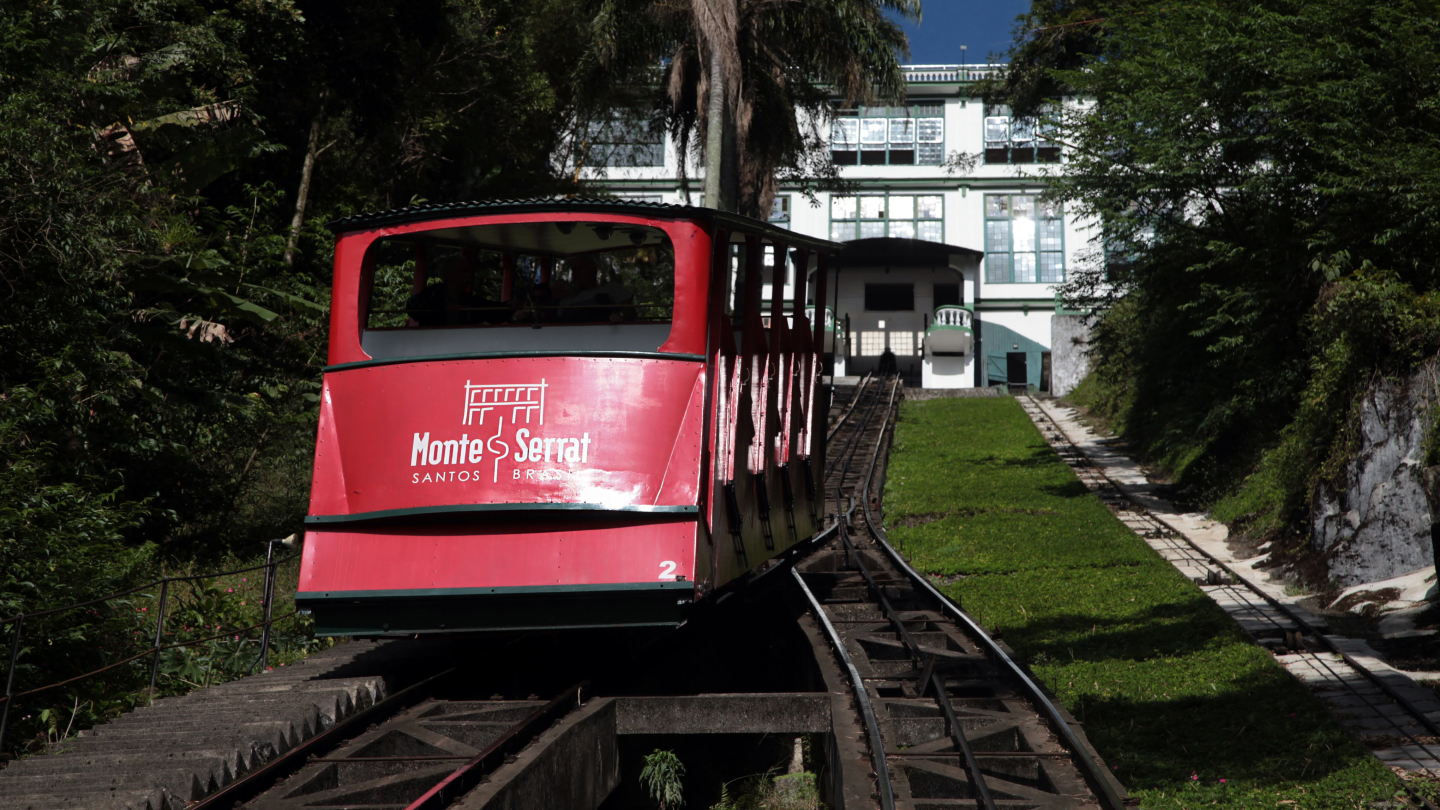
Four minutes of pure emotion, ascending 147 meters, lead to the top of Monte Serrat by funicular railway, where visitors can find the old casino and the Sanctuary dedicated to Our Lady of Monte Serrat (Nossa Senhora Monte Serrat), patron saint of Santos, built more than 400 years ago. Or, 402 steps with 14 niches reproducing scenes from the Via Dolorosa, inaugurated between 1939 and 1941, lead to a breathtaking 360-degree panoramic view of the city, and a partial view of the municipalities of São Vicente, Cubatão and Guarujá.
Monte Serrat is an important part of the history of Santos, since it used to serve as a refuge for the population when the then village was invaded by pirates. During one of these attacks, in 1614, the invaders were finally buried by an avalanche of earth and stones, and this miracle, attributed to Our Lady, made her the city’s patron saint in 1955.
The funicular
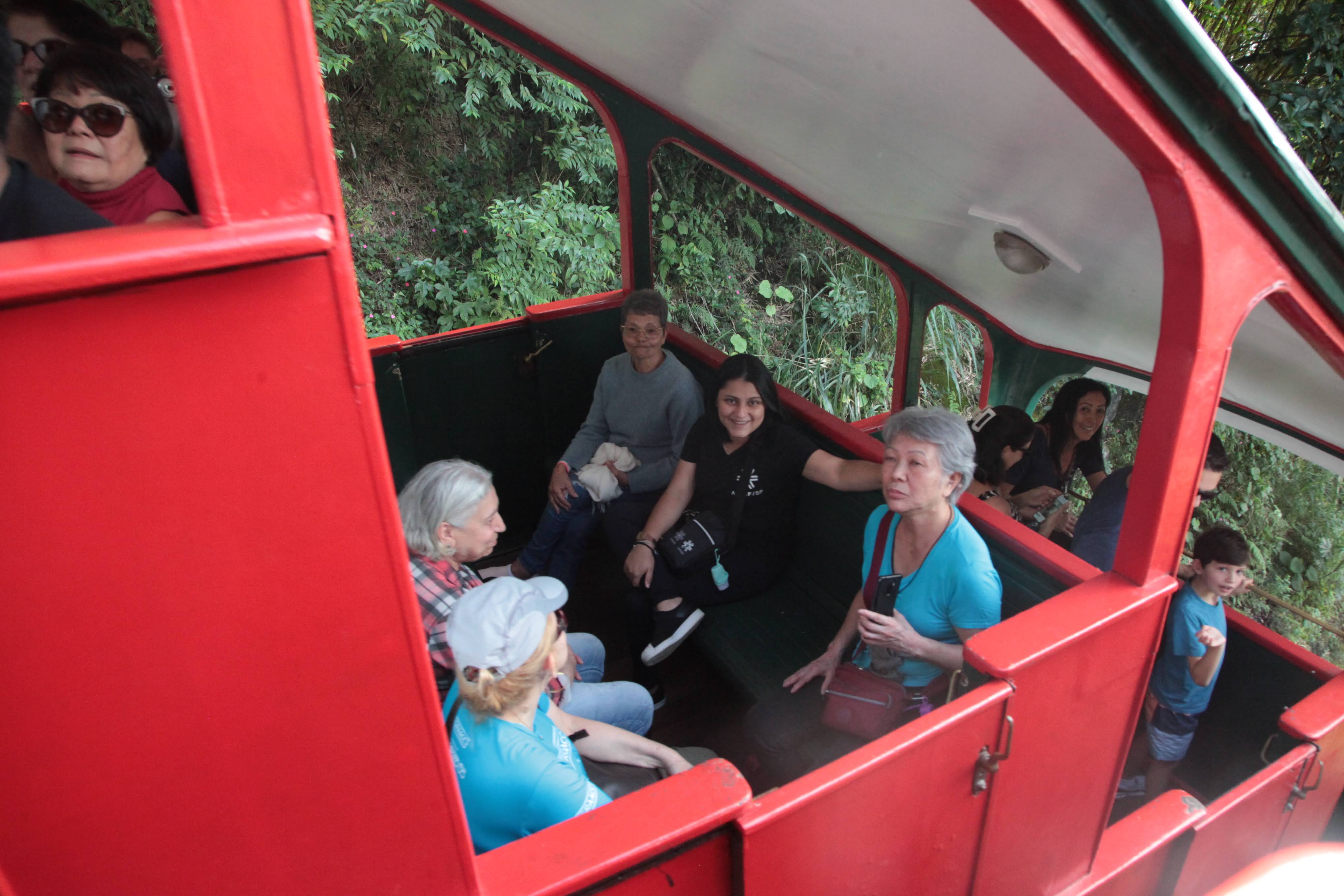
Taking a cable car up the hillside to the top of the mountain is an attraction in itself, unique in the country. A German design, the system operates with two cable cars moving in sync and a central switch. Each car has a capacity for 45 passengers, who travel the 242-meter-long line in four minutes. The support is provided by a steel cable one and a half inches in diameter, with a resistance of 90 tons.
Foto: Isabela Carrari
Origin
Conceived by Spanish immigrants, the tram system began construction in 1910, but World War I hampered imports, and the project was only completed in June 1927. At that time, the trams were enclosed by curtains to preserve the identity of Santos' bohemian scene, which ended the night at Monte Serrat, watching shows with renowned artists such as Carmen Miranda, Francisco Alves, and Sílvio Caldas. With fine materials such as Carrara marble, Belgian stained glass, French curtains and carpets, silverware, and crystal from Europe, the nightclub was known even abroad and served as a landmark for tourists.
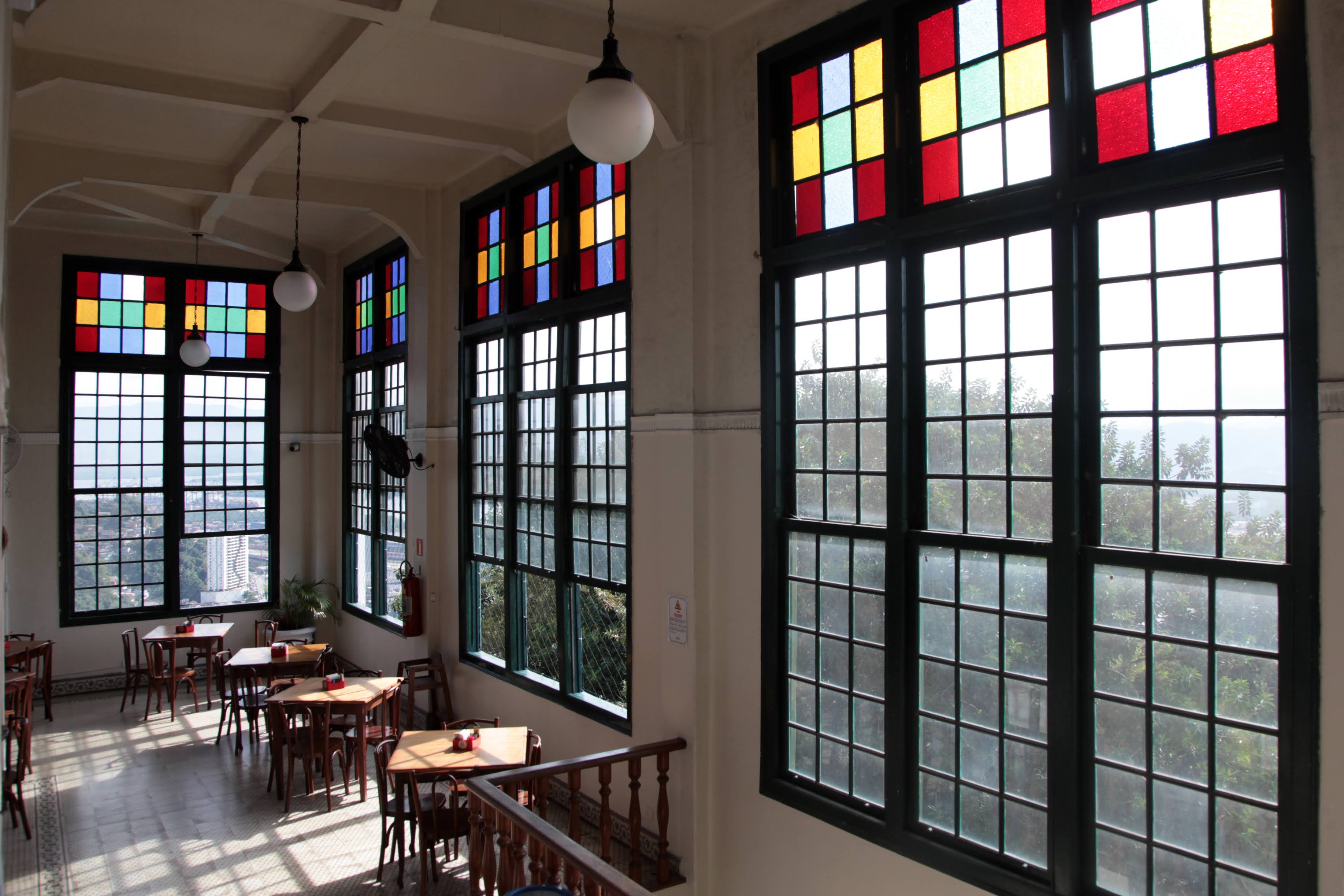
Three months after the cable cars and the ballroom were inaugurated, the Monte Serrat complex building began housing a casino in September 1927 – it operated until 1946, when the federal government banned gambling in the country. Renovated in 1998, the former casino is now a space for social and cultural events, has a cafeteria, and features a viewpoint and two curious mirrors.
Foto: Isabela Carrari
The chapel
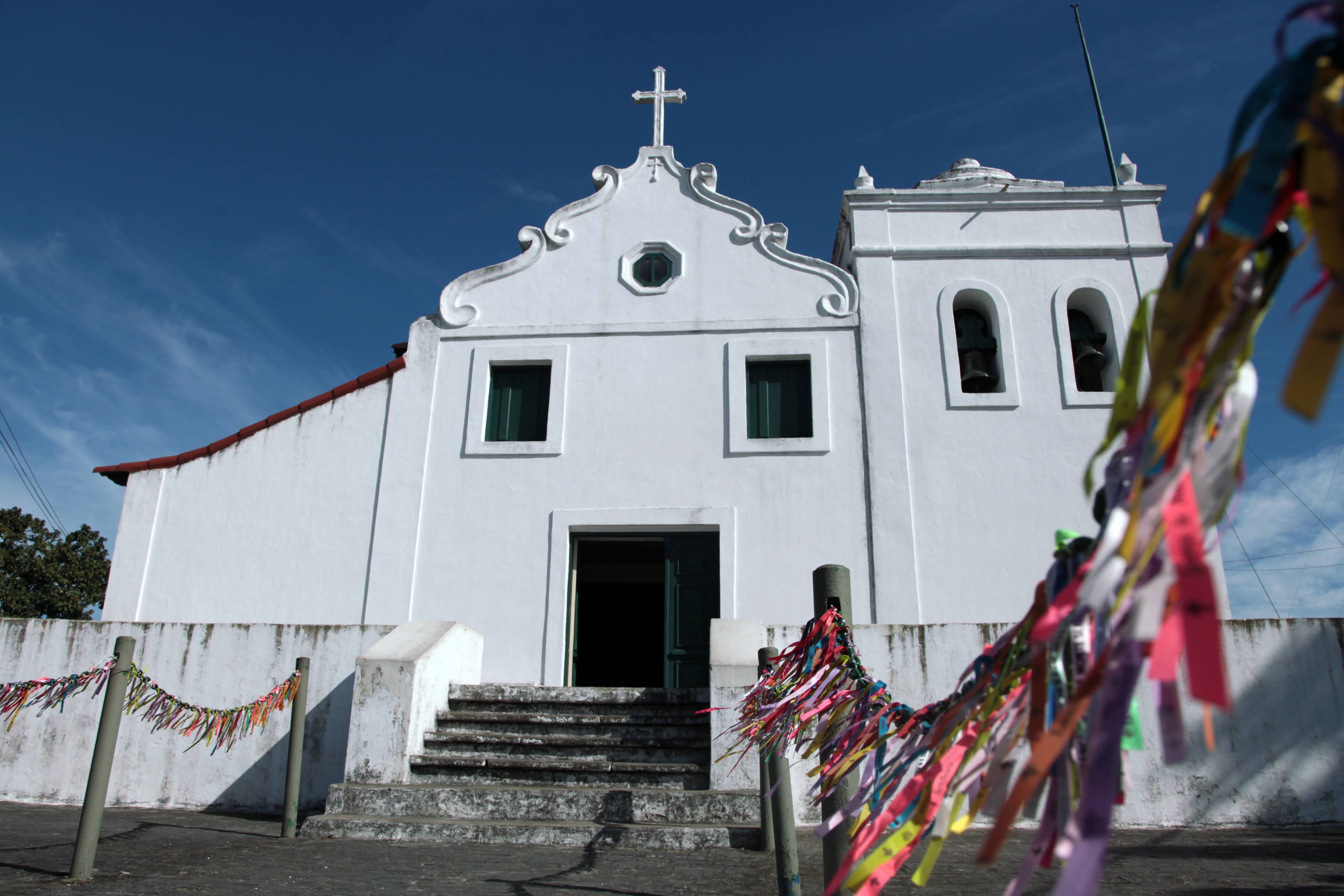
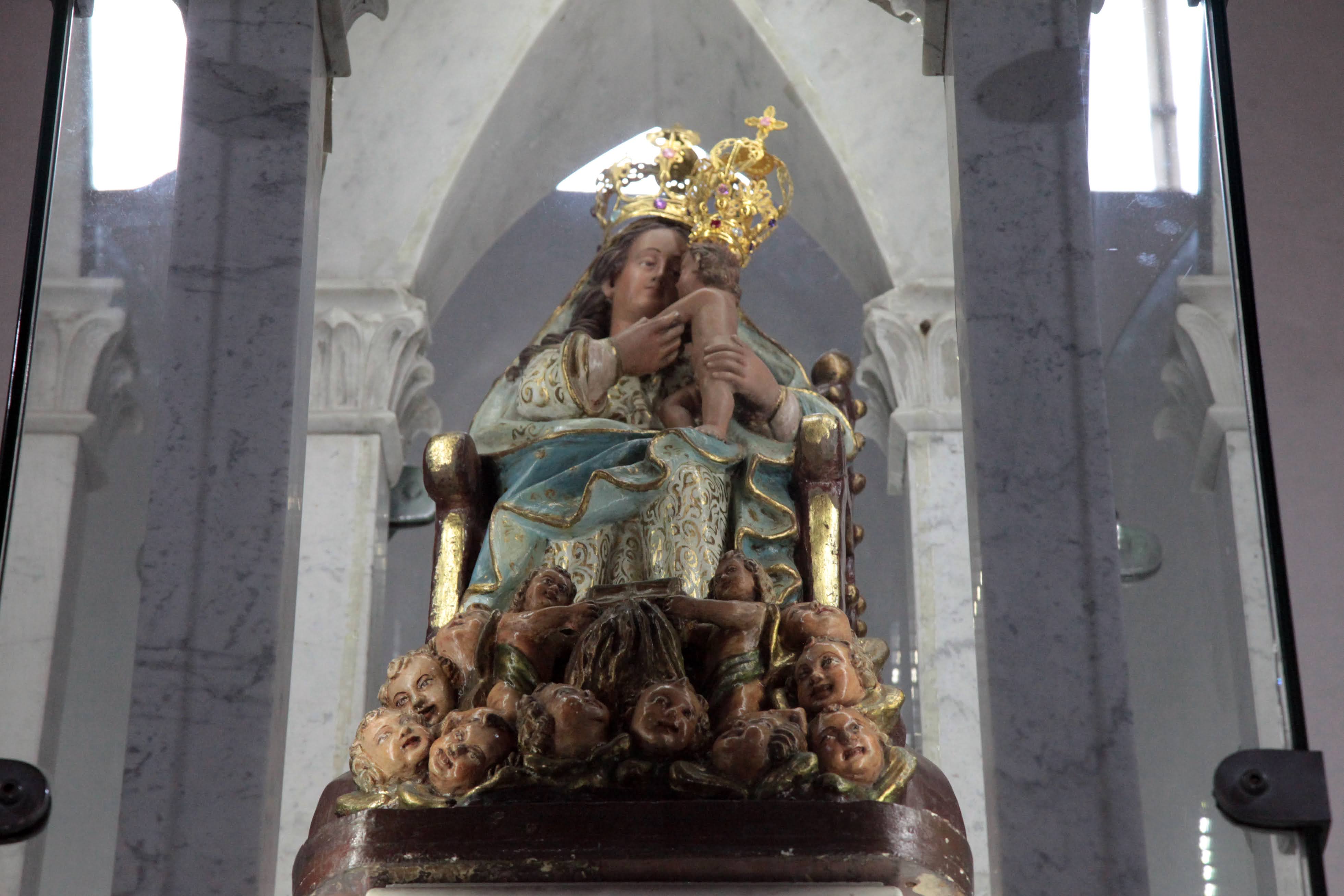
The Chapel of Our Lady of Montserrat, officially established in 1599, was built by order of Governor Francisco de Souza, a Spaniard devoted to the saint, patron saint of Barcelona. History records that in 1614, when the Dutch corsair Joris von Spilbergen invaded the town, part of the population fled to the hill. While trying to pursue them, the corsairs were buried under earth and stones that fell from the mountain. The people attributed this to a miracle of Our Lady of Montserrat, which led to her becoming the patron saint of the city. Under the responsibility of Benedictine monks since 1652, the chapel underwent several alterations over the centuries. The works completed in 2011, 165 years after the last renovation, preserved the configuration that existed in the 18th century.
Guided tours: Wednesday, Thursday, Friday and Saturday, from 9 am to 5 pm.
Foto: Isabela Carrari
Faith
Our Lady of Montserrat, whose image is said to have been produced by Saint Luke and taken to Montserrat (Spain) by Saint Peter in the year 50, is also the protector of sailors. Another great miracle in Santos is attributed to her: she saved the Brazilian ship Araguary from certain shipwreck in 1926. When the crew could no longer control the situation, they decided to kneel on one of the decks, pray, and invoke the Virgin, promising to celebrate a Mass of Thanksgiving if the ship managed to reach port. The next instant, the storm ceased and the sea became calm.
Foto: Isabela Carrari
Mural
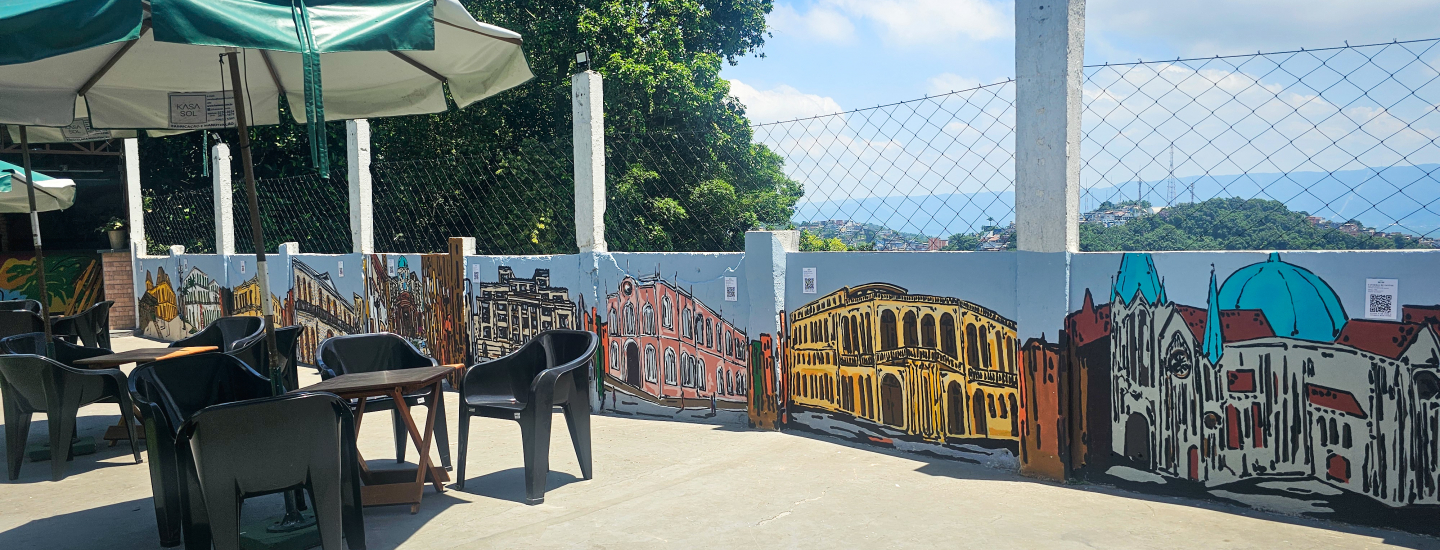
Developed by the artist Preö in January 2025, during the celebrations of Santos' Anniversary. The mural is located on top of Monte Serrat.
Photo: Santos City Hall Archive.