

Top photo: Tadeu Nascimento
A place that brings together tradition, architecture, history, flavors and aromas. Installed in an eclectic-style building, with an area of 6,000 m² and more than 200 doors and windows, the Coffee Museum, inaugurated in 1998, is much more than a tourist attraction that showcases the number one Brazilian export at the end of the 19th century. It is an experience of various sensations, from the cultivation of the bean to the consolidation of coffee as one of the national symbols. Permanent and temporary exhibitions, works of art, period furniture, themed shop and a café serving the best coffee beans – including the most expensive and rarest in the country – are some of its many attractions.
Trading Hall
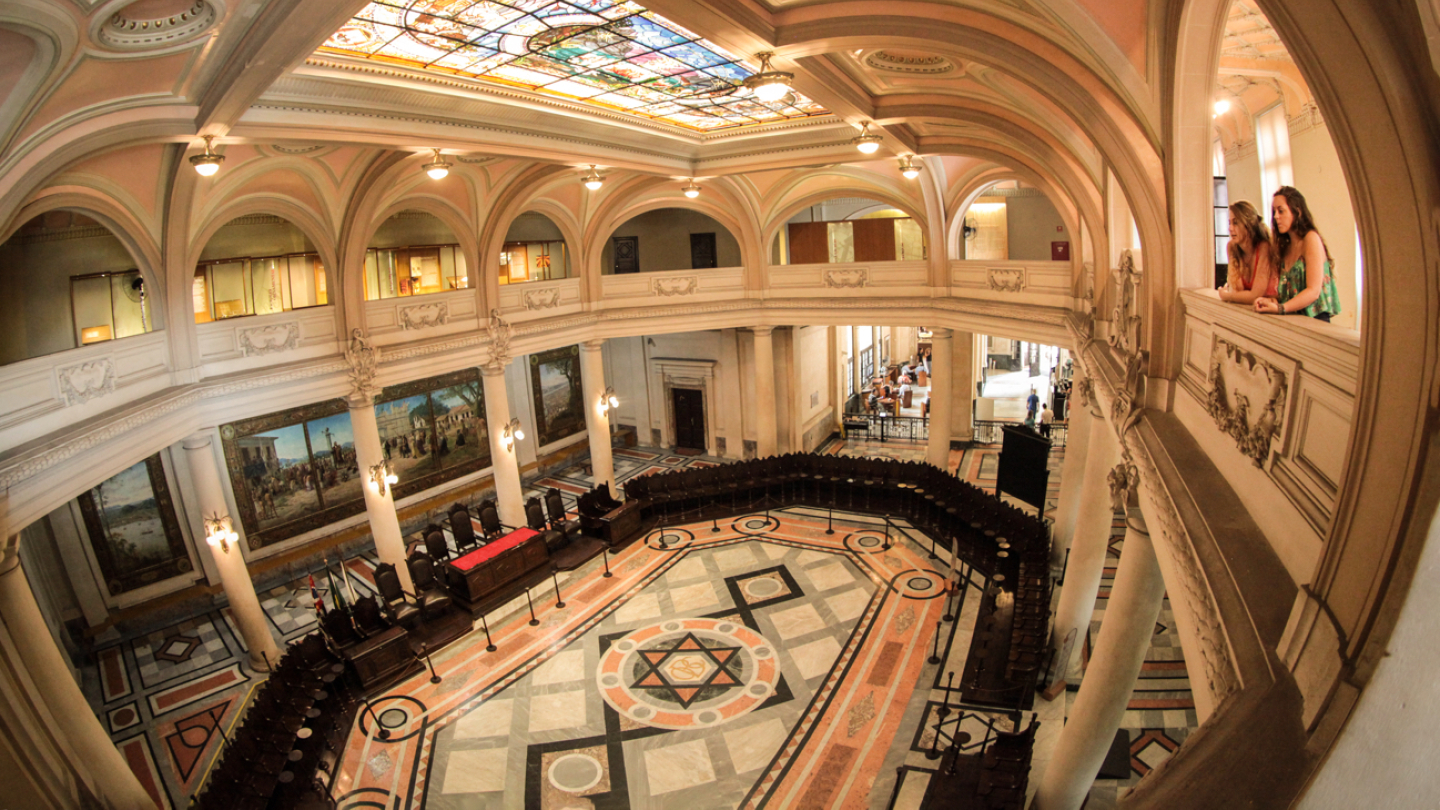
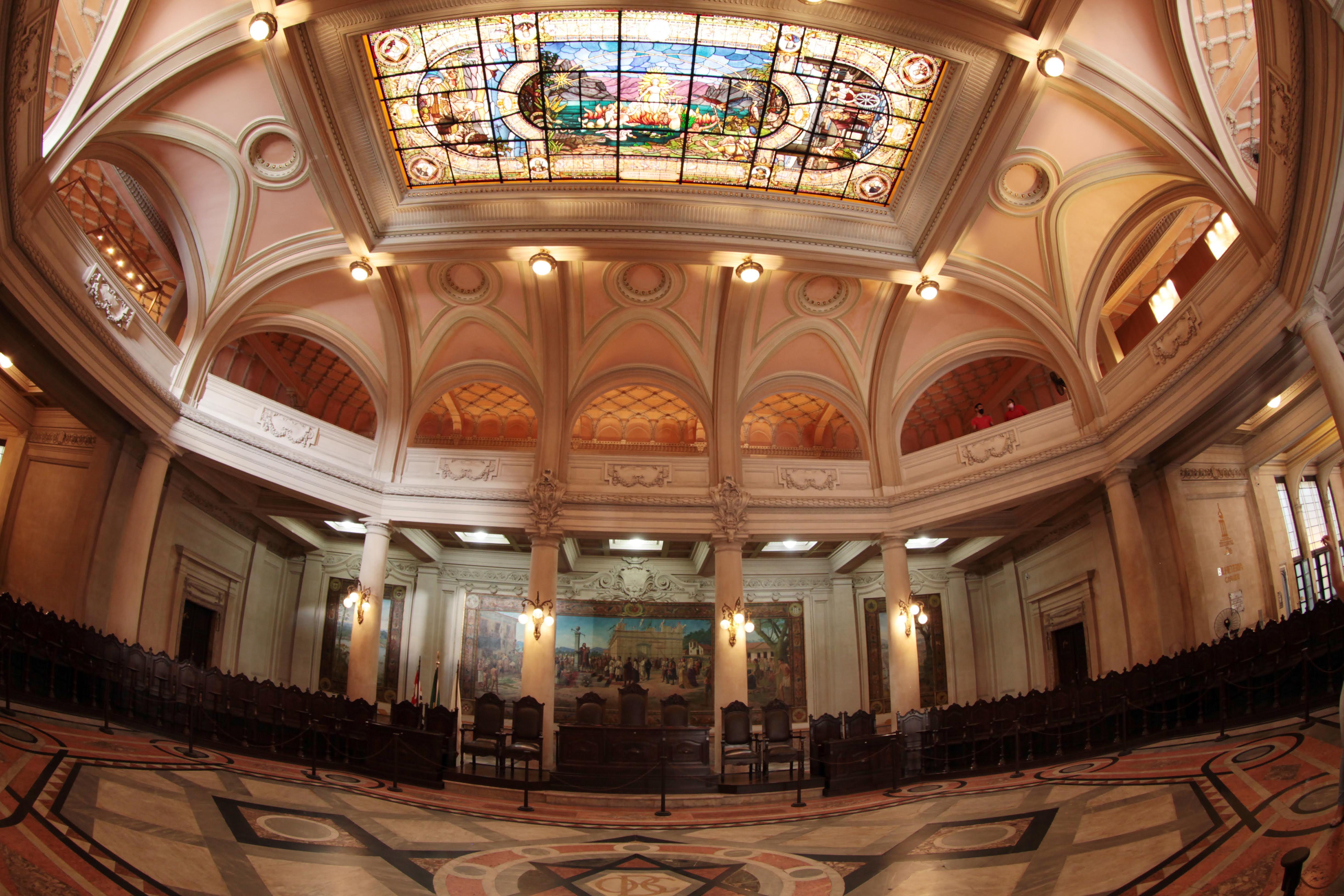
The space where the negotiations that set the daily coffee sack prices took place, the Trading Hall contains 154 items, including 81 imbuia wood chairs and tables set on a jacaranda platform. On the floor with geometric patterns made of marble from Greece, Spain, and Italy, the Star of David stands out — a Masonic reference. The Art Nouveau–style furniture arrangement reflects the hierarchy of the former exchange: 11 main chairs for the president, at the center, and the secretaries, on each side, with 70 others around for the brokers. Producers and exporters watched the sessions from the mezzanine. Trading sessions were held until 1950.
Photo: Francisco Arrais
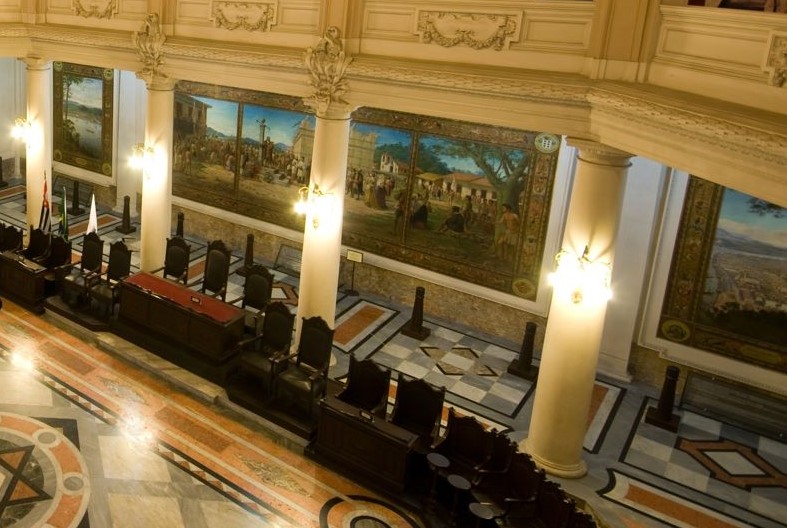
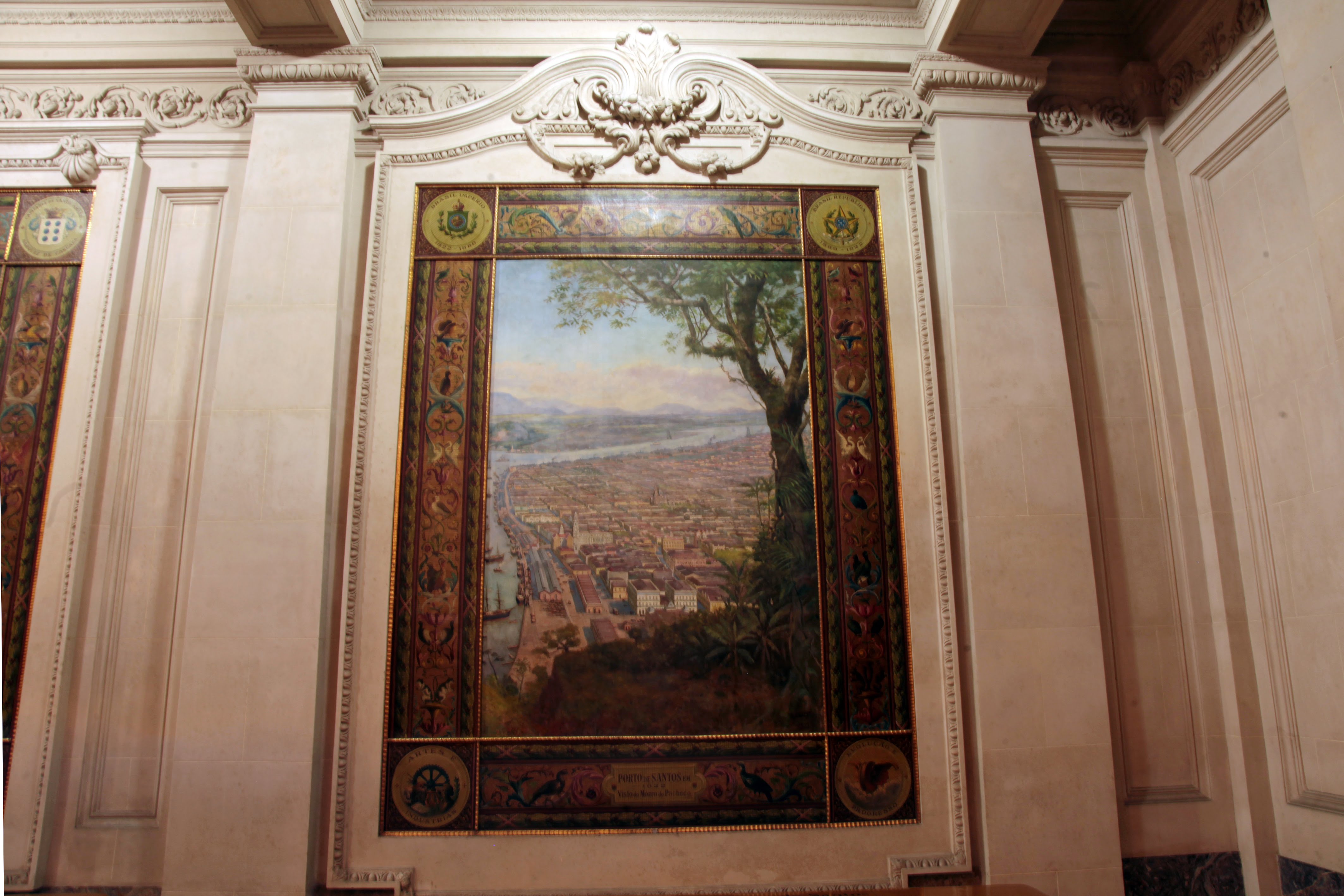
Triptych by Benedicto Calixto
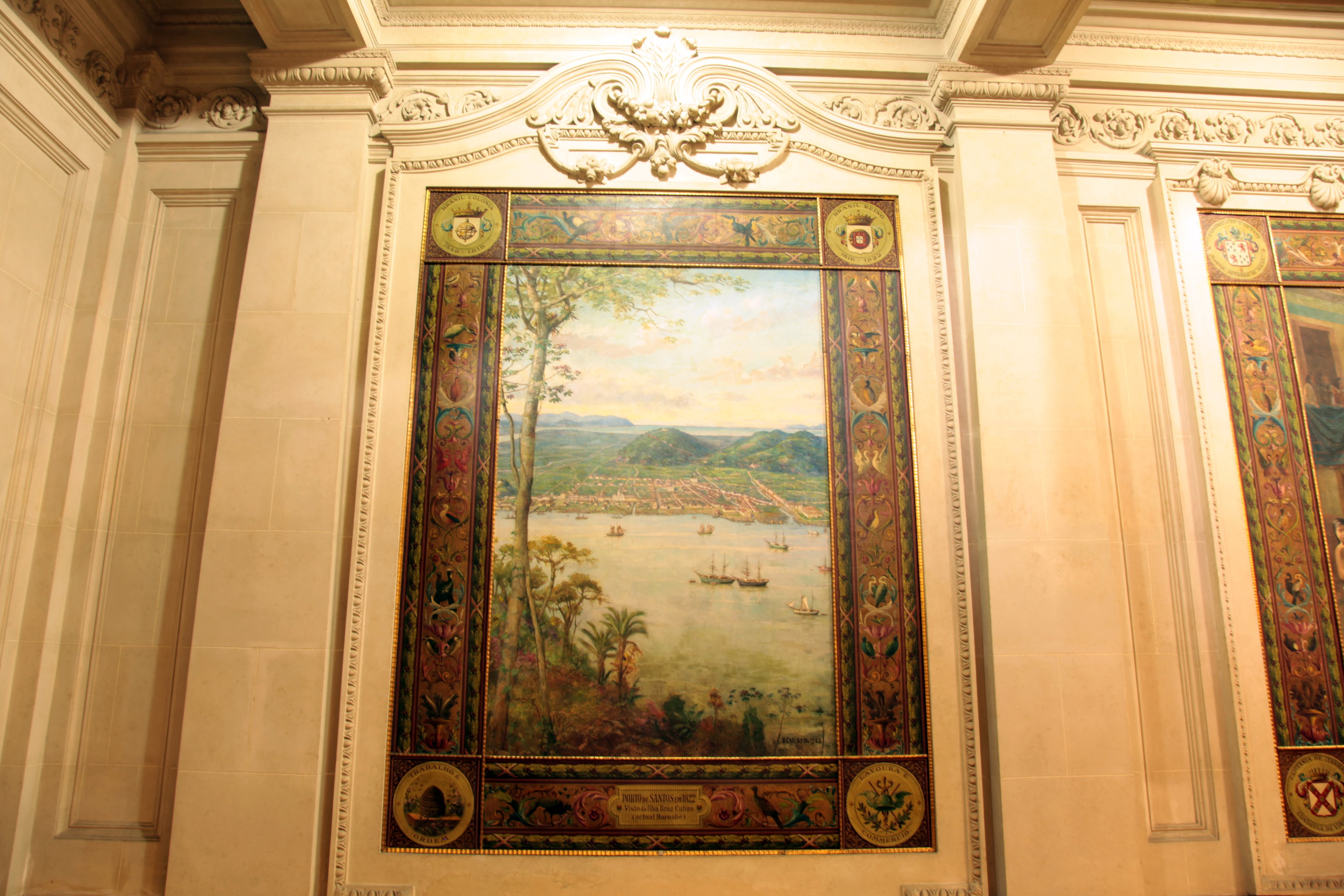
The triptych painting in the Trading Hall depicts the urban and economic transformations of Santos through the artistic vision of Benedicto Calixto — the founding of the town, 1822, and 1922. It includes a triangular stone, hammer, and trowel — three Masonic elements. Featuring figures from Brazilian fauna, the Renaissance-style frames were also created by the São Paulo painter.
Photos: Rosangela Menezes and Coffee Museum Collection
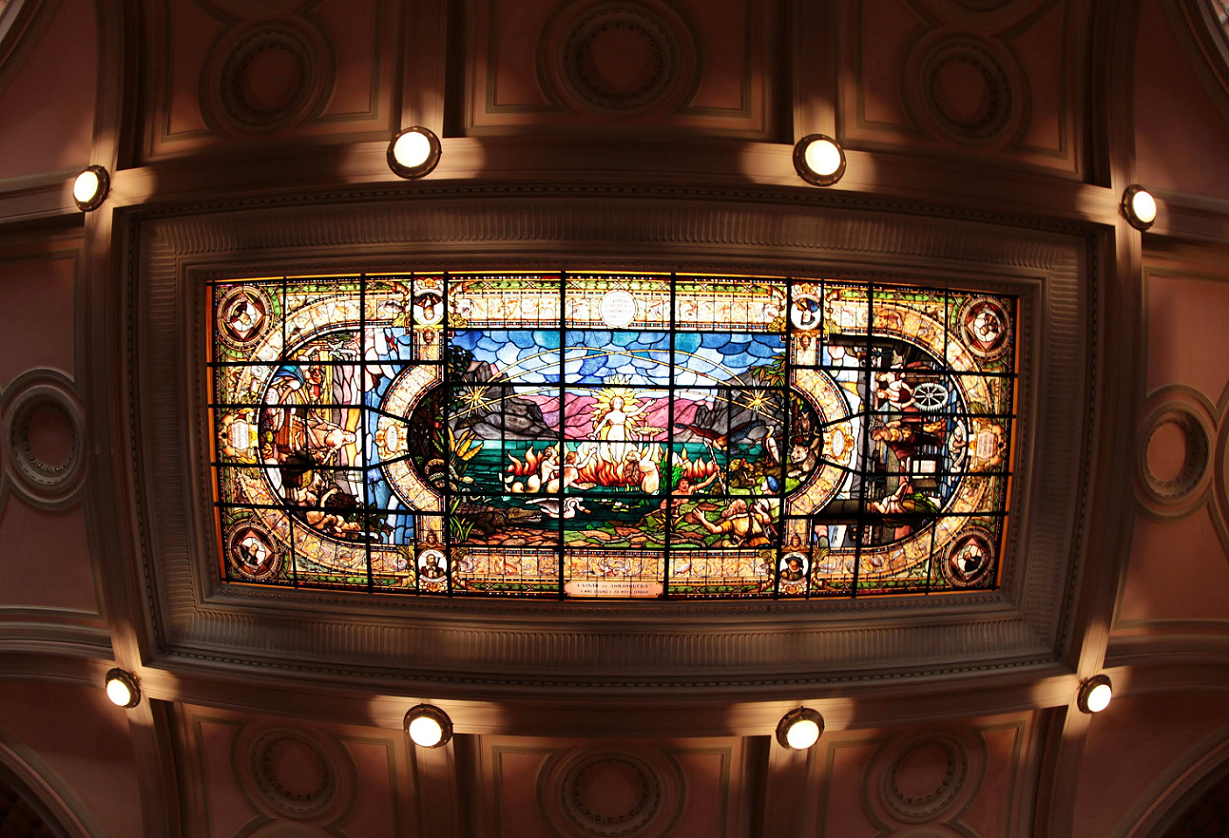
Stained Glass
One of the first stained-glass artworks with a Brazilian theme, The Epic of the Bandeirantes is also signed by Benedicto Calixto. Created by Casa Conrado, a famous studio in São Paulo, it presents allegories and symbolic compositions representing the wealth of three historical periods. In the central scene, The Vision of Anhanguera: the Mother of Gold and the Water Mothers, the gold of Colonial Brazil stands out. Coffee, sugarcane, and cotton agriculture of the Empire period are represented in Farming and Abundance on the left, while Industry and Commerce on the right highlights trade, export, and the modernization of the Republic.
Photo: Francisco Arrais
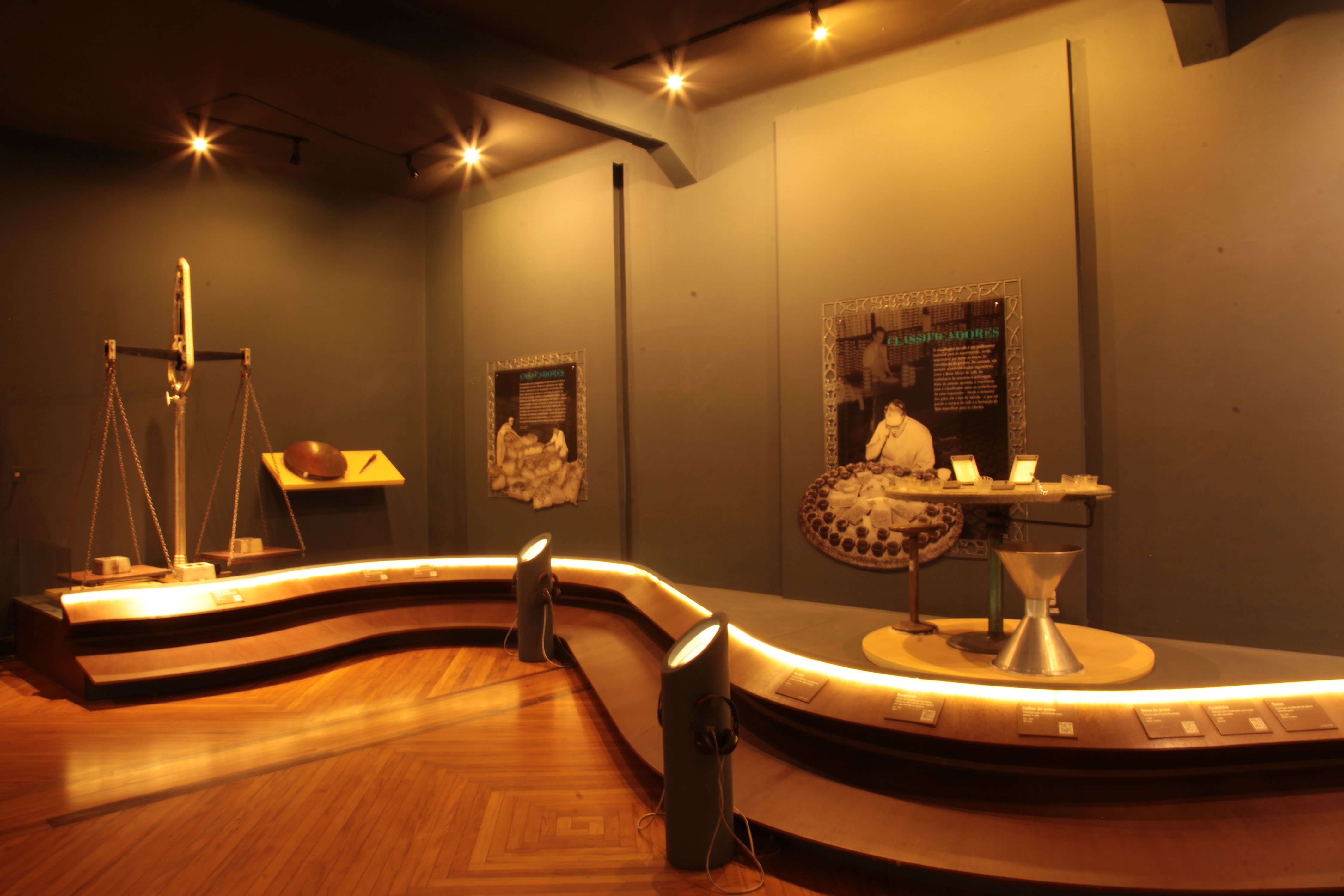
Permanent Exhibition
The permanent exhibition The Journey of Coffee in Brazil, which showcases the relationship between coffee cultivation and Brazil’s development, occupies spaces on the ground and first floors. Divided into the modules Coffee and Labor, Harvest, and Processing, it presents the arrival of the first coffee plant seedlings in the country, along with Japanese and European immigrants working in the plantations. The wealth and progress driven by coffee are illustrated through panels and models depicting the expansion of São Paulo’s railway network and the development of the Port of Santos.
Photo: Francisco Arrais
Clock Tower
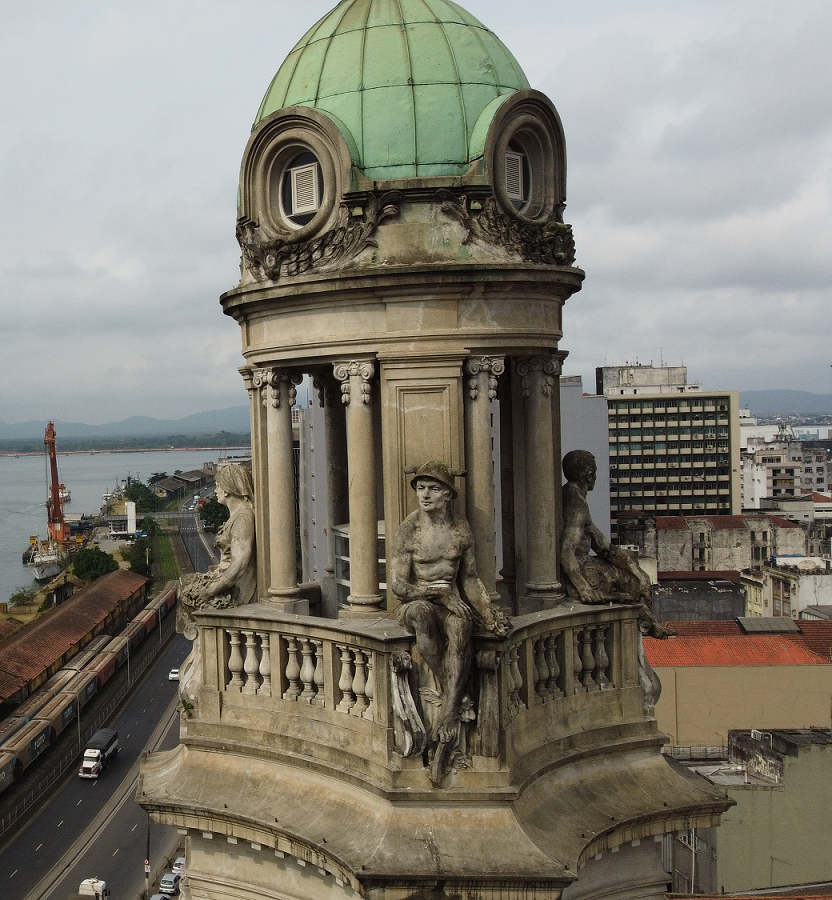
Standing about 40 meters tall—twice the height of the building—the clock tower, located at the corner of Rua Tuiuti, features four sculptures symbolizing agriculture, commerce, industry, and navigation. The Swiss-made clock, which once called traders to the auction sessions, changed the city’s routine, as residents previously relied on church bells to tell the time.
Photo: Carlos Nogueira
Entrance Stained Glass
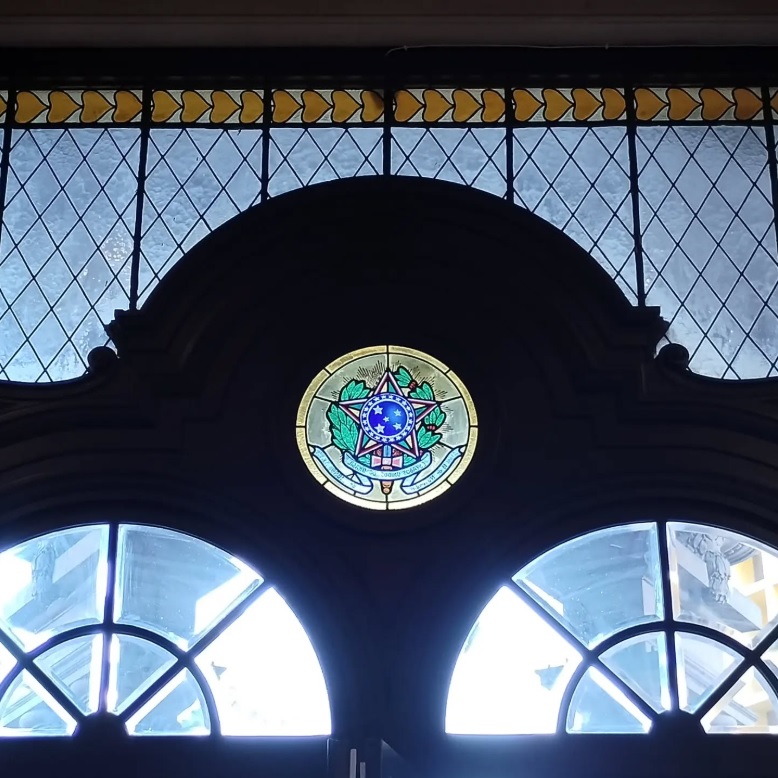
Above the main entrance door is a small stained-glass window featuring the emblem of the United States of Brazil, the country’s name at the time of the building’s inauguration, which remained until 1967. Also in highlight is the National Coat of Arms of Brazil, composed of a coffee branch and a tobacco branch - the two most important crops at the Proclamation of the Republic (1889).
Photo: Cecília Dias
Coffee Shop
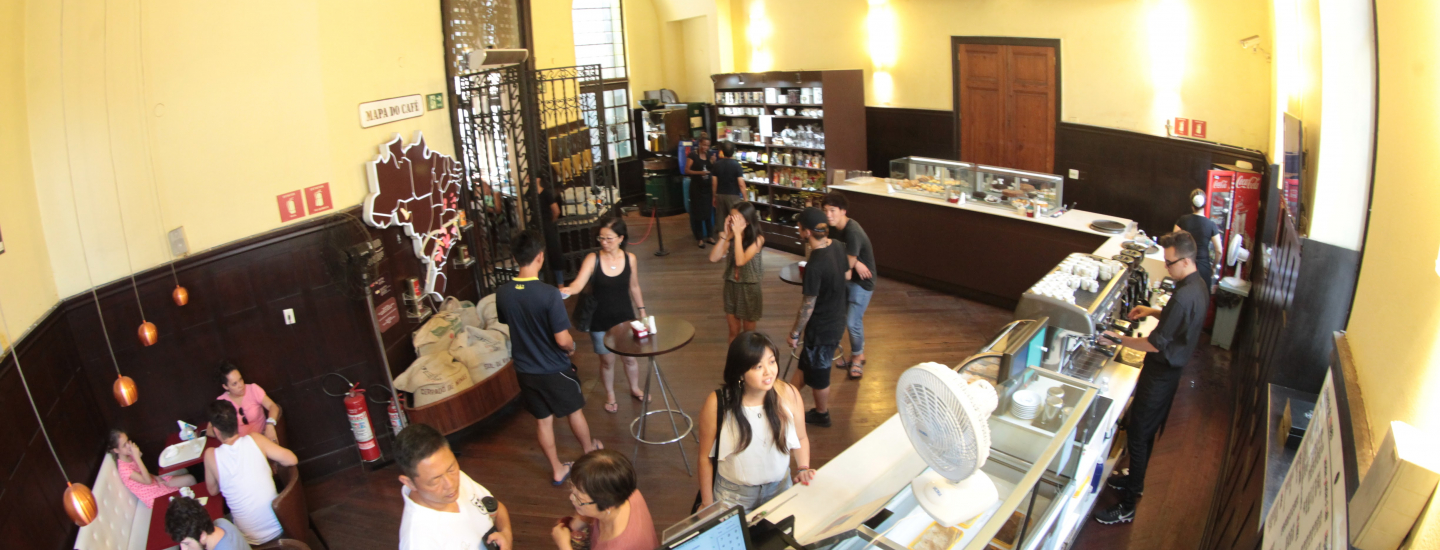
To end the visit, a stop at the museum’s coffee shop is almost a must. Its menu goes beyond the traditional espresso. Opened in 2000, it offers a variety of hot and cold beverages, coffee-based drinks and desserts, as well as beans from several producing regions, to enjoy on-site or take home.
Photo: Francisco Arrais