

Top photo: Tadeu Nascimento
The resting place of the ashes of José Bonifácio de Andrada e Silva, the ‘Father of Independence”, and his brothers Antonio Carlos, Martim Francisco and Father Patrício Manuel, the pantheon was inaugurated on 7 September, 1923. The civic monument occupies the space of the old of the Carmo Convent gatehouse and consists of the monument designed by sculptor Rodolfo Bernardelli, made in Italy – the pieces arrived in 19 boxes, were then auctioned because of customs issues and acquired by merchants and by the Humanitarian Society of Santos.
Statue
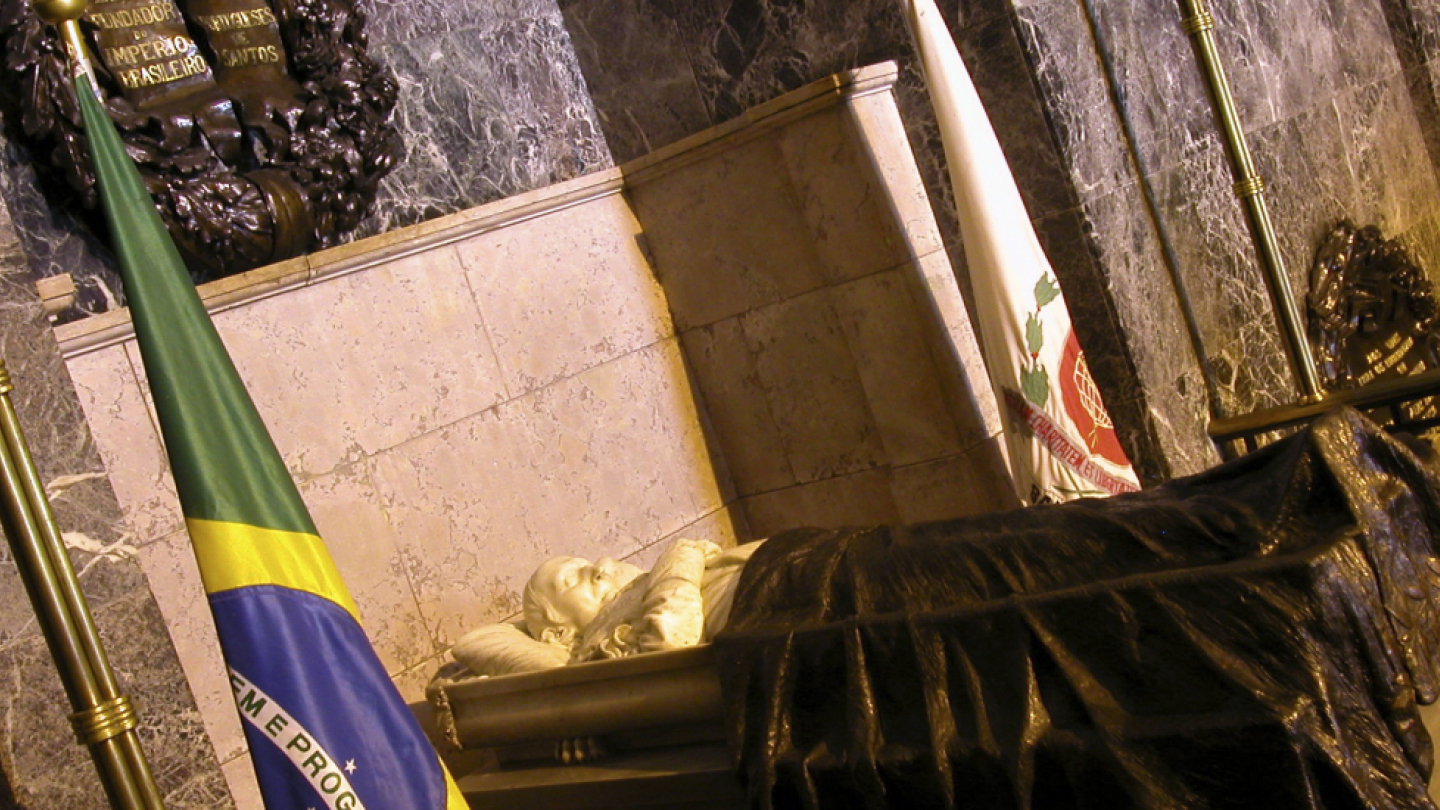
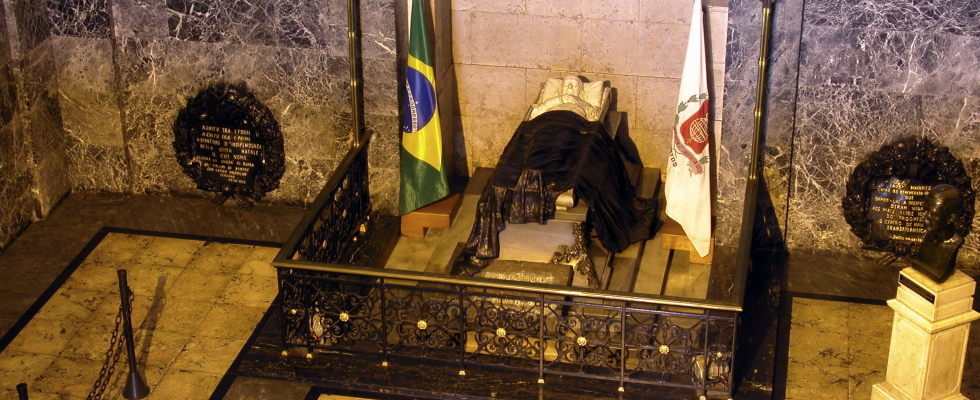
The recumbent, relief statue of José Bonifácio de Andrada e Silva, the ‘Patriarch of Independence’, is located in the center of the main hall – beneath it, in two steel boxes, lie a large part of his mortal remains. For 31 years, the body lay buried in the nave of the main altar of the Church of the Carmo Convent, without any significant identification, until, in 1869, Antônio Carlos do Carmo, a circus artist, discovered the tomb and obtained permission to place a marble slab honoring the native of Santos.
Made of white marble, to the left of the patriarch's monument is the funerary urn of Antonio Carlos Ribeiro de Andrada Machado e Silva, illuminated by a small pendant chandelier of colored glass. The funerary urn of Martim Francisco Ribeiro de Andrada is located to the right of the monument to the patriarch, and above it hangs a chandelier made of colored glass attached to two chains forming an inverted triangle, one of the symbols of Freemasonry, to which the Andrada brothers belonged.
Photo: Tadeu Nascimento
Panels
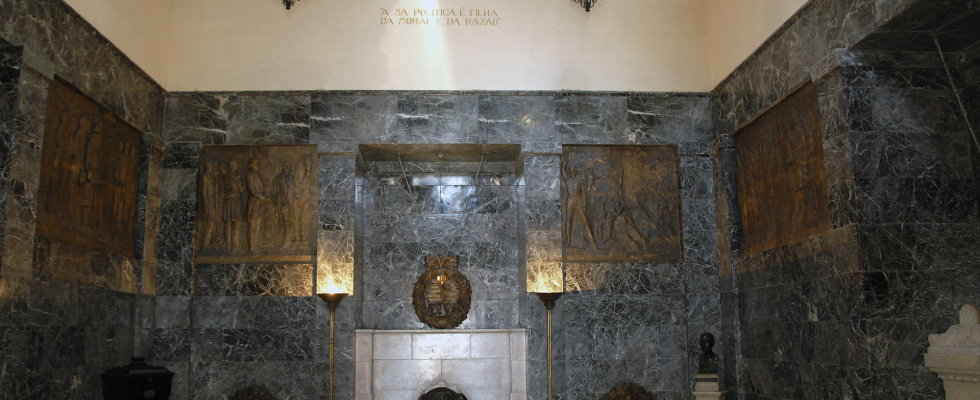
In the colonial-style space, with columns inspired by Masonic lodges and indirect lighting, designed by the Santos-born engineer Roberto Simonsen, there are also eight bronze bas-relief panels depicting scenes from Brazilian history, as well as inscriptions of phrases by the Andrada brothers.
Photo: Tadeu Nascimento