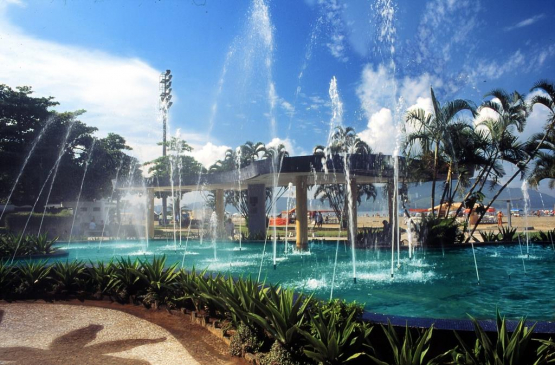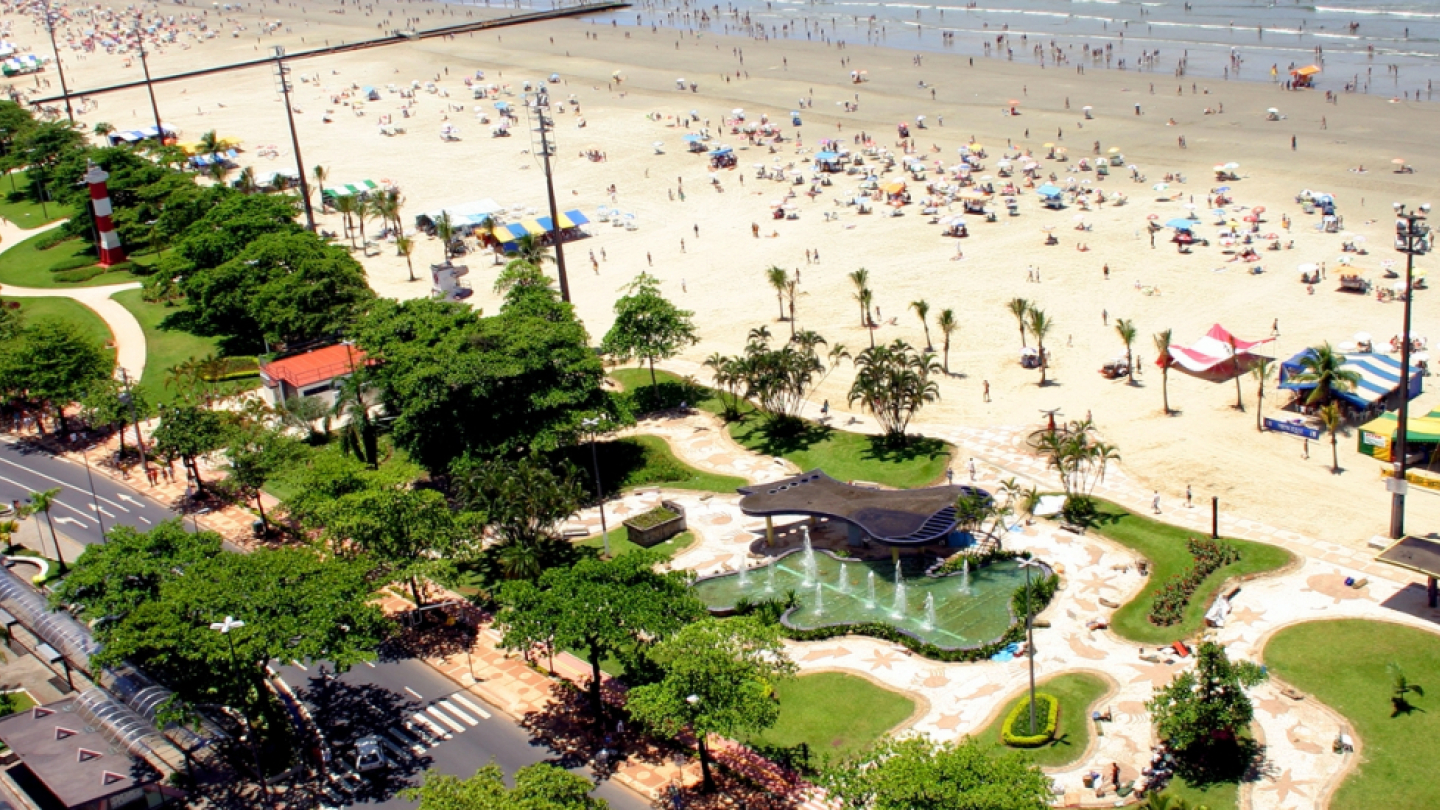


Santos is home to the largest beach-front gardens in the world, as registered in the Guinness Book of World Records in 2002. Still the record holder, the gardens, which frame the seven kilometers of beaches, are one of the city’s main tourist attractions and stretch for 5.335km, varying in width between 45m and 50m, with a total area of 218,800m2 .
They are also an open-air art gallery, housing no fewer than 38 monuments and sculptures, highlighting characters from the Santos, national and international scenarios.
Plant species
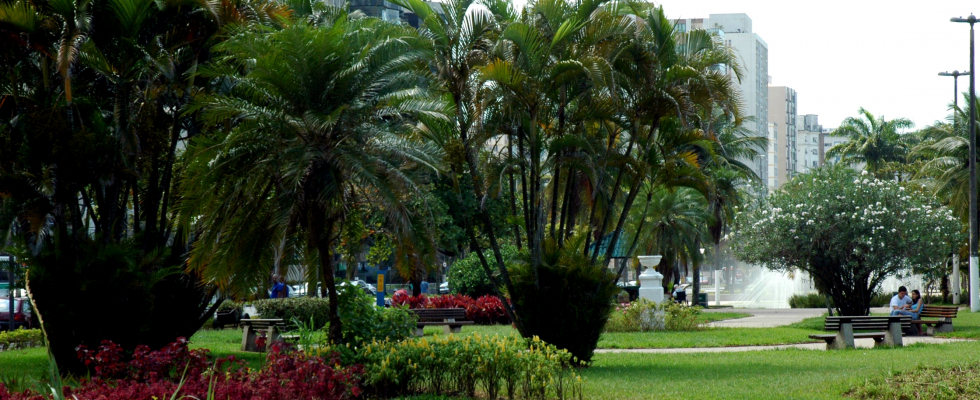
The waterfront garden features diverse hues, textures, and aromas in its 1,300 flowerbeds, planters, and potted plants, with over 70 ornamental species. These include peace lilies, biris, dracaenas, golden drops, paulistinhas, white and yellow daisies, white crinuns, and coleus.
The species are perennial, more resistant to the region's climate, which is humid, saline, and windy. There are also 1,800 trees of various sizes, such as palms, cycads, and parasols.
This rich flora attracts birds of various species, some endemic, which build nests and live there, and others that use the garden for feeding or as a resting point on flights, including flights abroad.
Photo: Anderson Bianchi
Monuments
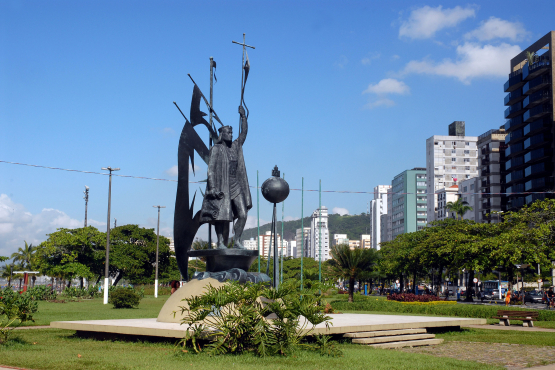
A veritable open-air art gallery, the gardens feature 38 monuments, including statues, busts, commemorative plaques, and sculptures depicting significant figures and pages in the history of the city, Brazil, and the world.
From José Menino, a neighborhood bordering the municipality of São Vicente, to Ponta da Praia, visitors can see important historical figures, such as Saturnino de Brito, patron of Brazilian sanitation engineering; Alberto Santos Dumont, the father of aviation; Jesuit priest José de Anchieta; and Christopher Columbus.
Other sculptures represent emblematic moments in local history or even characteristics of Santos, such as the monuments commemorating the 90th and 100th anniversaries of Japanese immigration, the Immigrants, Atlético Náutico Santista, João Octávio dos Santos, and the Flat Tire.
Photo: Tadeu Nascimento
History
The idea of creating a beach garden originated in 1914, the result of an urbanization study developed by sanitation engineer Saturnino de Brito. However, the project only began to be implemented in 1936, and the first sections were completed three years later, putting an end to real estate speculation along the beachfront.
Between 1949 and 1959, the garden gained fountains, lifeguard stations, and the Municipal Aquarium. From the 1970s to the 1990s, its design was geometric. In 2003, with the inauguration of the bike path, the flowerbeds regained their curvilinear shape.
Photo: Tadeu Nascimento