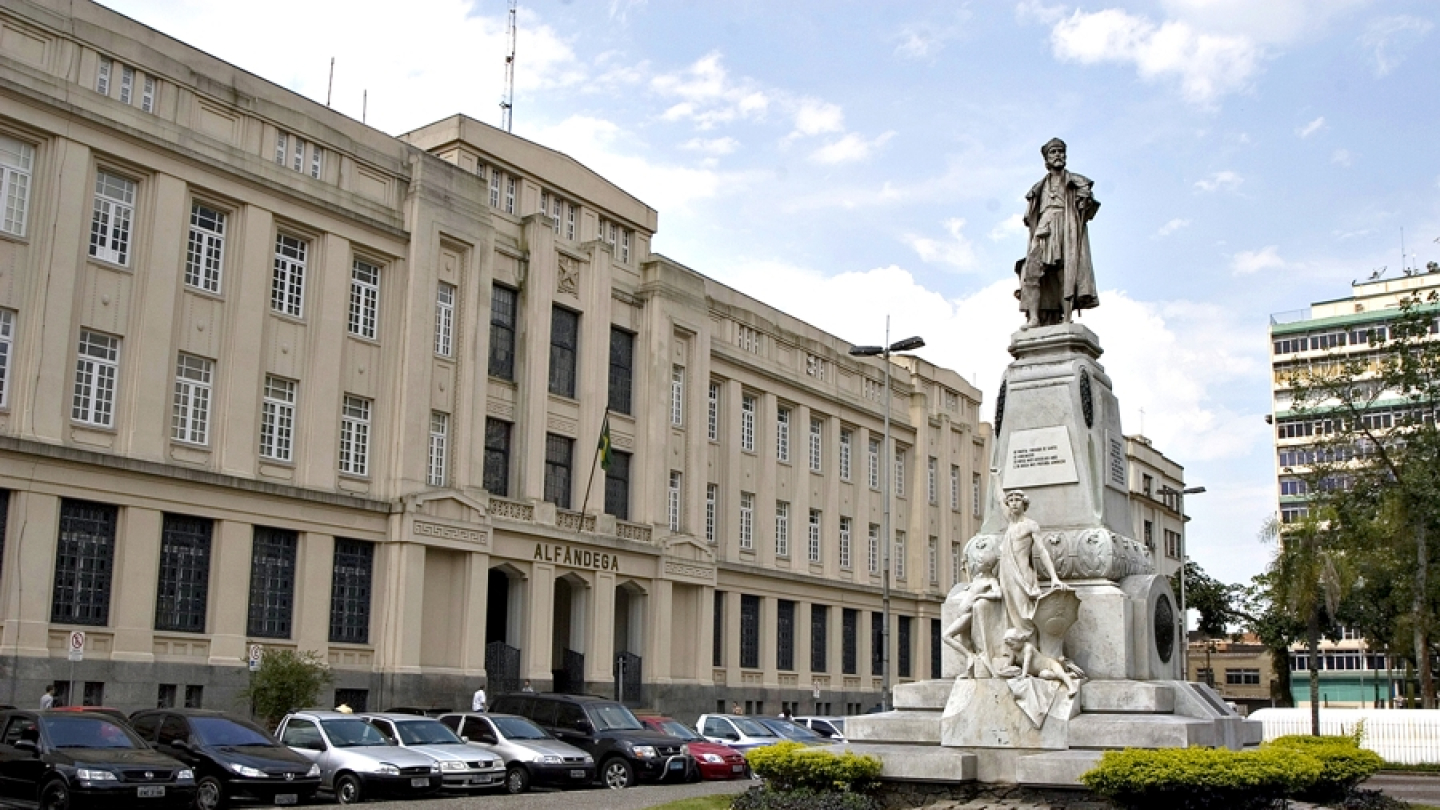


The largest and most important customs unit in the country, with jurisdiction over 24 municipalities (from Bertioga to the border with Paraná), the Customs House operates inside a building of 12,350m², eclectic in architectural style, with Art-deco influences, inaugurated in 1934. Responsible for controlling 34% of Brazil’s foreign trade, the Santos customs division, created in 1550, was the third to operate in the country – the first was in Salvador (BA) and the second, in São Vicente (SP).
The building
Designated a heritage site by the municipality, the building was constructed over four years. It features granite cladding on the ground floor and boasts over 90 windows, 66 of which are protected by iron grilles with designs mimicking coffee leaves and fruits – these designs are repeated on the six gates and two portals. In total, over 44,000 kilograms of iron are used in the decorative details alone.
Inside the building, there are pillars and staircases in imported marble, forming an eight-pointed star on the floor; beautiful chandeliers; frescoes; stained glass windows; and a dome with the National Coat of Arms.
Photo: Francisco Arrais
Counterfeit Museum
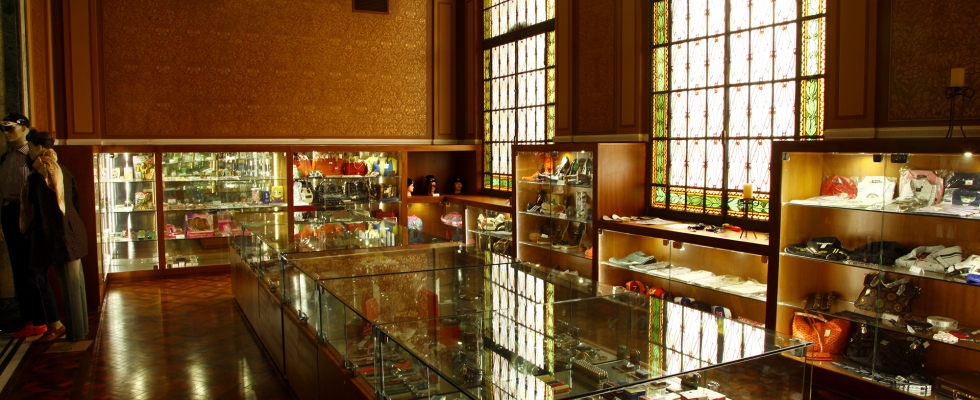
The Museum of Counterfeit Goods, comprised of goods seized at the Port of Santos, houses handbags, sneakers, watches, and other products, many of them imitating well-known brands.
Photo: Francisco Arrais